The Centre quarterly newsletter, June 2026 issue, is now available.
In this issue:
Last chance…


JAPANESE ECONOMIC AND BUSINESS WEEKLY NEWSLETTER: 02 May -11 May,2026

The EU Japan Centre is releasing a weekly press review covering Japan's economic and business matters.
Weekly Japanese Economic and Business News (02 May - 11 May, 2026)
Outline
1. Economic News
▶ Australia and Japan sign agreements on energy and critical minerals
04 May, 2026
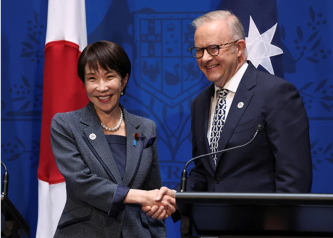
Photo Source: REUTERS
Japan and Australia agreed to deepen cooperation on energy, food, and critical minerals supply chains during a meeting between Prime Minister Sanae Takaichi and Australian Prime Minister Anthony Albanese. The two countries aim to strengthen economic security by securing stable supplies of energy and key materials such as rare earths and nickel, especially amid global disruptions linked to Middle East tensions. Australia will also provide up to A$1.3 billion in support for critical mineral projects involving Japanese companies.
Asahi: https://www.asahi.com/ajw/articles/16544338
▶ Japan to sign quantum tech agreement with India, eyeing computer exports
04 May, 2026
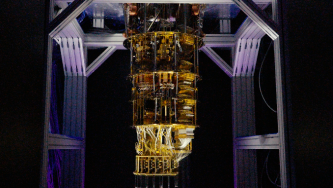
Photo Source: Ryo Matsuura/Nikkei
Japan and India are set to sign a quantum technology agreement to strengthen cooperation between researchers and companies in quantum computing. The deal will promote information sharing and support future research collaboration. Japan also hopes India will adopt next-generation Japanese quantum computers. Prime Minister Sanae Takaichi’s government considers quantum technology a key strategic industry and sees India as an important future market and research partner.
▶ Japan, Indonesia sign defense agreement for equipment transfers
05 May, 2026
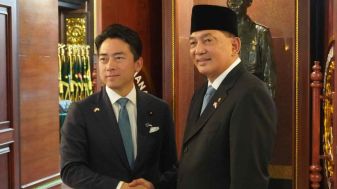
Photo Source: Tomoyoshi Oshikiri/Nikkei
Shinjiro Koizumi, Japan’s Minister of Defense, and Indonesia’s Defense Minister Sjafrie Sjamsoeddin signed a defense cooperation agreement in Jakarta to strengthen bilateral security ties amid rising global geopolitical tensions. The agreement expands cooperation on defense equipment transfers, personnel exchanges, joint exercises, and military information sharing, with discussions including potential Japanese transfers of maritime defense assets such as submarines. Koizumi emphasized that cooperation with Indonesia is increasingly important due to its regional influence and responsibility for stability, as Japan seeks to deepen security partnerships in Southeast Asia while managing concerns about technology security and Indonesia’s growing ties with China and Russia.
▶ Japan, EU to Deepen Cooperation to Protect Minors Online; AI Also on Agenda at Minister-Level Meeting in Brussels
06 May, 2026
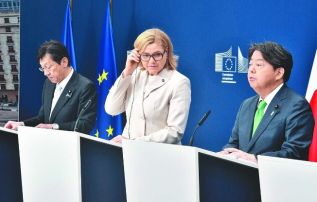
Photo Source: Yomiuri
Japan and the European Union agreed to deepen cooperation on protecting minors online and strengthening oversight of digital platforms at a ministerial meeting in Brussels. Both sides will share information on content moderation and reporting systems used by social media platforms and reinforce measures to ensure safer online environments for young users. They also reaffirmed cooperation on artificial intelligence, including support for Japan’s “Hiroshima AI Process,” which promotes safe and trustworthy AI development.
Japan’s ministers, including Yoshimasa Hayashi and Hisashi Matsumoto, also emphasized plans to expand safe government use of generative AI and promote cooperation with developing countries, especially in Southeast Asia.
Yomiuri:https://japannews.yomiuri.co.jp/politics/politics-government/20260506-326174/
▶ Soaring aluminum, plastics prices push up costs for auto parts makers
06 May, 2026
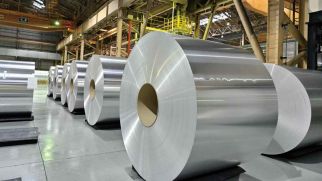
Photo Source: Nikkei
Middle East conflict has driven up prices of key auto materials like aluminum, plastics, rubber, and steel, raising concerns about future increases in vehicle prices. Aluminum prices have surged over 20% since February, affecting Japanese supply chains. Plastics used in auto parts, supplied by companies such as Mitsui Chemicals (through its subsidiary Prime Polymer), have seen roughly 30% price hikes. Rubber prices are also rising, impacting tire-related materials, while steelmakers like Nippon Steel Corporation and JFE Steel Corporation are increasing prices due to higher raw material and energy costs. If these cost pressures continue, they are expected to spread downstream to automakers such as Toyota Motor Corporation, potentially leading to higher vehicle prices and even production risks in the near future.
▶ Japan seeks more involvement in Angola oil, minerals during Africa tour
06 May: 2026
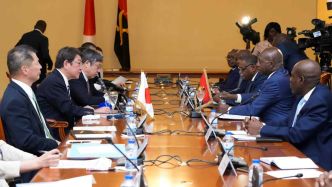
Photo Source: MOFA
Toshimitsu Motegi, Japan’s Foreign Minister, visited several African countries (Zambia, Angola, Kenya, South Africa) to strengthen Japan’s economic and resource ties with Africa amid concerns about energy supply risks from Middle East instability. Japan is seeking closer cooperation on crude oil and critical minerals such as copper, cobalt, and rare earths, while also supporting infrastructure and industrial development through investment and loans. The visit is part of a broader strategy to diversify resource supply chains away from reliance on the Middle East and China, while competing with China’s strong presence in African trade and infrastructure investment.
▶ Japan offers energy loan and ammonia technology to South Africa
07 May, 2026
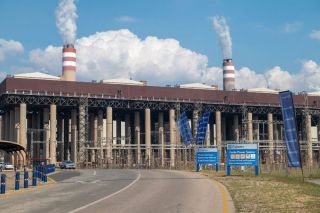
Photo Source: Bloomberg
Japan is accelerating talks with South Africa on a yen-denominated energy loan to support the country’s energy transition and promote Japanese ammonia co-firing technology, which reduces emissions by mixing ammonia with coal in power plants. The initiative was discussed during meetings involving South African President Cyril Ramaphosa and former Japanese Prime Minister Shigeru Ishiba. South Africa, which still generates about 75% of its electricity from coal, has strong potential for solar power and green hydrogen production. Japan sees opportunities for its companies in the country, though critics argue ammonia co-firing could extend the lifespan of coal-fired power plants.
Japan times:https://www.japantimes.co.jp/news/2026/05/07/japan/japan-energy-loan-south-africa/
▶ Asia propels global carbon-cutting investments to record $2.3tn
08 May, 2026
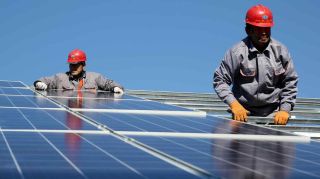
Photo Source: REUTERS
The Asia-Pacific region drove global decarbonization investment growth in 2025, helping total spending rise 8% to a record $2.3 trillion despite U.S. political resistance to sustainability initiatives. China led the world with $800 billion in investment, supported by its “Made in China 2025” strategy and major growth in solar and wind power. Japan also saw strong growth, with investments rising 44% to $39 billion, including major projects by Orix and Nippon Steel focused on green energy and lower-emission technologies. Global investment was also boosted by expanding AI data centers, which increasingly rely on renewable energy. Rising oil prices and the relatively low cost and fast deployment of solar power have further strengthened interest in clean energy worldwide.
Nikkei Asia:https://asia.nikkei.com/spotlight/esg/asia-propels-global-carbon-cutting-investments-to-record-2.3tn
▶ Japan-made EVs at risk of losing EU subsidies under content proposal
09 May, 2026

Photo Source: REUTERS
The EU is considering rules that would limit EV subsidies to vehicles assembled inside the bloc under its proposed Industrial Accelerator Act. Japan and over 100 companies including Toyota Motor oppose the plan, saying it would disadvantage Japanese automakers that export EVs to Europe from countries outside the EU. Japan’s government has asked the EU to revise the bill, which could force companies like Nissan Motor and Honda Motor to rethink their European strategies if approved.
▶ Japan pushes for South American economic pact, eyeing energy resources
10 May, 2026
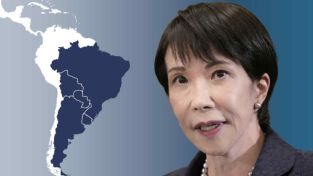
Photo Source: Kyodo
Japan is planning to start negotiations for an economic partnership agreement with Mercosur (Brazil, Argentina, Uruguay, Paraguay, Bolivia) by summer, marking the first major trade talks under Prime Minister Sanae Takaichi. The goal is to secure energy resources and critical minerals like oil, lithium, and rare earths while reducing reliance on the Middle East and China. The bloc also offers a large market of nearly 300 million people. Key challenges include Japan’s concerns over agricultural imports, especially Brazilian beef, which domestic producers fear could hurt local farming.
Nikkei Asia:https://asia.nikkei.com/economy/trade/japan-pushes-for-south-american-economic-pact-eyeing-energy-resources
--------------------------------------------------------------------------------------------------------------------------------------
2. Business News
▶ Denso aims to build system to wirelessly charge moving EVs by FY 2029
04 May, 2026
Photo Source: Kyodo
Denso Corporation is developing a wireless charging system for electric vehicles that enables charging while driving, with the goal of practical use by fiscal 2029. The system works by transmitting electricity from coils embedded in the road to receiving coils installed under vehicles, allowing continuous driving with smaller batteries, which could reduce vehicle weight and improve efficiency. In tests at its headquarters in Aichi Prefecture, the system achieved up to 500 km of continuous driving. Denso has also signed a 10-year collaboration agreement with the University of Tokyo to advance the technology toward commercialization and explore potential deployment sites.
Mainichi:https://mainichi.jp/english/articles/20260504/p2g/00m/0bu/002000c
▶ Japan's AGC freezes construction of green hydrogen material plant
05 May, 2026
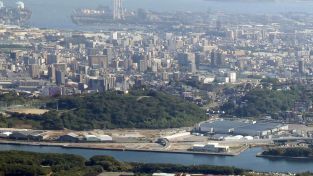
Photo Source: Sasazu Toshiki/Nikkei
AGC Inc. has decided to halt construction of a planned facility in Kitakyushu that was intended to produce key components for green hydrogen, due to delays and uncertainty in global hydrogen demand.
The plant, originally scheduled to start operations in 2026, was meant to manufacture ion exchange membranes used in water electrolysis, a core technology for green hydrogen. The decision reflects a broader slowdown in hydrogen-related investment as global decarbonization efforts lose momentum, leading other firms like Toray Industries to also delay expansion plans.
Nikkei Asia:https://asia.nikkei.com/business/energy/japan-s-agc-freezes-construction-of-green-hydrogen-material-plant
▶ Konica Minolta taps AI to find high-yield microbes in weeks, not months
05 May, 2026
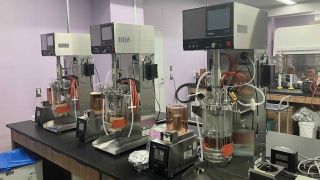
Photo Source: AIST and Konika Minolta
Konica Minolta plans to commercialize by March 2029 an AI-based system that uses hyperspectral cameras to greatly speed up the selection of high-yield microbes for food production.
Developed with Japan’s AIST, the technology can cut a process that normally takes about six months down to one or two weeks, while also identifying strains with up to 20% higher yields. The company also aims to expand the system into biopharmaceutical production to reduce costs and improve quality.
▶ Honda to shelve $11bn Canada EV plant as demand sputters
06 May, 2026

Photo Source: Yuki Nakao/Nikkei
Honda Motor is freezing plans to build a major EV factory and battery plant in Ontario, Canada, and may cancel the project entirely due to weak EV demand in North America. Instead, Honda is shifting its strategy toward hybrid vehicles, as U.S. EV sales have fallen while hybrids are gaining popularity. The company is also scaling back its global EV investment plans and repurposing existing facilities in the U.S. for hybrid production. The decision reflects broader uncertainty in North America’s EV market, including policy changes, reduced incentives, and slower-than-expected demand growth.
Nikkei Asia:https://asia.nikkei.com/business/automobiles/honda-to-shelve-11bn-canada-ev-plant-as-demand-sputters
▶ Osaka Gas Boosting E-Methane Production, Procurement
07 May, 2026
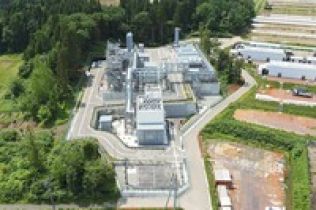
Photo Source: Inpex
Osaka Gas Co. is expanding the production and procurement of e-methane, a synthetic fuel seen as important for decarbonizing city gas systems. The company is preparing to import e-methane from the United States and has begun trial operations at one of the world’s largest e-methane plants in Nagaoka. E-methane is made from renewable-energy hydrogen and captured CO₂, making it close to carbon-neutral when burned. Osaka Gas aims to replace 1% of its city gas supply with e-methane by fiscal 2030 and is also testing the technology at the Expo 2025 Osaka using waste-generated gas.
JIJI: https://jen.jiji.com/jc/eng?g=ind&k=2026050700651
▶ High-speed plastic fiber cables for AI centers headed for production by Japan company
07 May, 2026

Photo Source: Nikkei
Tosoh plans to mass-produce plastic optical cables as early as 2029 to meet growing data center demand driven by generative AI. Developed with Keio University, the fluoropolymer cables can double data transmission speeds compared with conventional fiber while reducing energy use and production costs. They are intended for short-range connections within data centers and could help improve efficiency as AI increases data traffic between servers.
▶ Unmanned lab opens with robots at work as researchers push AI, automation
09 May, 2026
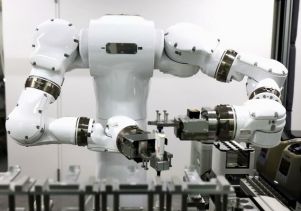
Photo Source: Kyodo
Institute of Science Tokyo has opened a robot-run medical research lab in Tokyo where humanoid robots, including Maholo LabDroid, perform experiments such as handling reagents and cell cultivation without human staff. The university aims to expand the system to about 2,000 robots by 2040 and automate nearly all research processes using robotics and AI, partly to address labor shortages and reduce human error.
Kyodo: https://english.kyodonews.net/articles/-/75657
Published: May 2026


EU-Japan Centre for Industrial Cooperation
Joint venture established in 1987 by the European Commission (DG GROW) and the Japanese Government (METI) for promoting all forms of industrial, trade and investment cooperation between the EU and Japan.


Copyright © 2026 EU-Japan Centre