
JAPANESE ECONOMIC AND BUSINESS WEEKLY NEWSLETTER: 22 - 28 August,2026

The EU Japan Centre is releasing a weekly press review covering Japan's economic and business matters.
Weekly Japanese Economic and Business News (22 - 28 August, 2026)
Outline
1. Economic News
▶ Japan to tap AI to speed up materials development 10-fold
25 Aug, 2026

Nikkei Illustration
The Japanese government plans to launch an AI-powered platform as early as fiscal 2027 to accelerate materials development. The platform will allow manufacturers to securely share data and use AI to analyze it without revealing proprietary information. By simulating chemical reactions digitally, the government hopes to reduce development time from several years to just a few months. The project will focus on high-performance fibers, polymers, films, ceramics, and high-purity microparticles, helping Japan maintain its global competitiveness in advanced materials.
▶ Japan eyes $630m to help buy undersea cable ships as risks grow
25 Aug, 2026
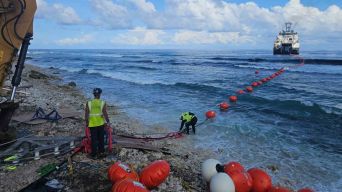
Photo Source: MOFA
Japan plans to allocate about 100 billion yen in fiscal 2027 to help domestic companies purchase undersea cable-laying ships, covering roughly half of the cost. The government aims to support the acquisition of three to five vessels to strengthen Japan’s infrastructure and strategic security. The move is driven by rising demand for undersea cables, aging Japanese vessels, growing Chinese competition, and security concerns over cable disruptions. Japan also wants to increase its global share of the undersea cable market to about 35% by 2030.
▶ Japan seeks to fund rare-earth mining under long-term tech support
26 Aug, 2026
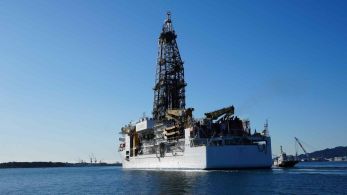
Photo Source: Ryoko Shimonoya/Nikkei
Japan plans to reform its K Program to provide longer-term funding for technologies important to economic security. A major focus will be deep-sea rare-earth mining near Minamitorishima, aiming to reduce Japan’s dependence on China. The government may invest hundreds of billions of yen in the project, including a specialized extraction ship and supporting infrastructure. Although commercialization could take many years and may not initially be profitable, Japan sees the project as strategically important for national security and securing rare-earth supplies.
Nikkei Asia:https://asia.nikkei.com/politics/japan-seeks-to-fund-rare-earth-mining-under-long-term-tech-support
▶ Japan Seeks to Maximize Nuclear Power, Renewable Energy; Also Working to Bypass Hormuz for Oil Supplies
26 Aug, 2026

Photo Source: Yomiuri
Japan plans to strengthen the resilience of its energy supply in response to instability in the Middle East. The package will focus on diversifying fossil-fuel procurement, reducing reliance on the Strait of Hormuz, and accelerating the use of nuclear power and domestically produced renewable energy. The government also plans to invest in next-generation reactors, perovskite solar cells, geothermal power, hydrogen and ammonia.
Yomiuri:https://japannews.yomiuri.co.jp/society/general-news/20260826-345592/
▶ Japan looks to salvage rare earths using nuclear reprocessing tech
26 Aug, 2026
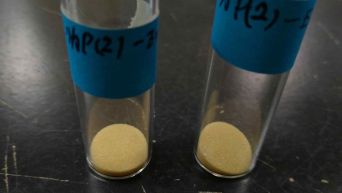
Photo Source: Japan Atomic Energy Agency
Japan’s JAEA and other researchers have developed a new technology to recover rare-earth elements from water and oil, including industrial wastewater. The technology uses a reusable absorbent that selectively captures rare earths such as europium. It was originally based on nuclear fuel reprocessing technology and could potentially be used by chemical and semiconductor companies to recover valuable materials from waste. The technology is still at an early stage, and commercialization may take around 10 years. If successful, it could help Japan recycle rare earths and reduce its dependence on China for these critical materials.
▶ Japan wholesale power prices set to surge 40% on LNG costs, IEA forecasts
26 Aug, 2026
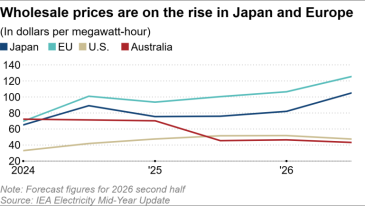
Japan’s wholesale electricity prices are expected to rise nearly 40% in the second half of 2026, reaching about $105/MWh, according to the IEA. The main reason is higher LNG prices linked to turmoil in the Middle East. Japan is particularly vulnerable because LNG accounts for 32% of its power generation and is largely imported. The price increase is higher than the roughly 25% rise expected in the EU. Higher wholesale prices could increase costs for businesses and households and put pressure on power retailers’ profits, although the impact on consumers will depend on their electricity contracts and Japan’s fuel-cost adjustment system.
▶ Japan seeks more H3 rocket launches to chase SpaceX
27 Aug, 2026
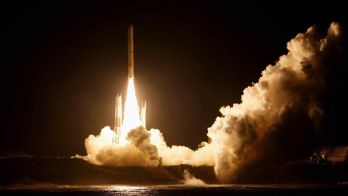
Photo Source: Kyodo
Japan’s science ministry plans to increase its budget for expanding the H3 rocket’s launch capacity nearly eightfold to ¥23.5 billion, aiming to increase launches to six to eight per year. The move is intended to address the H3’s low launch frequency and strengthen Japan’s position in the satellite launch market, which is currently dominated by SpaceX. Japan also aims to increase the share of domestic satellites launched on domestic rockets to 60–80% between 2030 and 2040.
▶ Japan pushes banks to broaden cybersecurity oversight as AI risks grow
27 Aug, 2026

Photo Source: Reuters
Japan’s Financial Services Agency plans to urge financial institutions to strengthen cybersecurity risk management across a broader range of third-party partners, including fintech and telecommunications companies. The move reflects growing concerns that increasing reliance on external providers and more capable AI could expose the wider financial system to cyber risks. The FSA is also drawing on practices in the U.S., EU and U.K., where institutions assess critical third-party dependencies and require stronger security and contingency measures.
-------------------------------------------------------------------------------------------------------------------------------------
2. Business News
▶ Japan to invest additional $940m in homegrown chipmaker Rapidus
21 Aug, 2026

Photo Source: Yuki Nakao/Nikkei
Japan’s trade ministry plans to invest an additional 150 billion yen ($944 million) in Rapidus in fiscal 2027 to strengthen the company’s financial base and encourage major banks to lend up to 2 trillion yen. Rapidus needs about 5 trillion yen to build facilities and begin mass production of next-generation 2-nanometer chips, which it aims to achieve by fiscal 2027. Major Japanese companies, including Toyota, SoftBank, and Sony, have already invested in Rapidus.
▶ Itochu, Taiwan IT firm support Taiwanese chip expansion into southern Japan
24 Aug, 2026
Photo obtained by Nikkei
Itochu’s IT subsidiary CTC and Taiwan’s Systex have launched a joint venture in Fukuoka to support Taiwanese companies expanding into Japan, particularly semiconductor-related businesses in Kyushu. The venture will provide IT systems, cybersecurity, and other digital services, helping Taiwanese companies quickly establish operations in Japan. The partnership aims to strengthen the semiconductor cluster around TSMC and its suppliers and generate 10 billion yen in revenue by 2030.
▶ Japan backs fusion, recycling startups in $125m public-private funding
24 Aug, 2026
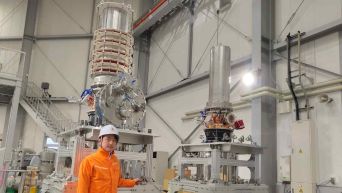
Photo Source: Eisaku Nitta/Nikkei
Japan’s GX Acceleration Agency has invested in two startups, Kyoto Fusioneering and JEPLAN, helping attract a total of 20 billion yen in public and private funding. Kyoto Fusioneering develops equipment for nuclear fusion reactors, while JEPLAN uses chemical recycling to turn waste plastics into raw materials. The investments are part of Japan’s broader GX strategy to promote decarbonization, encourage private investment and accelerate the commercialization of advanced technologies.
▶ One of the World's Largest Superconducting Toroidal Field Coils Successfully Passes Excitation Test
25 Aug, 2026
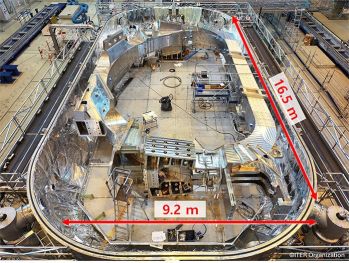
Photo Source: ITER
QST and Toshiba have successfully completed the first excitation test of an ITER (International Thermonuclear Experimental Reactor) toroidal field (TF) coil under superconducting operating conditions at -269°C. The coil was energised to 10,000 amperes, confirming its superconducting performance and integrity under cryogenic conditions. The test validated the manufacturing method for the large-scale niobium-tin (Nb₃Sn) superconducting coil and confirmed key performance parameters were within design expectations. The results will contribute to the integrated commissioning of ITER’s superconducting magnet system, including the establishment of operating procedures and operator training. The achievement represents a major step toward the start of ITER operations and demonstrates Japan’s core technology for large-scale superconducting coils.
Toshiba:https://www.global.toshiba/ww/news/energy/2026/08/news-20260825-01.html
▶ Japan's Terra Drone lands Self-Defense Forces order for interceptors
26 Aug, 2026
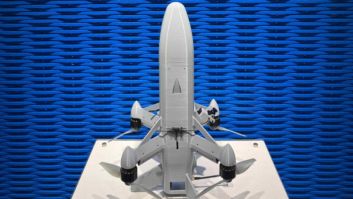
Photo Source: Terra Drone
Japan’s Terra Drone has secured an order from the Japan Self-Defense Forces for AI-powered interceptor drones, with deliveries expected to begin as early as September. The Terra B1 can autonomously detect, track, and destroy hostile drones using AI and onboard cameras. Japan is expanding its drone capabilities in response to lessons from conflicts such as Ukraine and the Middle East, while aiming to strengthen domestic defence technology and reduce reliance on foreign suppliers. Terra Drone hopes this contract will lead to further orders from Japan’s Ground and Air Self-Defense Forces.
▶ JFE Engineering first Japan firm to build frames for offshore wind farms
27 Aug, 2026
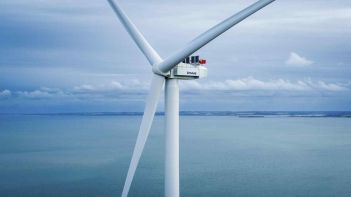
Photo Source: Kyodo
JFE Engineering will become the first Japanese company to supply domestically manufactured monopiles for offshore wind farms. The move supports Japan’s efforts to establish a domestic offshore wind supply chain, with the government aiming to raise the domestic procurement ratio to 65% by 2040. JFE Engineering also plans to manufacture components for floating offshore wind turbines and respond to overseas projects.
▶ Japan eyes research on nuclear fusion tritium fuel at new base
28 Aug, 2026
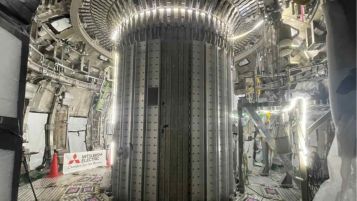
Photo Source: Ryo Matsuura/Nikkei
Japan plans to build a new research facility in Aomori to study tritium, a key fuel for nuclear fusion, with cooperation among industry, government, and academia. The Japanese government plans to request about ¥100 billion ($628 million) for fusion-related R&D, facility construction, and other expenses in fiscal 2027. The facility will focus especially on safe storage and use of radioactive tritium. Japan aims to advance fusion technology toward power-generation testing in the 2030s, making fusion one of the government’s strategic investment sectors.
Nikkei Asia:https://asia.nikkei.com/business/science/japan-eyes-research-on-nuclear-fusion-tritium-fuel-at-new-base
▶ Toyota to roll out near fully autonomous cars from 2028
28 Aug, 2026

Photo Source: Ryo Asayama/Nikkei
Toyota plans to introduce Level 2++ self-driving technology in passenger cars in 2028, requiring very little driver input, and expand it to more models from 2030. For commercial vehicles, Toyota aims to achieve Level 4 fully autonomous driving by 2030, including its e-Palette shuttle. The company is also considering entering the robotaxi market with Waymo. Toyota will combine AI with a “guardrail” safety system that limits unexpected AI behavior. Japan is also promoting autonomous vehicles as part of its national strategy, aiming for a 30% global market share in autonomous vehicle sales in the 2030s.
Nikkei Asia:https://asia.nikkei.com/business/technology/toyota-to-roll-out-near-fully-autonomous-cars-from-2028
▶ Fujitsu, US drone maker General Atomics to team on UAV maintenance in Japan
28 Aug, 2026
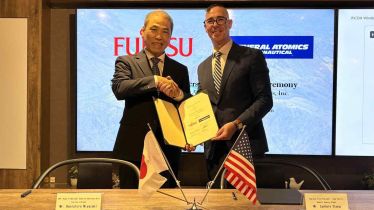
Photo Source: Uta Tokuda/Nikkei
Fujitsu has signed an agreement with U.S. drone maker General Atomics to support the maintenance and parts management of MQ-9B surveillance drones in Japan. The partnership comes as Japan's Maritime Self-Defense Force plans to begin operating the drones in fiscal 2027. Fujitsu will use its experience maintaining MSDF aircraft to develop domestic maintenance systems, including for sensors and radar components. The deal is part of Fujitsu's growing defence business and its broader cooperation with major U.S. defence companies.
Published: August 2026


EU-Japan Centre for Industrial Cooperation
Joint venture established in 1987 by the European Commission (DG GROW) and the Japanese Government (METI) for promoting all forms of industrial, trade and investment cooperation between the EU and Japan.


Copyright © 2026 EU-Japan Centre