このたび、日本企業の欧州での投資・事業展開に役立つ情報を日本語と英語で月1回お届けするニュースレターを創刊し、第1号(2026年9月号)を公開しました。
近年、日EU関係が幅広く発展し、…


JAPANESE ECONOMIC AND BUSINESS WEEKLY NEWSLETTER: 04 July - 10 July,2026

The EU Japan Centre is releasing a weekly press review covering Japan's economic and business matters.
Weekly Japanese Economic and Business News (04 July - 10 July, 2026)
Outline
1. Economic News
▶ Japan aims to ignite 'animal spirits' with $2.3tn plan
3 July, 2026
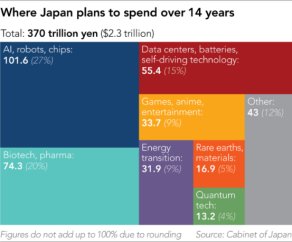
Japan has announced a ¥370 trillion ($2.3 trillion) public-private investment plan over 14 years to boost growth and global competitiveness. The strategy will focus on key industries such as AI, semiconductors, biotech, defense, energy, and shipbuilding, with government investment intended to encourage larger private-sector investment. While the government says the plan will drive innovation and economic growth, economists have expressed concerns about fiscal risks and government involvement in choosing strategic industries.
Nikkei Asia:https://asia.nikkei.com/economy/japan-aims-to-ignite-animal-spirits-with-2.3tn-plan
▶ Japan's Hayabusa2 makes close flyby of asteroid Torifune
5 July, 2026
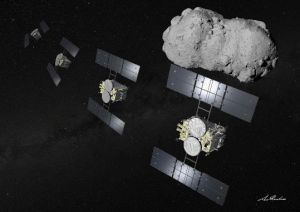
Photo Source: Kyodo
Japan’s Hayabusa2 space probe conducted a close flyby of the asteroid Torifune, passing within about 800 meters to test advanced navigation technologies for planetary defense. JAXA will analyze the data to assess whether such technology can help guide probes to potentially hazardous near-Earth objects and alter their trajectories. Hayabusa2, which previously returned samples from asteroid Ryugu, is continuing its extended mission toward its next target, 1998 KY26, in 2031.
Nikkei Asia:https://asia.nikkei.com/business/science/japan-s-hayabusa2-makes-close-flyby-of-asteroid-torifune
▶ Ukraine pushes civil drone drive with Japan and Taiwan
6 July, 2026
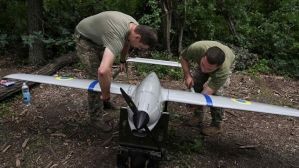
Photo Source: Reuters
Ukraine, Japan, Taiwan, South Korea, and other partners are launching the Japan-Ukraine Drone Cluster (JUDC) to promote cooperation on civilian drone technologies and related industries. The initiative aims to build a China-independent drone supply chain by combining Ukraine’s battlefield-tested drone expertise with Japan’s manufacturing capabilities and regional partners’ technologies. The project focuses on transforming military-developed technologies into peaceful applications, such as disaster response, infrastructure monitoring, and other civilian uses. It also supports Ukraine’s postwar economic recovery while addressing growing concerns over supply chain security and dependence on China.
▶ Japan-EU Foreign Ministers’ Meeting
7 July, 2026
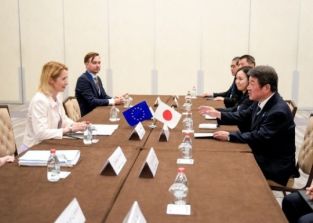
Photo Source: MOFA
Japan’s Foreign Minister Toshimitsu Motegi met with EU High Representative Kaja Kallas on the sidelines of the NATO Summit to reaffirm the Japan-EU strategic partnership. Both sides agreed to deepen cooperation on shared security challenges, emphasizing that the security of the Indo-Pacific and Euro-Atlantic regions is closely linked. The ministers also discussed trade issues, including the EU’s industrial and steel measures, Japan’s updated Free and Open Indo-Pacific (FOIP) strategy, and regional security developments related to Ukraine, the Middle East, North Korea, and freedom of navigation, confirming continued close coordination.
MOFA:https://www.mofa.go.jp/erp/ep/pageite_000001_00012.html
▶ Japan maglev plan paves way to ultra-fast link for $2tn 'megaregion'
8 July, 2026
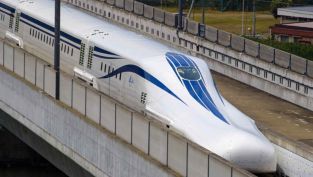
Photo Source: Central Japan Railway
Japan's maglev (Linear Chuo Shinkansen) project moved closer to reality after Shizuoka Prefecture approved construction, paving the way for a high-speed rail link between Tokyo, Nagoya, and Osaka. The line will cut travel times significantly and is expected to create a $2 trillion "super megaregion" by boosting business, innovation, tourism, regional development, and disaster resilience.
Despite its expected economic benefits, the project continues to face construction delays, environmental concerns, and rising costs, with the Tokyo–Nagoya section now estimated at ¥11 trillion.
▶ JOGMEC Signed a Cooperation Agreement for Oil and Gas Geological and Geophysical Survey in the Republic of Indonesia
8 July, 2026
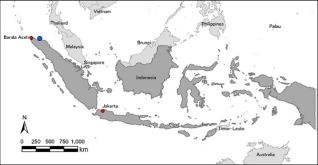
Source:JOGMEC
Japan’s JOGMEC, JAPEX, and Indonesia’s Padjadjaran University (UNPAD) have signed a cooperation agreement to conduct geological and geophysical surveys in onshore and offshore areas of northern Sumatra with potential oil and gas resources. The project aims to identify new hydrocarbon opportunities, encourage Japanese investment in Indonesia’s upstream energy sector, and support Japan’s long-term energy security through the diversification of energy supplies.
JOGMEC:https://www.jogmec.go.jp/english/news/release/release_00450.html
-------------------------------------------------------------------------------------------------------------------------------------
2. Business News
▶ NEC Signs Supply Contract for I-2SEA Submarine Fiber-Optic Cable System
3 July, 2026

Photo Source: NEC
NEC has signed a contract to supply the India-Southeast Asia (I-2SEA) submarine cable system, connecting India, Malaysia, and Singapore. The 3,600 km fiber-optic cable, scheduled to begin operations in 2029, will strengthen regional digital infrastructure and support growing demand from AI, cloud services, and data centers. The project will improve connectivity, diversify communication routes, and enhance network resilience across Asia. NEC’s involvement builds on its decades of experience in submarine cable systems and supports the region’s digital transformation.
NEC:https://www.nec.com/en/press/202607/global_20260703_02.html
▶ 130-year-old Japan firm flies under the radar to develop antidrone tech
7 July, 2026
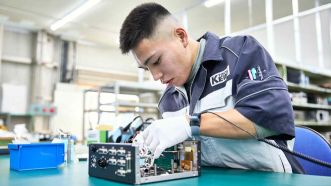
Photo Source: Tokyo keiki
Tokyo Keiki, a 130-year-old Japanese navigation instrument company, is gaining attention for its counterdrone technology development. Leveraging its expertise in radar and navigation systems, the company is developing technologies such as Doppler lidar to detect drones and microwave-based systems to neutralize them. The company is expanding through partnerships and open innovation, including collaboration with startups, as global demand for drone defense solutions grows. Rising defense spending in Japan has boosted its business performance, while increased visibility has also raised concerns over foreign investment and technology security.
▶ $3,500 Nissan: Japan's subsidies make new EVs cheaper than used ones
7 July, 2026
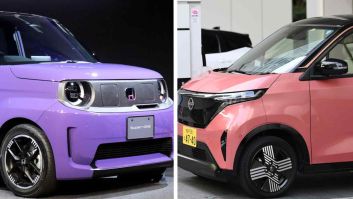
Photo Source: Honda Motor and Nikkei
Japan’s EV subsidies from the national and Tokyo governments have significantly reduced the effective price of new electric vehicles, with some models becoming cheaper than used cars. As a result, Japan’s EV sales nearly tripled year-on-year in the April–June quarter, reaching a record share of new vehicle sales. While subsidies are accelerating EV adoption and boosting sales for manufacturers such as Nissan, Honda, Toyota, and Tesla, concerns remain about market distortion. The incentives may weaken the used EV market, reduce resale values, and create uncertainty about demand if subsidies are later withdrawn.
▶ BP to exit Japan offshore wind project as sector faces rising costs
7 July, 2026
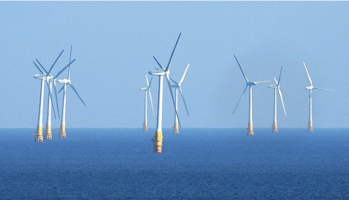
Photo Source: Asahi
BP is reportedly planning to withdraw from a 450MW offshore wind project off Yamagata Prefecture, Japan, due to concerns over profitability. The project, led by Marubeni, is expected to continue with other partners despite BP’s exit. The move highlights growing challenges in Japan’s offshore wind sector, including rising construction costs and worsening project economics, which have also led other companies to reconsider offshore wind investments.
Asahi:https://www.asahi.com/ajw/articles/16706176
▶ With SpaceX Starship, Japan’s ispace provides ride-share to the moon
8 July,2026
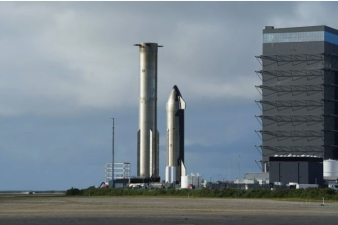
Photo Source: Reuters
Japanese lunar exploration company ispace is launching a lower-cost moon cargo service using SpaceX’s Starship rocket and lunar lander. The company plans to provide a “lunar access integrator” service, allowing multiple customers to share transportation capacity to the Moon. By combining Starship’s large payload capability with ispace’s lunar surface technology, the partnership aims to accelerate the development of a commercial lunar infrastructure market. ispace plans multiple lunar landing missions by 2030, supporting future scientific, commercial, and exploration activities on the Moon.
Asahi:https://www.asahi.com/ajw/articles/16710283
▶ Japan's Shimizu bets on humanoid robots to tackle construction labor crunch
8July, 2026

Kohei Okuyama/Nikkei
Shimizu plans to introduce AI-powered humanoid robots at construction sites by around fiscal 2030 to help address Japan's severe labor shortages. The robots are expected to perform tasks such as painting, plastering, and site inspections by combining humanoid mobility with AI and robotic arm technologies. The initiative aims to improve productivity, preserve skilled craftsmanship, and reduce dangerous work as Japan's construction workforce continues to shrink and age.
▶ Bridgestone's airless tires hit streets of Japan after nearly 2 decades
8 July, 2026
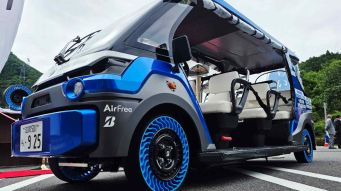
Photo Source: Seiya Ota/Nikkei
Bridgestone has commercially launched its AirFree puncture-resistant airless tires after 18 years of development. The tires will first be used in a self-driving mobility service for elderly residents in a mountainous area of Higashiomi, Japan, marking their first regular deployment.
Using thermoplastic-resin spokes instead of air, AirFree tires improve maintenance efficiency, reduce the need for tire pressure checks, and provide a quieter, smoother ride. While wider adoption in passenger vehicles faces challenges such as cost and performance limits, Bridgestone is exploring future applications, including smart mobility services and lunar rover technology.
▶ Rapidus to match TSMC on 2-nanometer chip pricing, Japan firm’s president says
9 July, 2026

Photo Source: Reuters
Japan’s Rapidus plans to price its advanced 2-nanometer semiconductors at a level comparable to or slightly below those produced by TSMC, aiming to compete on both cost and production speed. The company expects TSMC’s 2nm chips to be priced around ¥3–3.5 million per wafer and will use this as a benchmark. Rapidus is focused on achieving mass production of 2nm chips and eventually advancing toward 1.4nm and 1nm technologies, including future semiconductor applications involving optical and quantum technologies.
Japan times:https://www.japantimes.co.jp/business/2026/07/09/companies/rapidus-chip-price/
▶ Japan’s Terra Drone to mass-produce defense drones domestically
9 July, 2026

Photo Source: JIJI
Japan’s Terra Drone plans to establish a domestic production system capable of manufacturing tens of thousands of interceptor drones annually. The company aims to strengthen Japan’s defense drone industry by developing local supply chains for drones and components, reducing reliance on overseas imports. After acquiring two Ukrainian drone companies, Terra Drone is expanding into the defense sector, highlighting the growing importance of drones in modern conflicts. The initiative focuses on supply security, domestic manufacturing capability, and preparedness for future security risks.
Japan times:https://www.japantimes.co.jp/business/2026/07/09/terra-drone-domestic-production/
▶ ITOCHU Announces Signing of Comprehensive Business Alliance with Daikin Industries, Ltd. Regarding Business for the Horizontal Recycling of Commercial Air Conditioners
9 July, 2026
ITOCHU and Daikin have formed a comprehensive business alliance to establish a closed-loop recycling system for commercial air conditioners in Japan. The partnership will integrate the entire recycling process—from collection and dismantling to material recovery, quality assurance, and reuse in new products—to enable high-quality horizontal recycling. The initiative aims to recover and reuse metals, plastics, electronic components, and refrigerants, creating a more sustainable and traceable supply chain. Initially focused on Japan, the project supports the transition to a circular economy, reduces environmental impact, and advances decarbonization through resource-efficient manufacturing.
ITOCHU: https://www.itochu.co.jp/en/news/press/2026/260709.html
▶ Mitsubishi Motors to make humanoid robots for its own auto factories
10 July, 2026

Photo Source: Yuki Nakao/Nikkei
Mitsubishi Motors has partnered with Tokyo startup Highlanders to explore mass production of AI-powered humanoid robots. Production could begin as early as 2027 at its Kyoto plant with a capacity of 1,000 robots per month. The robots will first be used in Mitsubishi factories for tasks such as transporting parts and assembling engines, with possible sales to other companies if successful. The company aims to compete with global rivals like Tesla and Hyundai as the humanoid robot market is expected to grow rapidly over the next decade.
Published: July 2026


EU-Japan Centre for Industrial Cooperation
Joint venture established in 1987 by the European Commission (DG GROW) and the Japanese Government (METI) for promoting all forms of industrial, trade and investment cooperation between the EU and Japan.


Copyright © 2026 EU-Japan Centre