
JAPANESE ECONOMIC AND BUSINESS WEEKLY NEWSLETTER: 14 - 20 November ,2026

The EU Japan Centre is releasing a weekly press review covering Japan's economic and business matters.
Weekly Japanese Economic and Business News (14-20 November, 2026)
Outline
1. Economic News
▶Japanese gov't to aid firms ready to switch to defense production
15 Nov, 2026
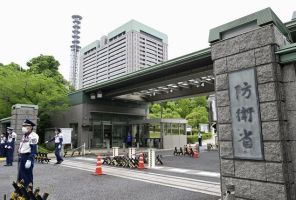
Photo Source: Kyodo
Japan plans to introduce loans and subsidies to encourage private companies to convert civilian factories to defence production during emergencies. The initiative aims to strengthen the domestic defence industrial base, secure supplies of essential equipment, and promote industry restructuring through a Government-Owned, Contractor-Operated (GOCO) model. The strategy will also prioritize emerging technologies, including AI, drones, space and cyber capabilities, in response to evolving security threats.
Kyodo: https://english.kyodonews.net/articles/-/91490
▶ AZEC Statement to Call for Oil Procurement Framework in Crisis, Create Joint Initiative for Research
16 Nov, 2026
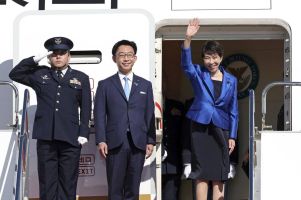
Photo Source: Yomiuri
Japan plans to propose an “Asia Oil Security Task Force” to coordinate oil procurement and reserves during emergencies, following concerns over supply disruptions caused by the closure of the Strait of Hormuz. At the AZEC summit in Manila, Prime Minister Sanae Takaichi will also promote cooperation in advanced technologies such as AI, digital and quantum technology through a new initiative called “Bridge Asia.” She will also attend the ASEAN and Quad summits before traveling to China for the APEC summit, where a possible meeting with President Xi Jinping remains uncertain.
Yomiuri:https://japannews.yomiuri.co.jp/politics/politics-government/20261116-359255/
▶ US and allies sign accord to protect AI supply chains from China
16 Nov, 2026
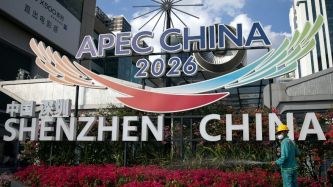
Photo Source: Andres Martinez Casares/EPA/Shutterstock
Japan, the U.S., Australia, Israel, the U.K., South Korea, India, Qatar and the UAE have signed the San Francisco Declaration to strengthen the security of AI-related supply chains and critical technologies. Germany, Sweden, the Netherlands and the European Commission are expected to sign next week. The initiative aims to protect sensitive technologies and critical infrastructure and reduce supply chain risks amid growing concerns over China.
FT:https://www.ft.com/content/3c2197fc-9618-4838-91e6-522ce1a96a22?syn-25a6b1a6=1
JIJI:https://jen.jiji.com/japan/politics/2026111600693/
▶ EU sets tariffs on steel from India, Japan, Taiwan, Turkey, Vietnam
17 Nov, 2026
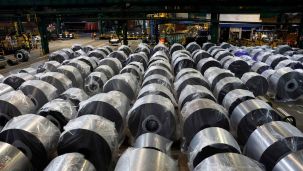
Photo Source: Reuters
The EU has imposed anti-dumping duties of up to 27.9% on cold-rolled flat steel imports from India, Japan, Taiwan, Turkey and Vietnam, citing unfairly low prices and the need to protect European producers. Japanese steelmakers, including Nippon Steel and JFE Steel, face the highest rate of 27.9%. The investigation also introduced a new methodology to address market distortions in India and Taiwan, potentially affecting future EU trade defence measures.
Nikkei Asia: https://asia.nikkei.com/economy/trade/eu-sets-tariffs-on-steel-from-india-japan-taiwan-turkey-vietnam
▶ Japan and ADB ink agreement to support nuclear power in Asia
17 Nov, 2026
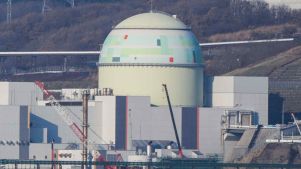
Photo Source: Akitoshi Sugiura/Nikkei
Japan's Ministry of Economy, Trade and Industry and the Asian Development Bank (ADB) have signed a memorandum to support Asian countries considering nuclear power through financing assistance and regulatory framework development. The initiative aims to strengthen regional energy security while helping Japanese nuclear industry suppliers expand into Asian markets. Following the ADB's 2025 policy shift allowing nuclear project financing, the partnership will initially focus on preparatory support, workforce training and capacity building.
Nikkei Asia:https://asia.nikkei.com/business/energy/japan-and-adb-ink-agreement-to-support-nuclear-power-in-asia
▶ Trump meets Quad leaders, says 4 nations agree on 'critical mineral deals'
17 Nov, 2026

Photo Source: Reuters
The leaders of the Quad (the U.S., Japan, India and Australia) met in Manila for the first time in over two years, announcing new cooperation on critical minerals, supply chain security, AI and maritime security. The initiatives aim to reduce dependence on individual foreign suppliers, strengthen economic resilience and enhance regional security. The four countries also agreed to deepen cybersecurity cooperation and expand defence coordination, including joint maritime patrol exercises planned for 2027.
MOFA: https://www.mofa.go.jp/fp/nsp/page1e_000691_00003.html
▶ Japan to call for ‘whole of society readiness’ for security crises
17 Nov, 2026
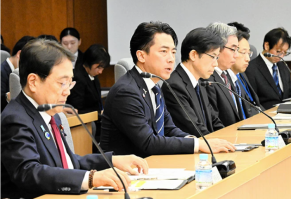
Photo Source: Asahi
Japan plans to adopt a “whole-of-society readiness” approach in its revised national security strategy documents, encouraging cooperation between the government, businesses and the public to prepare for prolonged security crises. Measures will include compensation for companies supporting defence-related activities, establishing a new agency to strengthen the defence industrial base, and expanding dual-use research and development. The initiative aims to enhance Japan’s comprehensive national power and societal resilience amid growing regional and global security challenges.
Asahi: https://www.asahi.com/ajw/articles/17056512
▶ Japan eyes state-backed plants to lift drone, ammunition output in crises
18 Nov, 2026
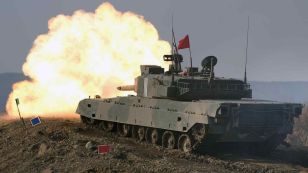
Photo Source: Akitoshi Sugiura/Nikkei
Japan plans to strengthen its defence industry by establishing a government-backed entity in fiscal 2027 to expand production capacity for drones and ammunition. Measures include state-owned, privately operated facilities, government investment and support for defence exports. The initiative aims to ensure reliable supplies during emergencies, reduce business risks for manufacturers and enhance Japan’s defence industrial base. However, challenges remain in securing export markets and attracting private operators.
Nikkei Asia: https://asia.nikkei.com/politics/defense/japan-eyes-state-backed-plants-to-lift-drone-ammunition-output-in-crises
▶ Japan ethylene output depressed despite normal naphtha supplies
20 Nov, 2026
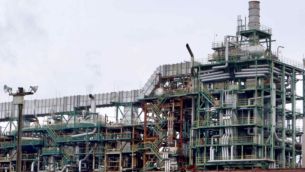
Photo Source: Mana Kubota/Nikkei
Japan’s ethylene production remains weak despite the normalization of naphtha supplies, with plant utilization falling to 71.5% in October. Weak domestic demand and rising Chinese production capacity have intensified competition from imports, forcing Japanese producers to reduce capacity and consider further industry restructuring and consolidation.
Nikkei Asia:https://asia.nikkei.com/business/materials/japan-ethylene-output-depressed-despite-normal-naphtha-supplies2
-------------------------------------------------------------------------------------------------------------------------------------
2. Business News
▶ Subaru retools boxer engine for fuel economy, with eye on hybrids
15 Nov, 2026
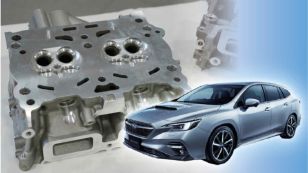
Photo Source: Nikkei and Subaru
Subaru is developing a more fuel-efficient next-generation boxer engine to support both gasoline and hybrid vehicles, particularly in the U.S. market. The redesigned engine uses improved airflow and turbocharger technology to potentially raise thermal efficiency from around 40% to 45%, while retaining the stability and performance associated with Subaru's signature engine. The strategy aims to strengthen Subaru's competitiveness amid rising U.S. demand for hybrids, slowing EV demand and growing competition from Chinese automakers.
▶ Toyota group companies team up to move upstream in auto software
16 Nov, 2026

Photo Source: Kyodo
Toyota Tsusho and Denso are establishing a joint venture, Toyota Tsusho Definex, with approximately 500 engineers to expand their automotive software business. The venture aims to move beyond contract development into vehicle function planning and system design, strengthening Japan's competitiveness in software-defined vehicles (SDVs) against Chinese and U.S. rivals. It will also expand its proprietary development platform and leverage expertise in Chinese automotive semiconductors to serve a broader range of automakers, including those outside the Toyota Group.
▶ Google to give Japan early access to frontier AI for cybersecurity
17 Nov, 2026

Photo Source: Nikkei and Google
Google will provide Japan's government and major infrastructure operators with early access to its cybersecurity-focused AI model, Gemini 4 Carbon, to strengthen defences against rising cyberattacks. The initiative will cover government agencies, including the National Cybersecurity Office and Digital Agency, as well as financial and telecommunications companies. Google will also launch "Scan for Japan," a service that automatically detects system vulnerabilities at 20–50 critical government institutions.
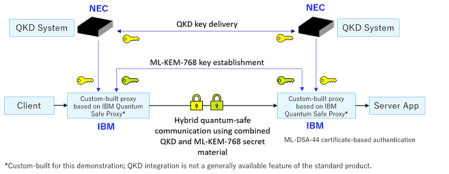
▶ NEC and IBM Japan Successfully Demonstrate Japan's First PQC and QKD Integrated Method for Quantum-Safe Communication Technology
17 Nov, 2026
Source: NEC
NEC and IBM Japan have successfully demonstrated Japan’s first hybrid quantum-safe communication technology integrating Quantum Key Distribution (QKD) and Post-Quantum Cryptography (PQC). Using internationally standardized APIs, the system enables quantum-resistant communication with minimal modifications to existing infrastructure. The companies aim to support its practical deployment in critical sectors, including finance and data centers, to address future cybersecurity risks posed by advances in quantum computing.
NEC: https://www.nec.com/en/press/202611/global_20261117_01.html
▶ Toyota targets 2027 race debut for hydrogen-engine linear drive
17 Nov 2026

Photo Source:Toyota Motor
Toyota has unveiled a prototype linear-drive system developed with Kyoto University to improve the efficiency of liquid hydrogen-powered engines. Using magnetic levitation and a simplified piston mechanism, the technology reduces friction, heat generation and liquid hydrogen vaporization. Toyota aims to introduce the system in the Super Taikyu 24-hour race in June 2027. The development is part of Toyota's broader efforts to advance hydrogen mobility and improve the competitiveness of hydrogen-powered vehicles as motorsports increasingly move towards decarbonization.
Nikkei Asia:https://asia.nikkei.com/business/automobiles/toyota-targets-2027-race-debut-for-hydrogen-engine-linear-drive
▶ Breach of Japan's Fugaku supercomputer exposes security spending gap
18 Nov, 2026

Photo Source: Riken
Japan’s Fugaku supercomputer suffered a security breach, potentially exposing personal information and sensitive research data of up to 4,597 people. The incident highlights insufficient cybersecurity spending at research institutions amid limited government funding. Experts stress the need to balance accessibility for researchers with stronger security measures to protect Japan’s scientific and industrial competitiveness.
▶ Samsung chip testing supplier Micronics Japan poised to ramp up capacity
18 Nov, 2026
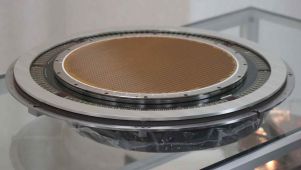
Photo Source: Shunhei Ochiai/Nikkei
Micronics Japan, a leading global manufacturer of semiconductor probe cards, plans to expand production capacity to meet rising demand from major memory chipmakers, including Samsung, SK Hynix and Micron. Following a ¥24.1 billion investment in existing facilities, the company is seeking land for a new manufacturing plant by around 2030. Driven by growing AI-related semiconductor demand, Micronics aims to strengthen its market position, while also developing technologies to expand into the non-memory chip segment.
▶ Japan's ammonia-powered carrier unveiled as shipping goes low carbon
18 Nov, 2026

Photo Source: Yasuaki Takao/Nikkei
Japan's NYK Line and its partners have unveiled Izanami, the world's first ammonia-powered vessel using ammonia for both propulsion and electricity generation. Built by a consortium of Japanese shipbuilders and manufacturers, the 180-metre carrier is expected to reduce greenhouse gas emissions by more than 90% compared with conventional heavy-oil-powered ships. However, high green ammonia costs remain a challenge. NYK Line and Kawasaki Kisen aim to accelerate adoption through further vessel orders, fuel supply partnerships and efforts to establish international standards.
▶ Japan spacecraft supported by NEC, others set to reach Mercury
20 Nov, 2026
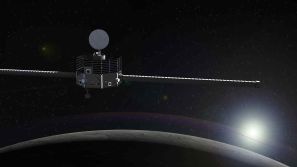
Photo Source: JAXA
Japan’s JAXA, in partnership with ESA, is preparing to place its Mio spacecraft into Mercury’s orbit as part of the BepiColombo mission. Japanese companies, led by NEC, have played a key role in developing the spacecraft and its advanced technologies, highlighting Japan’s technological capabilities and Japan-Europe cooperation in space exploration.
Nikkei Asia:https://asia.nikkei.com/business/science/japan-spacecraft-supported-by-nec-others-set-to-reach-mercury
Published: November 2026


EU-Japan Centre for Industrial Cooperation
Joint venture established in 1987 by the European Commission (DG GROW) and the Japanese Government (METI) for promoting all forms of industrial, trade and investment cooperation between the EU and Japan.

Copyright © 2026 EU-Japan Centre