このたび、日本企業の欧州での投資・事業展開に役立つ情報を日本語と英語で月1回お届けするニュースレターを創刊し、第1号(2026年9月号)を公開しました。
近年、日EU関係が幅広く発展し、…


JAPANESE ECONOMIC AND BUSINESS WEEKLY NEWSLETTER: 15 - 21 November, 2025

The EU Japan Centre is releasing a weekly press review covering Japan's economic and business matters.
Weekly Japanese Economic and Business News (15 – 21 November, 2025)
Outline
1. Economic News
▶ Defense budget surplus exceeds 100 billion yen for fiscal 2024
17 Nov, 2025
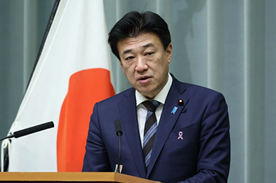 Photo Source: Asahi
About 110 billion yen of Japan’s fiscal 2024 defense budget went unused, similar to the previous year’s large surplus. The government said the underspending resulted from lower-than-expected equipment procurement costs and fewer Self-Defense Forces recruits. While Prime Minister Sanae Takaichi aims to accelerate defense budget increases, opposition parties question the efficiency of current spending and warn that such large surpluses should not continue.
Asahi: https://www.asahi.com/ajw/articles/16168060
▶ Japan to clarify that targets of overseas M&A can talk with peers
19 Nov, 2025
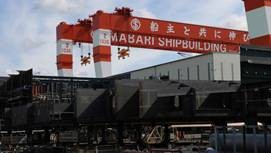 Photo Source: Imabari Shipbuilding
Japan will outline cases where domestic companies can legally cooperate under antitrust rules, especially to protect economic security. The government will allow information sharing when facing overseas acquisition proposals, preventing technology leaks, and during raw-material supply disruptions. It will also clarify that mergers can be approved even with high domestic market shares if strong foreign competitors exist. The goal is to reduce companies’ fear of violating the Antimonopoly Act and enable necessary cooperation.
Nikkei Asia: https://asia.nikkei.com/politics/japan-to-clarify-that-targets-of-overseas-m-a-can-talk-with-peers
▶ Japan gov't to start trial of self-driving shuttle service around parliament
19 Nov, 2025
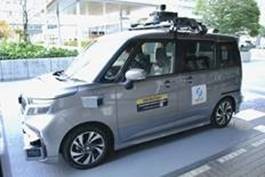 Photo Source: Kyodo
Japan will run a one-month trial using Level 2 self-driving vehicles as shuttle cars for government officials around the Diet. The test, led by the Ministry of Economy, Trade and Industry, will assess the technology’s reliability as Japan aims toward future Level 4 driverless services amid labor shortages in the transport sector. Three autonomous vehicles, operated by Tier IV, will join the existing shuttle route in the busy Kasumigaseki area, running about three times per hour.
Kyodo: https://english.kyodonews.net/articles/-/65172
▶ Japanese governor set to approve restart of world’s biggest nuclear plant
20 Nov, 2025
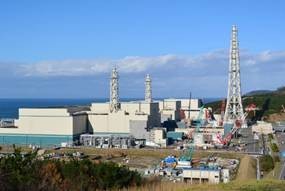 Photo Source: JIJI
Niigata Gov. Hideyo Hanazumi is expected to approve the restart of the Kashiwazaki-Kariwa nuclear power plant—home to the world’s largest nuclear facility—clearing the final hurdle for Tepco more than a decade after Fukushima. The approval would allow the No. 6 reactor, and later No. 7, to resume operations. Despite mixed public sentiment, with several nearby municipalities showing majority opposition, local leaders largely deferred to the governor. Restarting the two reactors would provide 2,710 MW of capacity, support Prime Minister Sanae Takaichi’s pro-nuclear energy policy, reduce Japan’s LNG import needs, and significantly improve Tepco’s finances. The move aligns with Japan’s broader effort to strengthen energy security and reduce costs as the country gradually brings more reactors back online.
Japan times: https://www.japantimes.co.jp/news/2025/11/20/japan/niigata-governor-to-approve-nuclear-plant-restart/
▶ Japan eyes quintupling foreign residency renewal fees to $190 range
21 Nov, 2025
 Photo Source: Rie Ishii/Nikkei
Japan plans to raise residency renewal fees for foreign nationals to around 30,000 yen in fiscal 2026—five to six times the current 6,000 yen—in order to cover rising administrative, personnel, and system-related costs. Additional fees based on the length of renewal are also being considered. The government argues current fees are low compared to other developed countries and that higher charges will help manage the growing foreign resident population and costs related to immigration oversight, digitalization, and illegal residency prevention. Annual revenue from these fees could increase by tens of billions of yen. Japan is also considering raising visa application fees for tourists and other short-term visitors to reflect rising costs and help curb overtourism.
▶ Japan's Takaichi cabinet launches $135bn economic package
21 Nov, 2025
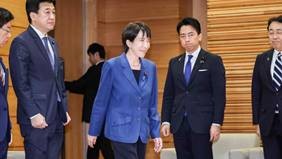 Photo Source: Ken Suzuki/Nikkei
Japan’s government approved a 21.3 trillion-yen ($135 billion) economic package, the first major stimulus under Prime Minister Sanae Takaichi, aimed at easing inflation, boosting growth, and strengthening defense and diplomacy. Of this, 11.7 trillion yen targets household relief—including subsidies for energy bills, rice vouchers, and 20,000 yen per child—while 7.2 trillion yen funds strategic growth investments in sectors like semiconductors, AI, shipbuilding, and space development. A 17.7 trillion-yen supplementary budget will support the plan, with total project scale including local and private funds reaching 42.8 trillion yen. The package is expected to raise real GDP by about 24 trillion yen (1.4% annualized growth). Fiscal sustainability remains a concern, requiring cooperation from other parties to pass the budget, while government bond issuance is projected below last year’s level.
Nikkei Asia: https://asia.nikkei.com/economy/japan-s-takaichi-cabinet-launches-135bn-economic-package
▶ Japan ruling party to discuss spending over 2% of GDP on defense
21 Nov, 2025
Japan’s ruling Liberal Democratic Party has begun discussions to revise its three key national security documents by 2026, aiming to consider increasing defense spending beyond the current 2% of GDP target. With former coalition partner Komeito gone, the LDP and its new partner, the Japan Innovation Party, are expected to debate issues previously considered off-limits, including the three non-nuclear principles. Motivated by rising threats from China and North Korea and concerns about reduced U.S. engagement, lawmakers are examining higher long-term defense spending, new technologies such as AI-guided uncrewed aircraft, and expanded counterattack capabilities including advanced submarines. They also plan to strengthen Japan’s defense industry by easing restrictions on defense equipment exports and considering state-run factories. The revisions will seek to adapt to modern warfare lessons from Ukraine while ensuring sustainable funding.
Nikkei Asia: https://asia.nikkei.com/politics/defense/japan-ruling-party-to-discuss-spending-over-2-of-gdp-on-defense
---------------------------------------------------------------------------------------------------------------------------------------------------------------------------
2. Business News
▶ Sharp to make efficient perovskite-silicon solar cells at low cost
15 Nov, 2025
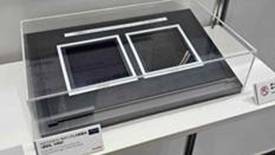 Photo Source: Sharp
Sharp will enter mass production of perovskite–silicon tandem solar cells in fiscal 2027, using its OLED-style vacuum deposition process to cut production costs by about 10% versus conventional coating methods. Perovskite cells are thin and flexible, and when paired with silicon, can reach over 30% efficiency, about 50% higher than standard silicon panels.
Japan sees domestically made perovskite cells as strategically important, and Sharp aims to regain global share as demand grows for high-efficiency panels amid limited installation sites. Government subsidies and rival efforts from Japanese and Chinese manufacturers are accelerating the race toward mass production.
Nikkei Asia: https://asia.nikkei.com/business/energy/sharp-to-make-efficient-perovskite-silicon-solar-cells-at-low-cost
▶ Japan's Turing partners with Denso on self-driving cars after raising $63m
17 Nov, 2025
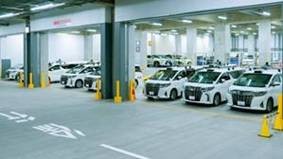 Photo Source: Turing
AI startup Turing raised 9.77 billion yen and partnered with Denso to accelerate development of fully autonomous driving, targeting commercial rollout by 2030. Its valuation is now about 60 billion yen, and it also secured a 5.5 billion yen loan to expand nationwide testing.
Turing uses an end-to-end generative AI approach for self-driving and has achieved Level 2 autonomy in Tokyo. With rising competition from Tesla and Chinese firms, Turing is working with Japanese automakers and joining national efforts to build domestic AI, though meeting safety and certification standards remains a major challenge.
▶ Sakana AI takes crown as Japan's most valuable unicorn
17 Nov, 2025
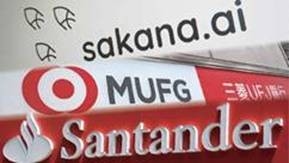 Photo Source: Nikkei
Sakana AI has raised 20 billion yen, doubling its valuation to about 400 billion yen, the highest ever for an unlisted Japanese startup. Backed by investors such as MUFG and international VCs, the company will use the funds to advance its Japanese-focused LLMs and expand into sectors like defense and manufacturing. Founded in 2023 by ex-Google researcher David Ha, Sakana AI develops efficient models by integrating multiple LLMs and recently achieved rapid self-improvement capabilities. The rise in its valuation reflects global momentum in AI investment and growing interest in sovereign, specialized AI solutions.
sakana ai: https://sakana.ai/series-b/
▶ Google AI to help Kyoto University efficiently produce stem cells
18 Nov, 2025
 Photo Source: Nikkei
Kyoto University will partner with Google DeepMind to use its AI tools to develop more efficient and safer methods for producing induced pluripotent stem (iPS) cells, aiming to speed up their medical use. Researchers will use Google’s AI co-scientist system to form hypotheses and analyze experiments — the first such collaboration announced by a Japanese institution.
AI is expected to help discover new manufacturing methods that improve iPS cell quality and production efficiency, which is vital for treatments for diseases such as diabetes. The collaboration comes amid rapid growth of AI in scientific research, though concerns remain about data security and the potential loss of Japan’s competitive edge. Kyoto University says its experimental data will not be shared with third parties. Meanwhile, Japan is also trying to develop domestic AI tools, but faces challenges due to smaller investment and limited computing resources compared to the U.S. and China.
Nikkei Asia: https://asia.nikkei.com/business/science/google-ai-to-help-kyoto-university-efficiently-produce-stem-cells
▶ Toyota announces $912m investments in US hybrid vehicle production
18 Nov,2025
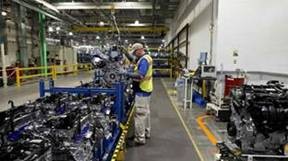 Photo Source: Toyota Motor
Toyota will invest $912 million in five U.S. factories to boost production of next-generation hybrid-vehicle engines, as part of a broader $10 billion U.S. investment plan over five years. The new funding will create 252 jobs and includes major expansions at plants in West Virginia ($453M) and Kentucky ($204.4M), with production starting in 2027. Toyota also aims to begin producing hybrid Corolla sedans in Mississippi by 2028. The investments support greater local production of hybrid components and reduce reliance on imports, though Toyota says the move was not driven by U.S. tariff policies.
Nikkei Asia: https://asia.nikkei.com/business/automobiles/toyota-announces-912m-investments-in-us-hybrid-vehicle-production
TOYOTA: https://global.toyota/en/newsroom/corporate/43577463.html
▶ JOGMEC and Aramco renew crude oil storage, throughput, and tank lease agreement in Okinawa
19 Nov, 2025
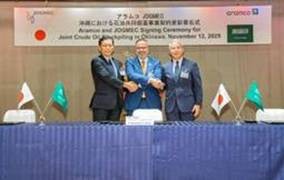 Photo Source: JOGMEC
JOGMEC and Aramco have renewed their crude oil storage, throughput, and tank lease agreement in Okinawa for another three years. Under the deal, Aramco will continue leasing 13 national oil tanks, allowing storage of about 1.3 million kiloliters (8.2 million barrels) of crude. Japan receives priority access to this oil in emergencies, while Aramco uses Okinawa as a strategic Asian supply hub. The partnership, ongoing since 2010, supports Japan’s energy security and helps ensure a stable regional oil supply.
JOGMEC: https://www.jogmec.go.jp/english/news/release/news_10_00084.html
▶ Toyota's experimental town a test field for technologies in everyday life
19 Nov, 2025
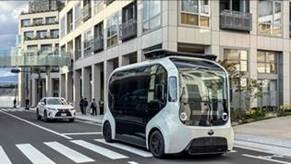 Photo Source: Yuichi Shiga/Nikkei
Toyota has opened Woven City, an experimental smart town at the base of Mount Fuji where people live and companies test future mobility technologies. The city integrates autonomous vehicles, logistics robots, smart infrastructure, and digital systems in a real-life environment. One example is Guide Mobi, a small autonomous pace car that guides non-autonomous vehicles around the town. Woven City also hosts partners like Daikin, DyDo, Nissin, and UCC, which test technologies and services using real resident feedback. With plans to expand significantly, Toyota aims to quickly turn experiments in mobility, logistics, and lifestyle services into practical, real-world solutions as global competition intensifies.
▶ Nippon Light Metal to import recycled aluminum from India
20 Nov, 2025
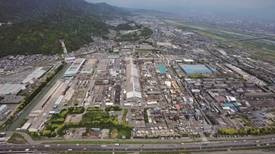 Photo Source: Nippon light Metal
Nippon Light Metal Holdings will build a new aluminum supply chain using 100% recycled scrap supplied by its Indian partner, CMR NLM Eco, with mass production planned for fiscal 2026. Recycling aluminum emits far less CO₂ than producing it from ore, and the company has already raised its scrap usage to 36%. As global demand for high-quality scrap increases, securing stable, low-cost supply is challenging. By importing purified, high-grade recycled ingots and billets from India, Nippon Light Metal aims to provide Japan with a reliable source of recycled aluminum suitable for uses such as auto parts, helping advance decarbonization efforts.
Nikkei Asia: https://asia.nikkei.com/business/materials/nippon-light-metal-to-import-recycled-aluminum-from-india
▶ Maxell to develop solid-state batteries for transport robots by 2030
21 Nov, 2025
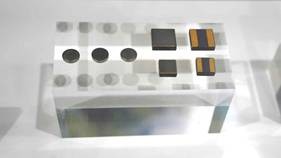 Photo Source: Yoshika Kaku/Nikkei
Maxell plans to commercialize large all-solid-state batteries for industrial equipment—especially automated guided vehicles (AGVs)—starting around fiscal 2030. The new cylindrical, palm-sized batteries will have over 100 times the capacity of Maxell’s current small solid-state cells and far higher energy density. Designed to be safe and heat-resistant, they can operate in harsh environments and last many years, offering major advantages over lead-acid and lithium-ion batteries. Maxell will invest about 10 billion yen in development and aims for 30 billion yen in sales of these batteries by fiscal 2030, followed by further expansion. The company is shifting its portfolio by exiting some lithium-ion products, acquiring Murata’s nonrechargeable battery business for stable revenue, and accelerating solid-state battery commercialization.
Nikkei Asia: https://asia.nikkei.com/business/technology/maxell-to-develop-solid-state-batteries-for-transport-robots-by-2030
Maxell: https://ssl4.eir-parts.net/doc/6810/ir_material4/262788/00.pdf
Published: November 2025


EU-Japan Centre for Industrial Cooperation
Joint venture established in 1987 by the European Commission (DG GROW) and the Japanese Government (METI) for promoting all forms of industrial, trade and investment cooperation between the EU and Japan.


Copyright © 2026 EU-Japan Centre