このたび、日本企業の欧州での投資・事業展開に役立つ情報を日本語と英語で月1回お届けするニュースレターを創刊し、第1号(2026年9月号)を公開しました。
近年、日EU関係が幅広く発展し、…


JAPANESE ECONOMIC AND BUSINESS WEEKLY NEWSLETTER: 23 May -29 May,2026

The EU Japan Centre is releasing a weekly press review covering Japan's economic and business matters.
Weekly Japanese Economic and Business News (23 May - 29 May, 2026)
Outline
1. Economic News
▶ Japan's extra budget won't add deficit-covering bonds, Takaichi says
26 May, 2026
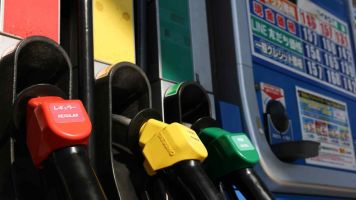
Photo Source:Kazuho Fujiwara/Nikkei
Japan plans a supplementary budget of over 3 trillion yen to support households facing higher energy and fuel costs linked to the Iran war. Prime Minister Sanae Takaichi said the government will avoid increasing net issuance of deficit-financing bonds to maintain fiscal discipline and market confidence. The package includes subsidies for electricity, gas, and gasoline, along with reserve funds for potential economic shocks. However, analysts warn that continued heavy subsidy spending could strain Japan’s finances and reduce future fiscal flexibility.
Nikkei Asia:https://asia.nikkei.com/politics/japan-s-extra-budget-won-t-add-deficit-covering-bonds-takaichi-says
▶ Japan-Australia-India-U.S. (Quad) Foreign Ministers’ Meeting
26 May, 2026
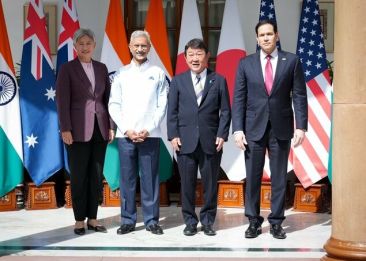
Photo Source: Kyodo
The Quad foreign ministers (Japan, Australia, India, and the U.S.) met in New Delhi and reaffirmed their commitment to a “Free and Open Indo-Pacific,” emphasizing resilience, economic security, and regional stability. They agreed to strengthen cooperation in key areas including maritime security, critical minerals supply chains, energy security, and emerging technologies, while launching new initiatives on Indo-Pacific energy security and critical minerals. The ministers also expressed concerns over China-related regional tensions, North Korea’s missile and nuclear programs, cyber activities, and Middle East instability, while reaffirming support for regional stability and free navigation.
MOFA: https://www.mofa.go.jp/fp/nsp/pageite_000001_00005.html
▶ Japan poised to start Mercosur trade talks, seeking oil, more car exports
27 May, 2026
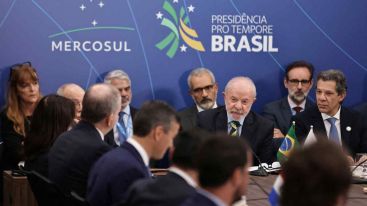
Photo Source: Reuters
Japan plans to begin EPA negotiations with the South American trade bloc Mercosur to strengthen access to oil, rare earths, and lithium, while seeking lower tariffs on Japanese automobiles and industrial goods. The move reflects Japan’s push to diversify supply chains amid geopolitical risks and growing concerns over dependence on the Middle East and China. Japanese businesses, especially automakers, strongly support the talks as the EU-Mercosur trade deal advances. Agricultural concerns, particularly over beef imports, remain sensitive, but Tokyo increasingly views economic security as a priority.
▶ Japan's car exports to war-hit Middle East plummet in April
28 May, 2026
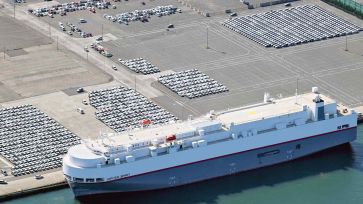
Photo Source:Toshiaki Sasatsu/Nikkei
Japan’s trade with the war-affected Middle East fell sharply in April, with exports down 55.8% and imports down 56.8% year-on-year, mainly due to the closure of the Strait of Hormuz and ongoing conflict.
Key declines included steep drops in automobile exports (up to 90%+ for some vehicle types) and major reductions in imports such as crude oil, naphtha, and aluminum. Steel and chemical-related shipments were also heavily affected. While Japan is shifting to alternative trade routes and sourcing from other regions, experts note that supply chain disruptions have not yet broadly spread across industries due to substitutions and reserves.
Nikkei Asia:https://asia.nikkei.com/economy/trade/japan-s-car-exports-to-war-hit-middle-east-plummet-in-april
▶ Japan and Philippines elevate ties amid China security concerns
28 May, 2026
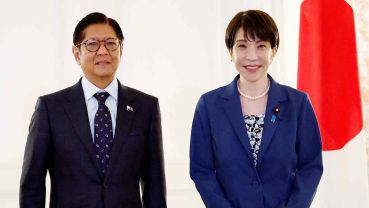
Photo Source: Reuters
Japan and Philippines upgraded ties to a “comprehensive strategic partnership” as concerns over China’s regional assertiveness grow. During talks in Tokyo, Sanae Takaichi and Ferdinand Marcos Jr. agreed to deepen defense and intelligence cooperation, including talks on a military information-sharing pact and possible transfers of Japanese defense equipment. Japan will also support the Philippines’ energy security and oil reserve development.
▶ China tungsten exports to Japan halve amid tightened controls
29 May, 2026
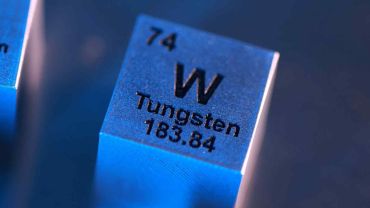
Photo Source: Reuters
China’s export restrictions on tungsten have sharply cut shipments to Japan, with April imports down 50% from the 2025 average and effectively halted since February. Tungsten is vital for cutting tools used in autos, aircraft, chips, and defense, and China controls about 80% of global supply. Japanese manufacturers including Mitsubishi Materials, Sumitomo Electric Industries, and OSG are raising prices, seeking alternative suppliers, and expanding recycling efforts. Japan has also increased tungsten scrap imports from the U.S., though securing a stable non-China supply chain remains difficult.
Nikkei Asia: https://asia.nikkei.com/business/materials/china-tungsten-exports-to-japan-halve-amid-tightened-controls
--------------------------------------------------------------------------------------------------------------------------------------
2. Business News
▶ Global infrastructure funding doubles over 5 years, led by Japanese banks
23 May, 2026
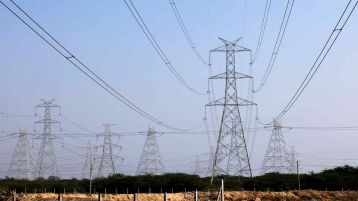
Photo Source:Reuters
Japanese banks, led by MUFG, are expanding their role in global infrastructure project financing as demand grows for energy, data centers, and supply-chain diversification away from China. Global project financing increased 30% to $623.5 billion in fiscal 2025, with the U.S. representing more than 40% of the market. MUFG ranked first globally in project financing, followed by SMFG, while Mizuho also remained in the global top 10. Major investment areas include power infrastructure, AI-related data centers, oil and gas development, and rare-metal projects. The growth reflects rising geopolitical and economic-security concerns, as countries and companies seek more resilient supply chains and domestic infrastructure development.
▶ Nissan pulls plug on UK e-axle project amid EV slowdown in Europe
24 May, 2026
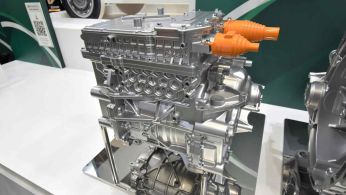
Photo Source:Ryohei Shimizu/Nikkei
Nissan Motor has canceled plans to build a Jatco e-axle factory in Sunderland, U.K., due to weak EV sales in Europe and ongoing restructuring under its Re:Nissan turnaround plan. The factory, originally announced in 2025 with a planned annual capacity of 340,000 units, was expected to supply EV drive units for Nissan’s European production. Instead, Nissan will continue exporting e-axles from Japan to the U.K. The decision reflects slowing demand for Nissan EVs in Europe, with Leaf sales falling 99% and Ariya sales down 44% in fiscal 2025. Nissan’s European market share has also declined significantly over the past decade. The company is now reviewing its global vehicle and powertrain production network, including plants in Japan, as part of broader restructuring efforts.
▶ Fujitsu develops self-evolving multi-AI agent technology that learns and adapts to business operations
25 May, 2026

Source: Fujitsu
Fujitsu has developed a self-evolving multi-AI agent system where multiple AI agents collaborate and continuously improve by learning from business execution results, human feedback, and changes in rules and specifications. The system reduces the need for manual tuning by experts by automatically optimizing tasks such as evaluation and workflow improvement. It is designed for enterprise use and aims to improve accuracy and adaptability in dynamic business environments like healthcare, finance, and government services.
Fujitsu: https://global.fujitsu/en-global/pr/news/2026/05/25-01
▶ Hitachi Energy and Volvo Construction Equipment announce collaboration to accelerate zero-emission construction sites
26 May, 2026
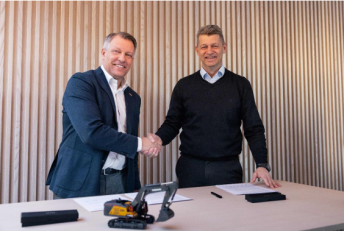
Photo Source: Hitachi
Hitachi Energy and Volvo Construction Equipment have signed a Memorandum of Understanding to jointly develop integrated solutions for zero-emission construction sites. The collaboration brings together electric construction machinery with clean power supply, charging infrastructure, energy management, and system integration to support a full-site electrification approach. The aim is to move beyond standalone technologies and create coordinated, ready-to-deploy solutions that improve productivity while reducing emissions, initially focusing on business models and practical implementation.
Hitachi:https://www.hitachi.com/content/dam/hitachi/global/en/press/files/2026/05/260527a.pdf
▶ Japan's Nabtesco to mass-produce all-electric power steering for EV buses
27 May, 2026
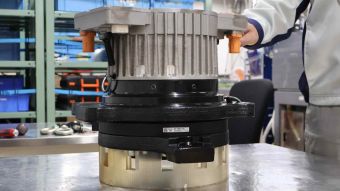
Photo Source: Yuka Adachi
Japanese machinery maker Nabtesco plans to start mass production of fully electric power steering systems for large trucks and buses in 2027, which it says will be the world’s first of its kind. It expects adoption in China, the largest EV market, to drive wider global use. The system replaces hydraulic steering with electric control, improving efficiency, precision, and autonomous driving potential. It has already been delivered in prototype form to China’s CRRC for testing. Nabtesco aims to expand in China and other markets, targeting several billion yen in sales by 2030.
▶ Japan's IHI receives first images from observation satellites
28 May, 2026

Photo Source:Kotaro Igarashi/Nikkei
IHI Corporation has begun receiving imagery from two newly deployed observation satellites procured from Finland’s ICEYE, marking an early step in its plan to build a 20+ satellite Earth-observation constellation. The system will enhance Japan’s defense and intelligence capabilities by improving maritime monitoring and rapid data access, while IHI also plans to sell satellite data to domestic and international customers as it expands its space and defense business.
▶ Toyota supplier Denso aims to cut rare-earth reliance with R&D investment
28 May. 2026
Photo Source: Nikkei
Denso and five other Toyota Group suppliers plan to sharply increase R&D spending to reduce reliance on rare earth materials and strengthen future technologies, especially for electrification and software-defined vehicles. Combined R&D spending is expected to reach about 1.16 trillion yen in fiscal 2027, with firms also expanding investment in automation, cost reduction, and growth markets such as India. The goal is to make vehicle components less dependent on materials vulnerable to supply risks, particularly from China.
▶ Nikon to take on ASML with low-priced chipmaking equipment: CEO
29 May, 2026
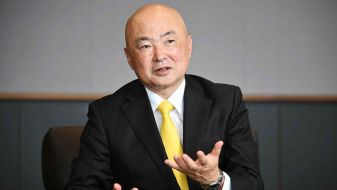
Photo Source: Akikazu Ishii/Nikkei
Nikon is aiming to revive its semiconductor lithography equipment business by competing with market leader ASML Holding on price. New CEO Yasuhiro Ohmura said Nikon’s in-house manufacturing gives it a cost advantage, and the company is in talks with major chipmakers in the U.S. and Asia for new ArF lithography equipment orders. Facing weak recent performance and heavy losses, Nikon plans to focus more on core businesses such as cameras and chipmaking equipment. The company also sees potential collaboration opportunities with major shareholder EssilorLuxottica in optical and wearable devices.
Published: May 2026


EU-Japan Centre for Industrial Cooperation
Joint venture established in 1987 by the European Commission (DG GROW) and the Japanese Government (METI) for promoting all forms of industrial, trade and investment cooperation between the EU and Japan.


Copyright © 2026 EU-Japan Centre