The Belgian-Luxembourg Chamber of Commerce in Japan (BLCCJ) is organizing the 13th edition of the…


JAPANESE ECONOMIC AND BUSINESS WEEKLY NEWSLETTER: 24 -27 March, 2026

The EU Japan Centre is releasing a weekly press review covering Japan's economic and business matters.
Weekly Japanese Economic and Business News (24-27 March, 2026)
Outline
1. Economic News
▶ Japan to prepare 800 billion yen from reserves for gas subsidies
24 Mar, 2026
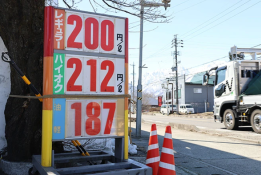
Photo Source: Asahi
The Japanese government plans to use contingency reserves to expand funding for gasoline subsidies, anticipating prolonged high oil prices due to the Middle East crisis. About 800 billion yen may be approved to maintain fuel prices around 170 yen per liter, adding to an existing subsidy program that has already exceeded 8 trillion yen.
Prime Minister Sanae Takaichi also highlighted cooperation with the U.S. on crude oil supply and stockpiling, while emphasizing Japan’s support for U.S. leadership in maintaining global stability.
Asahi:https://www.asahi.com/ajw/articles/16442954
▶ Japan, France plan to up cooperation on next-generation reactors at summit
24 Mar, 2026

Photo Source: AP
Japan and France plan to strengthen cooperation on next-generation nuclear reactors, including small modular reactors, during a Tokyo summit between Prime Minister Sanae Takaichi and President Emmanuel Macron. They will also confirm collaboration on nuclear safety, spent fuel reuse, and decommissioning, alongside talks on joint military exercises and cyber policy. The summit aims to deepen strategic cooperation across energy, security, and technology.
Mainichi:https://mainichi.jp/english/articles/20260324/p2g/00m/0na/009000c
▶ Japan-Europe container shipping hangs on by a thread
26 Mar, 2026

Photo Source: Kosaku Mimura/Nikkei
Direct container shipping between Japan and Europe nearly ended after Ocean Network Express decided to stop its only direct route due to delays and inefficiencies linked to rerouting via the Cape of Good Hope. This would have forced all cargo to transit through hubs like Busan, increasing risks of delays. The situation was avoided when CMA CGM launched a new direct Japan–Europe route in April, following lobbying from Japan’s public and private sectors.
However, Japan still faces structural challenges in shipping, including lagging port infrastructure and declining direct routes, while geopolitical risks (Middle East tensions, Taiwan strait issues) continue to threaten supply chain stability.
Nikkei Asia:https://asia.nikkei.com/business/transportation/japan-europe-container-shipping-hangs-on-by-a-thread
▶ The 3rd Japan-EU Foreign Ministerial Strategic Dialogue
26 Mar, 2026

Photo Source: MOFA
On March 26, Japanese Foreign Minister Toshimitsu Motegi held the 3rd Japan–EU Foreign Ministerial Strategic Dialogue with Kaja Kallas in France during the G7 Foreign Ministers’ Meeting. They emphasized strengthening Japan–EU relations as strategic partners, covering economic, political, and security cooperation. Key topics included defense industry collaboration, advanced technology (including dual-use tech), and resilient supply chains for critical materials. They also discussed regional and international issues such as Ukraine, North Korea (nuclear, missile, and abduction issues), the Middle East, and confirmed continued cooperation through multilateral frameworks like the G7. The EU expressed full support for Japan’s efforts to resolve the abductions issue.
MOFA:https://www.mofa.go.jp/erp/ep/pageite_000001_01551.html
--------------------------------------------------------------------------------------------------------------------------------------
2. Business News
▶ Fujitsu to double Europe defense business staff to 2,000
24 Mar, 2026

Photo Source:Fujitsu
Japanese technology group Fujitsu plans to double its defense-related workforce in Europe to around 2,000 by the 2030s, focusing on cybersecurity and dual-use technologies. The company will deploy staff to major NATO countries, including Belgium, home to NATO headquarters and the European Commission. This move is unusual for Japanese defense firms, which typically operate mainly in Japan. Fujitsu aims to provide cybersecurity, AI-related semiconductors, and other dual-use tech to European governments and defense companies, supporting Europe’s push to reduce reliance on U.S. technology. The expansion aligns with Japan’s broader strategy in the defense sector, including participation in the EU’s Horizon Europe research and development initiative and other NATO projects.
▶ Sakana AI enters chatbot race with Japan-tailored model
24 Mar, 2026

Photo Source: Getty Images
Japan’s Sakana AI, previously focused on corporate clients, has launched its first consumer-facing chatbot, Sakana Chat, powered by its Namazu model. The chatbot is designed to reflect Japanese language, culture, and social norms, and includes web search for up-to-date information. The move highlights the trend of localizing global AI models for specific markets. Sakana AI fine-tunes existing models rather than building from scratch, aiming for high reasoning, coding performance, neutrality, and factual accuracy on sensitive topics. Initially free, the chatbot is part of the company’s plan to expand AI services for general users, integrating multiple models and agent technologies over time.
▶ Itochu enters e-waste management with view to rare earths recycling
24 Mar, 2026
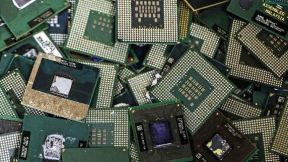
Photo Source: Kyodo
Japanese trading company Itochu is launching an e-waste recycling joint venture in Japan with U.S. firm ERI to recover valuable materials, including rare earths. This supports Japan’s efforts to reduce dependence on China and manage resource risks. The venture will start recycling metals like copper and gold, with plans for rare earths later. The move responds to growing e-waste and low global recycling rates.
▶ Mitsubishi Electric, Rohm, Toshiba mull merging power chip businesses
26 Mar, 2026

Photo Source: Shotaro Mori, Takayuki Yao and Tsuyoshi Tamehiro/Nikkei
Japan’s Mitsubishi Electric, Rohm, and Toshiba are set to begin negotiations to merge their power semiconductor businesses. If completed, the combined entity would hold about 10% global market share, becoming the world’s second largest player behind Infineon (17%). The move aims to improve cost competitiveness in key sectors like EVs and data centers. Rohm and Toshiba were already in talks, with Mitsubishi Electric now joining. The outcome could also affect a separate acquisition bid for Rohm by Denso.
▶ Daughter of SoftBank's Son to take over troubled Japanese unicorn Spiber
26 Mar, 2026

Photo Source: Nikkei
Japanese biotech startup Spiber will transfer ownership to Crane, led by Maya Kawana, as part of an out-of-court restructuring due to heavy debt (~¥40B). Creditors are expected to forgive debts, and the business will continue under new management. Crane will take over Spiber’s technology and staff, later adopting the Spiber name, while the original company will be liquidated. Despite strong global interest in its sustainable biofiber technology (used by brands like Burberry), high costs and financing challenges led to major losses. This marks the first known case of a Japanese unicorn undergoing such restructuring, raising concerns about funding risks for capital-intensive deep-tech startups.
Published: March 2026


EU-Japan Centre for Industrial Cooperation
Joint venture established in 1987 by the European Commission (DG GROW) and the Japanese Government (METI) for promoting all forms of industrial, trade and investment cooperation between the EU and Japan.


Copyright © 2026 EU-Japan Centre