このたび、日本企業の欧州での投資・事業展開に役立つ情報を日本語と英語で月1回お届けするニュースレターを創刊し、第1号(2026年9月号)を公開しました。
近年、日EU関係が幅広く発展し、…


JAPANESE ECONOMIC AND BUSINESS WEEKLY NEWSLETTER: 27 June - 03 July,2026

The EU Japan Centre is releasing a weekly press review covering Japan's economic and business matters.
Weekly Japanese Economic and Business News (27 June - 03 July, 2026)
Outline
1. Economic News
▶Japan launches CFIUS-style foreign investment screening panel
29 Jun, 2026
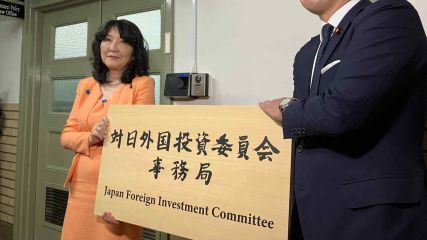
Photo Source: Shunsuke Ushigome/Nikkei
Japan has launched a new cross-ministerial body called the Japan Foreign Investment Committee (JFIC) to strengthen screening of foreign investments from an economic security perspective. Modeled on the U.S. CFIUS system, the committee will review inbound investments to prevent risks such as technology leakage and sensitive data outflows while still supporting foreign investment. It will be led by the Ministry of Finance and Japan’s National Security Secretariat, with participation from key ministries including METI and Defense.
Nikkei Asia: https://asia.nikkei.com/economy/japan-launches-cfius-style-foreign-investment-screening-panel
▶ China restricts exports to Mitsubishi, Hitachi, Komatsu units
29 Jun, 2026
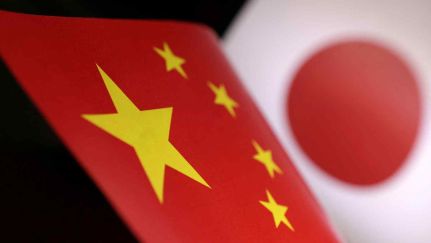
Photo Source: Reuters
China has imposed new export controls targeting around 40 Japanese entities, including major firms such as Mitsubishi Electric, Mitsubishi Heavy Industries, Hitachi, and Komatsu, citing concerns over “militarization.” The measures restrict or require additional approvals for shipments of dual-use goods from China to these companies, increasing compliance burdens and potentially disrupting supply chains. Beijing framed the move as a response to Japan’s defense-related policies, while Tokyo rejects the accusations. The decision highlights rising geopolitical tensions and growing risks for Japan–China economic relations.
▶ Japan wants more startups. Its new visa rules say otherwise
30 Jun, 2026
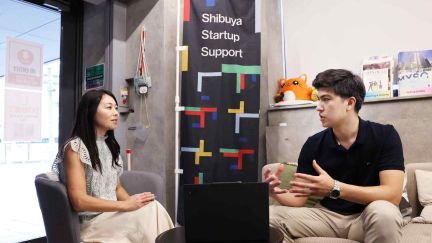
Photo Source: Nikkei
Japan has significantly tightened its business manager visa requirements, raising the minimum capital threshold and adding stricter conditions such as management experience and Japanese language ability. The changes have made it harder for foreign entrepreneurs, including startup founders already operating in Japan, to stay long-term, leading to concerns that Japan is becoming less attractive despite its efforts to attract global talent. While the government says the reforms aim to prevent abuse of the system through shell companies, critics argue they are discouraging legitimate startups and contributing to a sharp drop in visa applications.
Nikkei Asia:https://asia.nikkei.com/spotlight/immigration/japan-wants-more-startups.-its-new-visa-rules-say-otherwise
▶ Japan puts startup ambitions at center of $2.3tn tech strategy
1 July, 2026
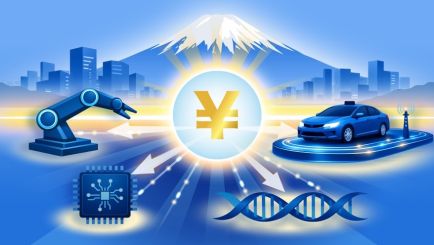
Nikkei Illustration
U.S. venture capital firms such as Andreessen Horowitz are expanding into Japan as the country seeks to strengthen its startup ecosystem in deep tech sectors like AI, robotics, biotech, and semiconductors. The article highlights Japan’s efforts to close the gap with the U.S. and China by attracting global investors, expanding university-linked startups, and launching large-scale public-private investment programs. Despite progress, Japan still lags far behind in unicorn startups and faces structural challenges such as limited risk capital and low labor mobility. The broader push is driven by economic security concerns and competition in advanced technologies, with Japan aiming to build globally competitive startups that can scale beyond its domestic market.
Nikkei Asia:https://asia.nikkei.com/business/business-asia/japan-puts-startup-ambitions-at-center-of-2.3tn-tech-strategy
▶ Japan backs SoftBank-led AI models with up to $6.2bn in chasing US, China
New company will focus on physical AI using data from Japanese companies
1 July, 2026
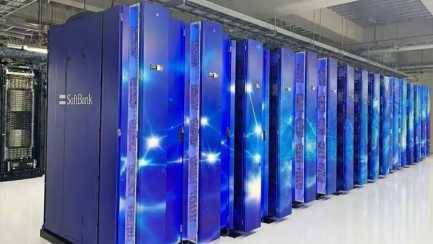
Photo Source: Softbank
Japan will invest up to ¥1 trillion ($6.2 billion) to support a consortium led by SoftBank, Honda, NEC, and Sony to develop a domestic AI foundation model, aiming to strengthen Japan’s technological independence amid competition from the U.S. and China. The project, backed by the government through METI, will focus on building large-scale AI systems using real-world industrial data, with an initial service target by 2027. A key focus is “physical AI”, applying AI to robotics and manufacturing, leveraging Japan’s industrial strengths. The initiative also aims to address labor shortages and improve productivity, with long-term plans to scale AI-driven robotics across society and strengthen Japan’s position in global AI development.
▶ China storage battery makers denied cybersecurity approval in Japan
1 July, 2026
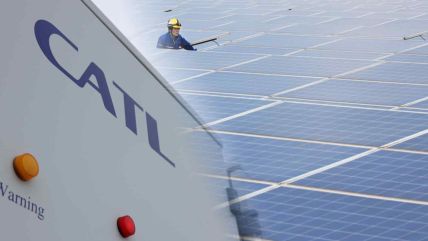
Photo Source: Nikkei
Japan has begun tightening cybersecurity rules for grid-connected energy storage systems under the JC-STAR certification scheme, which will become mandatory from fiscal 2027. Although products from companies in Japan, the U.S., and Europe have been certified, no Chinese manufacturers such as BYD, CATL, Huawei, or Sungrow have received approval so far. The system evaluates cybersecurity risks, including potential influence from foreign laws like China’s National Intelligence Law, which Japanese analysts say has effectively prevented approval of Chinese products. The move reflects Japan’s effort to strengthen energy security and reduce cyber risks in critical infrastructure.
Nikkei Asia:https://asia.nikkei.com/business/energy/china-storage-battery-makers-denied-cybersecurity-approval-in-japan
▶ Mercosur launches economic partnership talks with Japan, eyes China
1 July, 2026
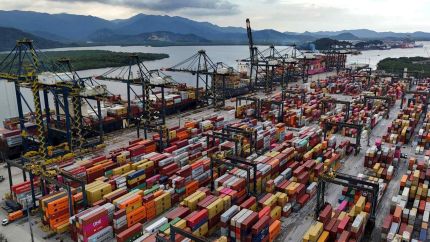
Photo Source: Reuters
Mercosur has launched negotiations with Japan on an economic partnership agreement, aiming to create a free trade area covering about 400 million people and $7 trillion in GDP. The talks, announced during a leaders’ summit in Paraguay, follow earlier meetings between both sides and discussions at the G7. The agreement would expand market access for goods and deepen investment and supply chain cooperation between Japan and the South American bloc, as both sides seek to diversify trade relationships amid global tariff tensions.
Nikkei Asia:https://asia.nikkei.com/economy/trade/mercosur-launches-economic-partnership-talks-with-japan-eyes-china
▶ India, Japan unveil 1st defense codevelopment pact, boost AI, energy ties
2 July, 2026
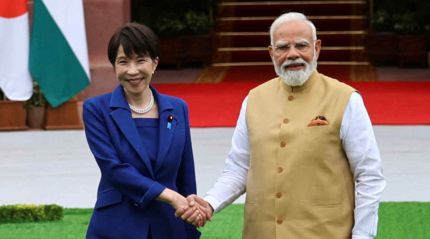
Photo Source: Reuters
On July 3, Japanese Prime Minister Sanae Takaichi and Indian Prime Minister Narendra Modi held the 16th Japan–India Annual Summit in New Delhi, reaffirming their commitment to strengthening the Special Strategic and Global Partnership. They announced new initiatives in defense, economic and energy security, artificial intelligence (AI), and critical technologies, including the first joint development of the UNICORN naval communications system and a roadmap for economic security cooperation. The two leaders also agreed to deepen cooperation on supply chains, semiconductors, clean energy, and the Mumbai–Ahmedabad High-Speed Rail project, while expanding Japanese investment in India. They reaffirmed close coordination on Indo-Pacific security and expressed shared concerns over developments in the East and South China Seas, North Korea, and the Middle East, highlighting the importance of a free, open, and rules-based Indo-Pacific.
▶ Japan to offer trade insurance on loan for Reliance's India solar, battery effort
2 July, 2026
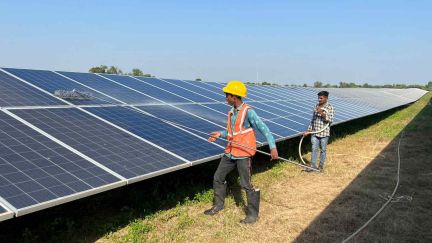
Photo Source: Reuters
Japan’s Nippon Export and Investment Insurance (NEXI) will provide trade insurance for a ¥100 billion syndicated loan to India’s Reliance Industries, led by MUFG Bank and involving several international banks. The financing will support manufacturing and R&D in storage batteries and solar panels as part of efforts to strengthen Japan–India supply chains and reduce dependence on China. The initiative also aims to facilitate Japanese companies’ entry into India’s renewable energy sector and deepen bilateral economic cooperation.
▶ Japan taps delivery trucks in push to recycle rare metals from e-waste
3 July, 2026
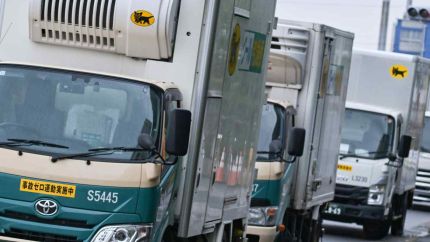
Photo Source: Shintaro Ino/Nikkei
The Japanese government will launch a pilot program to improve the collection and recycling of electronic waste in order to recover rare metals such as copper and other valuable materials. Delivery and moving companies, including major logistics firms, will collect discarded PCs and smartphones using unused space in their trucks, before transferring them to certified recyclers under the Environment Ministry’s supervision. The program will run in selected regions from 2026 to early 2027 and temporarily relax existing rules that normally restrict subcontracting in e-waste collection. The initiative aims to address stagnating collection rates, reduce illegal dumping and overseas leakage of e-waste, and improve the efficiency of Japan’s recycling system.
-------------------------------------------------------------------------------------------------------------------------------------
2. Business News
▶Kawasaki Heavy and Airbus to team up on anti-submarine drone for Japan
26 Jun, 2026
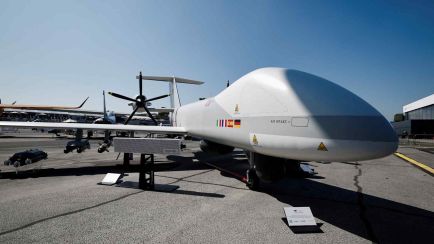
Photo Source: Reuters
Kawasaki Heavy Industries has partnered with Airbus Defence and Space to develop an anti-submarine drone based on the Eurodrone platform for Japan's Ministry of Defense. The drone will integrate Kawasaki's advanced maritime surveillance technologies to enhance anti-submarine operations while reducing manpower requirements. The collaboration marks the first known partnership between a major Japanese heavy industry company and a leading overseas defense firm on military drones. It reflects Japan's growing focus on strengthening domestic drone capabilities and international defense cooperation in response to evolving security challenges and the increasing role of unmanned systems in modern warfare.
▶ Rakuten-led group set for subsidies to build Japan's answer to Starlink
30 Jun, 2026

Photo Source: Reuters
The Japanese government plans to provide about ¥150 billion ($926 million) in subsidies to a Rakuten-led consortium to develop a domestic low-Earth orbit satellite communications network. The project, in partnership with U.S. company AST SpaceMobile, aims to build a direct-to-mobile satellite system to strengthen Japan’s communication resilience, especially during disasters and in remote areas. The initiative is also part of Japan’s economic security strategy to reduce reliance on foreign networks like Starlink, with operations expected to begin through a new joint venture around 2026.
▶ Japan startup SolaNika to test tech for charging drones with lasers
30 Jun, 2026
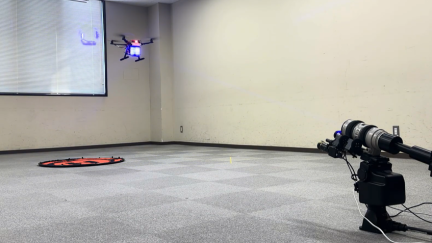
Photo Source: SolaNika
SolaNika, a Japanese startup, plans to begin trials this year of a laser-based wireless power system for drones, aiming to enable flight times of over 12 hours. The technology works by beaming laser energy to a drone’s solar cell to provide power in flight, potentially reducing or eliminating the need for heavy batteries. Early tests will focus on automated laser tracking and charging in controlled environments such as tunnels. If successful, the system could significantly extend drone endurance for applications like infrastructure inspection and also support broader technologies such as high-altitude platforms.
▶ Japan, UK and Italy to extend next-gen fighter jet contract through 2027
1 July, 2026
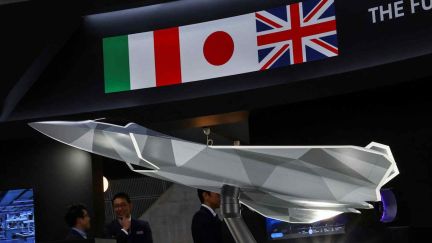
Photo Source: Reuters
Japan, the U.K., and Italy have agreed to extend their joint contract for developing a next-generation fighter jet under the Global Combat Air Programme (GCAP) until the end of 2027. The extension was needed after delays in the U.K.’s defense spending approval had stalled a longer-term agreement. The U.K. government announced the investment plan on Tuesday, which includes 8.6 billion pounds for GCAP over four years. The program, which brings together the three countries’ defense industries, continues toward its goal of deploying a sixth-generation stealth fighter around 2035 to replace existing aircraft and strengthen long-term air defense capabilities.
▶ Toyota to harmonize vehicle specs with AI, helping to speed production
1 July, 2026
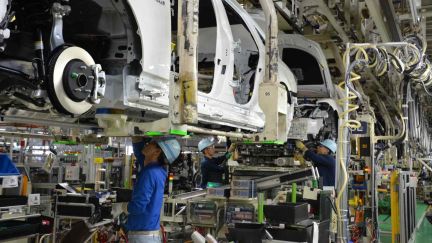
Photo Source: Toyota Motor
Toyota Motor plans to standardize specifications terminology across its planning, production, and sales divisions using AI, aiming to eliminate translation gaps that currently account for about 30% of work steps. The new integrated system, expected by 2028, will unify around 45,000 technical terms into about 5,000 common terms, improving efficiency, real-time information sharing, and coordination with suppliers. The initiative is expected to significantly streamline Toyota’s internal processes and strengthen supply chain efficiency across its global operations.
▶ Kyocera vies with Toto in ceramic parts for chipmaking, data centers
1 July, 2026
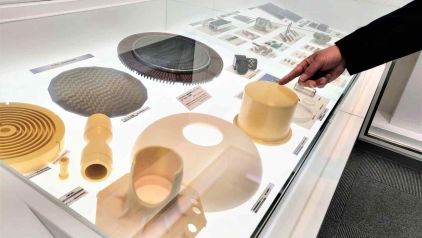
Photo Source: Eisaku Nitta/Nikkei
Kyocera plans to invest about 650 billion yen through 2031 to expand its components business, focusing on semiconductors and AI data centers. The company aims to strengthen production of high-value ceramic parts used in chipmaking equipment and optical communication systems, where it already holds major global market shares. The move is driven by rapid growth in AI-related infrastructure, especially data centers and advanced semiconductors, though Kyocera faces strong competition from other Japanese firms and pressure to sharpen its business focus.
▶ Japan, UK, Italy to consider Canada as observer in fighter jet program
2 July, 2026
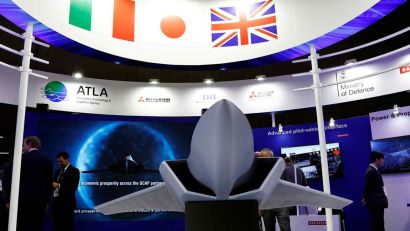
Photo Source: Reuters
Japan, the U.K., and Italy are considering allowing Canada to join the Global Combat Air Programme (GCAP) as an observer with access to sensitive development data for a next-generation fighter jet planned for deployment around 2035. The move is expected to be discussed at an upcoming defense ministers’ meeting, where Japan’s defense minister may confirm Canada’s participation. The program, led by the three countries through the GCAP International Government Organisation, continues to attract interest from other partners such as Australia and Singapore. Meanwhile, the development timeline has been extended to 2027, and the U.K. has committed about £8.6 billion to the project.
▶ Hydrogen combustion engines emerge as cheap alternative to fuel cells
3 July, 2026
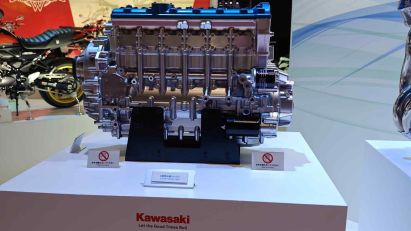
Photo Source: Eisaku Nitta/Nikkei
Hydrogen-fueled combustion engines are gaining attention as a lower-cost alternative to fuel cells, with companies like Kawasaki Heavy Industries developing small hydrogen-powered generators such as the “O’Cuvoid,” designed for mobility and power supply applications. Unlike fuel cells, hydrogen engines can use existing engine technology, are cheaper to produce, and can operate with lower-purity hydrogen, making them more practical for early adoption. They are being considered for vehicles, industrial equipment, and even robotics, including Kawasaki’s planned hydrogen-powered robotic platform. However, fuel cells remain more energy-efficient and environmentally cleaner, while challenges such as limited refueling infrastructure and high hydrogen costs continue to slow widespread adoption. The industry is increasingly viewing hydrogen engines and fuel cells as complementary technologies in building a future hydrogen economy.
▶ Japan eyes AI-powered comeback in factory robot race with China, Europe
3 July, 2026
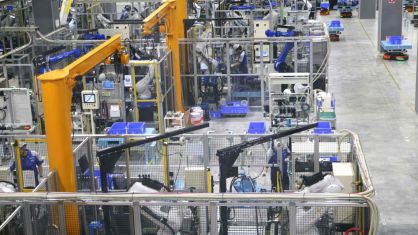
Photo Source: Eisaku Nitta/Nikkei
Japanese industrial robot makers such as Yaskawa Electric and Fanuc are integrating artificial intelligence and expanding collaborations to regain global competitiveness. By combining AI models, including partnerships with companies like Nvidia and Google, their robots are becoming more flexible, capable of handling multiple product types and even responding to simple language commands. The industry, once dominant globally, has lost market share to Chinese and European rivals, but sees “physical AI” as a new opportunity to improve automation, productivity, and regain leadership in manufacturing robotics.
Published: July 2026


EU-Japan Centre for Industrial Cooperation
Joint venture established in 1987 by the European Commission (DG GROW) and the Japanese Government (METI) for promoting all forms of industrial, trade and investment cooperation between the EU and Japan.


Copyright © 2026 EU-Japan Centre