Toward Further EU Market Integration
New Investment Opportunities Created by the “One Europe, One Market” Agenda
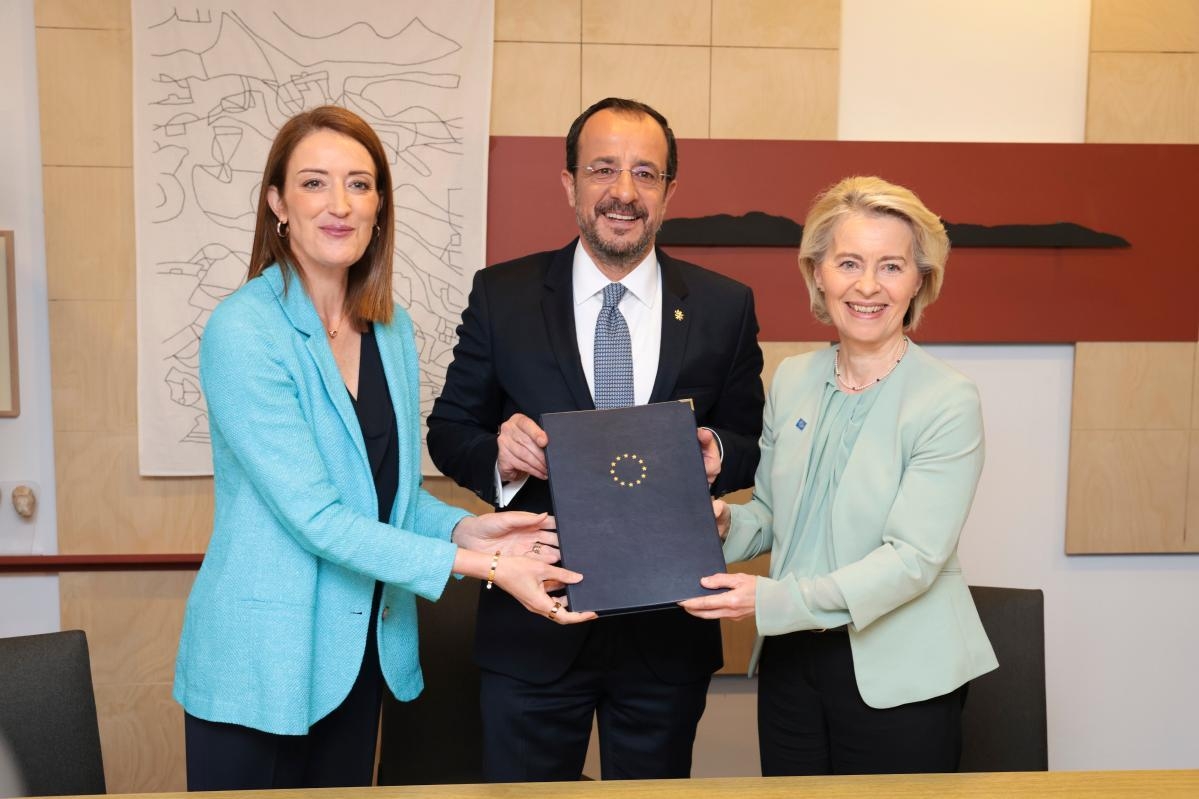
Roberta Metsola, President of the European Parliament, Níkos Christodoulides, President of Cyprus, and Ursula von der Leyen at the signing ceremony of the roadmap entitled “One Europe, One Market.” (Photo credit: European Union, 2026 / EC – Audiovisual Service / Dati Bendo)
Key Points
・The EU is working to create a more business-friendly environment by further integrating the Single Market and simplifying regulations and procedures.
・The “One Europe, One Market” Roadmap sets out an implementation plan through the end of 2027, focusing on regulation, the Single Market, trade, energy, and digital/AI.
・For Japanese companies, these developments may make it easier to view the EU as a more integrated investment destination and to consider establishing operations, expanding product deployment, and providing services across the EU.
Introduction
The EU is currently advancing the “One Europe, One Market” agenda. This initiative aims to further deepen the integration of the EU Single Market in order to strengthen competitiveness, resilience, strategic autonomy, and economic security. In the Conclusions adopted by the European Council in March 2026, the EU indicated that this agenda should be implemented where possible in 2026 and completed by the end of 2027 at the latest.
In response, the EU’s key institutions — the European Commission, the Council of the EU, and the European Parliament — jointly developed the “One Europe, One Market Roadmap” and published a concrete policy implementation plan on 24 April. The Roadmap provides a cross-cutting framework covering areas such as regulatory simplification, Single Market integration, trade, energy, and digital/AI, with the aim of strengthening the EU’s overall competitiveness.
This review of the EU business environment, centred on deeper Single Market integration, may create new investment opportunities for Japanese companies. This page outlines the key points of the “One Europe, One Market” agenda and provides an overview of its implications for Japanese investment in the EU.
Background and Objectives
Against the backdrop of intensifying geopolitical competition, technological change, and growing economic uncertainty, the EU places strong emphasis on reinforcing a competitive economic base that can support its prosperity, security, and strategic autonomy. To this end, the EU positions three mutually reinforcing pillars at the core of its economic strategy: a stronger, fairer, and more integrated Single Market; a trade policy that diversifies partnerships and reduces strategic dependencies; and an industrial policy that strengthens Europe’s capacity to produce, innovate, and compete.
These policy directions were confirmed in the European Council Conclusions of March 2026 and were further translated into the “One Europe, One Market” Roadmap published in April. The Roadmap identifies the main policy areas to be advanced by the EU from 2026 through the end of 2027, namely simplifying rules, further integrating the Single Market, strengthening trade, reducing energy prices and decarbonising, and driving the digital and AI transformation.
What Does the “One Europe, One Market” Agenda Aim to Achieve?
At the heart of the “One Europe, One Market” agenda is the aim of making the EU Single Market more integrated and easier for businesses to use. The EU seeks to further deepen and integrate the four freedoms of the Single Market and to create a simpler market environment in which people and businesses can operate more seamlessly across the EU and scale up their activities.
Further Integrating the Single Market and Making It Easier for Businesses to Operate Across the EU
With this objective in mind, the European Council Conclusions set out measures to simplify and harmonise, as far as possible, rules and procedures that differ across Member States, thereby making it easier for companies to use the EU as one single market.
These measures include the “28th regime”, which would allow companies to operate under a unified EU-wide set of rules covering relevant areas such as company law, insolvency law, labour law, and tax law; a simple and unified e-declaration system for the cross-border provision of services; improved mutual recognition of professional qualifications; digitalisation of administrative procedures through the “once-only” principle and the European Business Wallet; and measures to address differing product labelling and packaging requirements across Member States.
These initiatives are not intended to add new burdens. Rather, they aim to reduce the need for companies to deal separately with different national systems, making it easier to operate and scale up across the EU. For Japanese companies, this could make it easier to consider the EU not as a collection of separate national markets, but as a more integrated market for establishing operations, providing services, and deploying products.
Simplifying Rules and Reducing Administrative Burdens
In parallel with deeper Single Market integration, the EU also identifies simplification of rules and reduction of administrative burdens as a key objective. In concrete terms, the EU aims to reduce burdens arising from existing legislation through omnibus packages and to speed up planning and permitting procedures. It also calls for a review of the EU acquis to remove outdated provisions, overlaps, inconsistencies, and unnecessary rules.
For future EU initiatives, the emphasis is also on designing rules to be simple from the outset, conducting high-quality impact assessments, and reducing regulatory, administrative, and compliance costs. Member States are also called upon to avoid excessive additional national requirements when transposing and implementing EU rules.
This review of the regulatory environment also extends to the energy sector. The European Council refers to a review of the Emissions Trading System (ETS) with a view to reducing the volatility of the carbon price and mitigating its impact on electricity prices, related supply chain costs, and the diversion of activities. At the same time, it also stresses the importance of preserving the essential role of the ETS in the climate and energy transition.
These efforts are expected to contribute to an improved business environment within the EU. By maintaining high regulatory standards while streamlining and simplifying procedures and requirements that differ across Member States, the EU aims to make it easier for companies to use the entire EU as a more integrated market. For Japanese companies, this could help reduce practical burdens related to establishing operations, deploying products, providing services, and making investment decisions.
◆Clarifying the Roadmap for Implementation
The “One Europe, One Market” Roadmap, published in April 2026, serves as an implementation plan to translate the EU’s policy direction into a more usable institutional environment for businesses. The Roadmap identifies five strategic building blocks where progress should be made from 2026 through the end of 2027 at the latest:
- Simplifying rules
- A more integrated Single Market
- Championing strong trade
- Reducing energy prices and decarbonising
- Driving the digital and AI transformation
For each of these pillars, the Roadmap sets out key legislative and policy initiatives as well as target timelines for agreement. It also clarifies the respective roles of the European Commission, the European Parliament, the Council of the EU, and Member States, and provides for quarterly progress reviews. For Japanese companies, this offers useful visibility when considering the timing of establishing operations, deploying products, providing services, or making investment decisions in the EU.
Key Policy Deliverables Set Out in the Roadmap can be seen from here.
Related Links:
・One Europe, One Market’ roadmap, 24 April 2026
・European Council conclusions, 19 March 2026
・Boosting EU competitiveness, the way forward (background information)
・What the EU is doing to boost its competitiveness
Disclaimer
The EU-Japan Centre for Industrial Cooperation is not involved in any way in the calls / proposals promoted on this webpage (i.e., it has no role in accepting or processing questions or offers submitted in relation to a call). The contents of this webpage are made available for general information and non-commercial purposes only. It does not claim to be comprehensive or up to date and is not intended to provide legal or other advice. No person should rely on the contents of this webpage without first obtaining advice from a qualified professional person.
If you have questions about the 'Invest in EU Hub' as opposed to the calls or other proposals featured on this webpage please email us.