

JAPANESE ECONOMIC AND BUSINESS WEEKLY NEWSLETTER: 12 May -18 May,2026

The EU Japan Centre is releasing a weekly press review covering Japan's economic and business matters.
Weekly Japanese Economic and Business News (12 May - 18 May, 2026)
Outline
1. Economic News
▶ Japan team has 1st successful engine test for Mach 5 aircraft, eyeing 2 hour trips to US
11 May, 2026
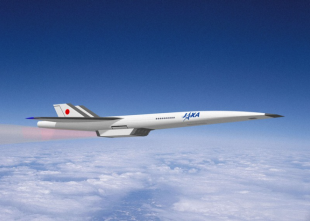
Photo Source: JAXA
A Japanese team from JAXA and Waseda University has successfully tested a ramjet engine for a Mach 5 experimental aircraft, a step toward future hypersonic passenger travel that could reduce Japan–U.S. flight time to about two hours and may even reach space. The test, conducted at JAXA’s Kakuda Space Center, simulated high-altitude Mach 5 conditions and confirmed the engine’s performance and heat resistance. The team aims to move toward a real flight demonstration and eventual practical use in the 2040s, though major technical challenges remain.
Mainichi: https://mainichi.jp/english/articles/20260511/p2a/00m/0sc/015000c?dicbo=v2-fEqr1p9
▶ Japan, India Agree to Further Economic Security Ties
12 May, 2026
Japan and India held the second round of their economic security dialogue in New Delhi, agreeing to deepen cooperation in key areas such as semiconductors and critical minerals. The talks also covered energy security amid Middle East tensions and support for a free and open Indo-Pacific initiative. Additionally, discussions included coordination within the Quad framework (Japan, the U.S., India, and Australia), with a foreign ministers’ meeting expected later this month in India.
JIJI: https://jen.jiji.com/jc/eng?g=eco&k=2026051200260
▶ Japan to broaden subsidies for domestic legacy chip production
14 May, 2026
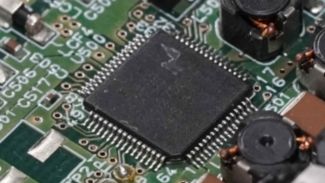
Photo Source: Ryosuke Eguchi/Nikkei
Japan’s Ministry of Economy, Trade and Industry plans to expand subsidies for domestic production of legacy semiconductors by removing a 30 billion yen investment threshold. The goal is to strengthen supply chains for widely used chips like analog semiconductors and microcontrollers, which are essential for industries such as automotive and machinery. The policy aims to reduce reliance on overseas suppliers after past shortages and encourage more domestic small and mid-sized manufacturers to enter the sector. Subsidy conditions will require significant increases in domestic production capacity or relocation of overseas processes to Japan, alongside stricter oversight of technology security.
▶ Andreessen Horowitz to open Japan office by summer, co-founder tells Takaichi
14 May, 2026
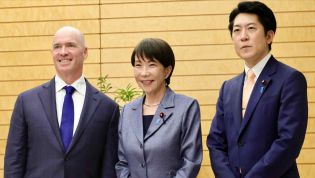
Photo Source: Ken Suzuki/Nikkei
Andreessen Horowitz co-founder Ben Horowitz met with Sanae Takaichi in Tokyo and announced plans to open a Tokyo office by summer to expand investments in Japanese startups, especially in AI and defense sectors. The firm also plans to bring its startup incubation program, Speedrun, to Japan within 3–4 years to help entrepreneurs develop a global mindset and foster innovation talent.
▶ The 2nd Japan-EU Security and Defence Dialogue
14 May, 2026
On May 14 in Tokyo, Japan and the EU held the 2nd Security and Defence Dialogue, following up on last year’s meeting. They agreed to deepen cooperation across key areas including maritime security, cybersecurity, countering disinformation, Women, Peace and Security (WPS), space, and disarmament/non-proliferation. Both sides also exchanged views on the current strategic environment and regional developments, with Japan explaining the evolution of its Free and Open Indo-Pacific (FOIP) policy, which the EU acknowledged. Japan was represented by senior officials from the Ministry of Foreign Affairs and Ministry of Defense, while the EU was represented by a senior official from the European External Action Service.
MOFA: https://www.mofa.go.jp/erp/ep/pagewe_000001_00002.html
--------------------------------------------------------------------------------------------------------------------------------------
2. Business News
▶ Completion and Commencement of Commercial Operation of the Noirmoutier Offshore Wind Farm Project in France
11 May, 2026
©EMYN-C.Beyssier
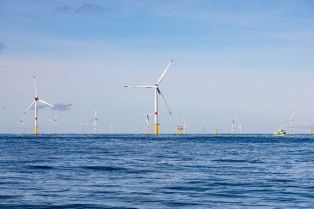
Sumitomo Corporation and its international partners, including Ocean Winds, have completed and started commercial operations of the Noirmoutier Offshore Wind Farm in France. The 500 MW offshore wind project, located off the western coast of France, can supply electricity for about 800,000 people and is expected to operate for around 25 years under a long-term agreement with Électricité de France. The project reflects growing demand for renewable energy in Europe amid energy security and decarbonization efforts. Sumitomo Corporation said the project also demonstrates its experience in offshore wind development, project finance, and international partnerships as it continues expanding renewable energy projects across Europe.
Sumitomo Corporation:https://www.sumitomocorp.com/en/jp/news/release/2026/group/20990
▶ Japan's SoftBank enters battery business to power AI data centers
11 May, 2026

Photo Source: Softbank
SoftBank Corp. has launched a new battery business in Japan to support the growing electricity needs of AI data centers. The company plans to develop and manufacture battery cells and energy storage systems at Sharp’s former Sakai factory site in Osaka, where SoftBank is also building a large AI data center. Production is expected to begin by fiscal 2027, with a goal of generating over 100 billion yen in annual sales by 2030. SoftBank is partnering with South Korean startups to develop safer zinc-halogen batteries and high-capacity storage systems, aiming to improve stable power supply and renewable energy use for AI infrastructure.
Nikkei Asia:https://asia.nikkei.com/business/energy/japan-s-softbank-enters-battery-business-to-power-ai-data-centers
▶ Japan's NEC seeks edge in undersea cable with high-capacity fiber
12 May, 2026
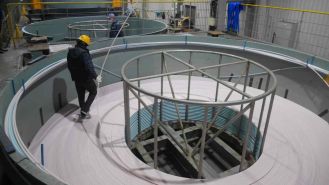
Photo Source: Kyoko Hariya/Nikkei
NEC plans to invest more than 100 billion yen over the next five years to expand its submarine cable business and increase its global market share. The company expects strong future demand driven by AI and growing data center use. NEC and its subsidiary OCC will upgrade production facilities and develop advanced multicore fiber technology that can transmit more data. NEC also plans to acquire cable-laying ships to strengthen its global operations. Rising geopolitical tensions and the importance of secure communications have made submarine cables a strategic industry, with Japan and the United States viewing NEC as a trusted partner.
▶ Japan space startups to train engineers from India, Philippines, Indonesia
12 May, 2026
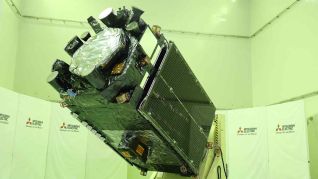
Photo Source: Dai Kuwamura/Nikkei
Japan International Cooperation Agency (JICA) will launch a new program allowing Japanese space startups to train professionals from developing countries including India, Philippines, and Indonesia.
Participants from 12 countries, including African nations such as Kenya and Senegal, will learn skills like satellite manufacturing and satellite data analysis through Japanese companies and universities under Japan’s foreign aid program. The initiative aims to support disaster management, agriculture, and other space-related applications while helping Japanese startups build international ties. JICA also sees the program as strategically important amid growing competition from China in the global space sector and participation in the U.S.-led Artemis program.
▶ Panasonic EV battery production delayed again as customer order stalls
12 May, 2026
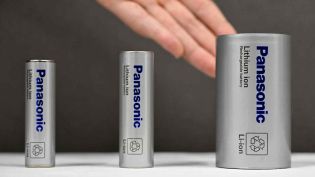
Photo Source: Yo Inoue/Nikkei
Panasonic Holdings has again delayed mass production of its new 4680 EV battery because a major customer, believed to be Tesla, has not yet approved or placed orders for the product. Panasonic had prepared production lines at its Wakayama factory and originally planned to start mass production by March 2024, but slowing global EV demand and weaker Tesla sales have affected its plans. As a result, Panasonic has also frozen plans for a third U.S. battery factory and is shifting some production capacity toward power storage systems for data centers, where demand remains strong.
▶ Japan megabanks to gain access to Anthropic's powerful AI model Mythos
13 May, 2026
Photo Source: Nikkei montage
Japan’s three megabanks—MUFG Bank, Sumitomo Mitsui Banking Corp., and Mizuho Bank—are set to gain access to Anthropic’s advanced AI model Claude Mythos as early as late May, marking the first time a Japanese entity would receive access. The model, previously limited to around 50 organizations including U.S. banks and UK government bodies, is capable of rapidly identifying and exploiting software security vulnerabilities. Japan had been lobbying for access due to cybersecurity concerns and strategic AI competition. The move was reportedly discussed in meetings involving U.S. Treasury Secretary Scott Bessent, and aligns with Japanese efforts led by Prime Minister Sanae Takaichi to strengthen cybersecurity defenses against advanced AI-related threats.
▶ European investment firm to acquire Japan's Kakaku.com, operator of Tabelog
13 May, 2026
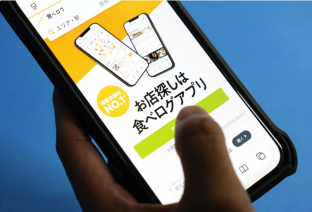
Photo Source: Kyodo
A European investment firm group led by Sweden’s EQT AB plans to acquire Japan’s Kakaku.com, operator of Tabelog and other services, in a deal worth about 590 billion yen, taking the company private at 3,000 yen per share. Kakaku.com has agreed to the proposal as it adapts its business model amid increasing competition from AI-powered information services. Some existing shareholders will adjust their stakes, with KDDI exiting fully, while other investors such as Digital Garage are expected to remain partially involved.
Mainichi:https://mainichi.jp/english/articles/20260513/p2g/00m/0bu/002000c
▶ Japan bearing makers NSK, NTN agree to merge into world's top player
13 May, 2026
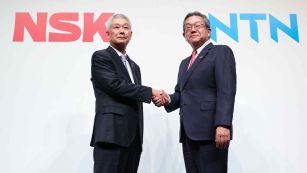
Photo Source: Kosaku Mimura/Nikkei
NSK and NTN announced plans to merge under a joint holding company by October 2027, a move that would create the world’s largest bearing manufacturer ahead of Sweden’s SKF. The companies aim to cut rising production and procurement costs through shared factories and parts purchasing as demand weakens and competition from Chinese manufacturers grows. The merger agreement is expected within six months, with shareholder approval planned for June next year after antitrust reviews. Together, NSK and NTN would control about 24% of the global bearing market. After the merger, they plan to focus on growth areas such as robots, drones, and space technology.
Published: May 2026


EU-Japan Centre for Industrial Cooperation
Joint venture established in 1987 by the European Commission (DG GROW) and the Japanese Government (METI) for promoting all forms of industrial, trade and investment cooperation between the EU and Japan.


Copyright © 2026 EU-Japan Centre