

JAPANESE ECONOMIC AND BUSINESS WEEKLY NEWSLETTER: 21 - 27 November ,2026

The EU Japan Centre is releasing a weekly press review covering Japan's economic and business matters.
Weekly Japanese Economic and Business News (21-27 November, 2026)
Outline
1. Economic News
▶ Japan to transfer H3 rocket launch operations to Mitsubishi Heavy
21 Nov, 2026

Photo Source: Sae Kamae/ Nikkei
Japan’s space agency JAXA will transfer H3 rocket launch operations to Mitsubishi Heavy Industries from January 2027, allowing JAXA to focus on rocket development. Mitsubishi Heavy plans to conduct six to eight launches annually, targeting growing demand for small-satellite launches from domestic and international customers. Meanwhile, Japan is developing upgraded H3 models and reusable rocket technology in cooperation with France and Germany to strengthen its competitiveness in the global space launch market.
▶ Japan sovereign AI project faces $5bn cost surge on chip prices, weak yen
21 Nov, 2026
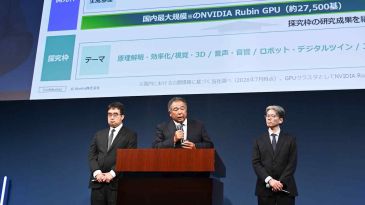
Photo Source: Shintaro Ino/Nikkei
Japan’s sovereign AI project, led by the Noetra consortium, faces a potential cost increase from ¥1 trillion to ¥1.8 trillion by FY2030 due to rising semiconductor prices and the weak yen. The additional ¥800 billion ($5 billion) will largely increase the government’s financial burden. The project aims to develop domestic foundational AI models for robotics and physical AI, highlighting Japan’s challenge in securing AI competitiveness while controlling public spending.
▶ 2 probes enter orbit around Mercury on Japan-Europe joint mission
22 Nov, 2026

Photo Source: Kyodo
Japan’s Mio probe and Europe’s Mercury Planetary Orbiter have successfully entered orbit around Mercury as part of the joint BepiColombo mission, following an eight-year journey covering more than 10 billion kilometres. The two spacecraft are expected to begin imaging the planet in spring 2027, advancing scientific understanding of one of the least explored planets in the solar system.
Mainichi: https://mainichi.jp/english/articles/20261122/p2g/00m/0sc/029000c
▶ Corporate Japan races to revive rare-earth supply chain amid China curbs
22 Nov, 2026
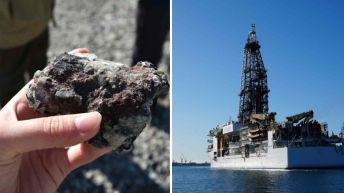
Photo Source: Nikkei
Japanese companies are accelerating efforts to rebuild an independent rare-earth supply chain in response to China's export restrictions. Major firms are investing in domestic refining facilities, recycling technologies, and overseas mining projects, with government subsidies supporting these initiatives to reduce dependence on China and strengthen Japan's economic security.
▶ Japan weighs scaling back missile and warship purchases
22 Nov, 2026
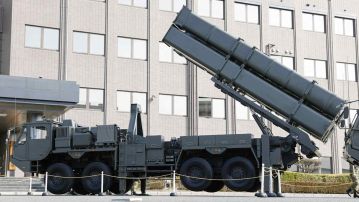
Photo Source: Kyodo
Japan is considering reducing its defence procurement plans from FY2027, potentially cutting planned five-year defence spending from ¥70–80 trillion to ¥50–60 trillion. The cuts could significantly affect ammunition, air defence missiles, stand-off missiles and warship procurement, raising concerns about Japan’s defence industrial capacity and companies’ investment plans. Meanwhile, spending on drones and AI-enabled military technologies is expected to remain protected. The debate highlights the tension between fiscal constraints, traditional military capabilities and investment in next-generation defence technologies. Revised national security documents are expected to be approved in mid-December 2026, although final spending decisions remain pending.
Nikkei Asia:https://asia.nikkei.com/politics/defense/japan-weighs-scaling-back-missile-and-warship-purchases
▶ EU's EV incentives to exclude Japan-made cars even in amended proposal
24 Nov, 2026
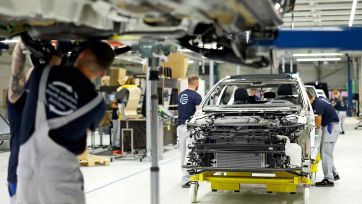
Photo Source: Reuters
The EU plans to exclude Japan-made electric vehicles from preferential treatment under its proposed Industrial Accelerator Act (IAA), even in the amended draft. The proposal would limit eligibility for EV subsidies to vehicles assembled in the EU and certain European countries, including the UK, Switzerland and EEA members. This could affect Japanese automakers such as Toyota by reducing access to European support schemes. Japan's government and Toyota are lobbying EU institutions and key member states, including Germany and France, to reconsider the restrictions.
▶ Japan backs Kawasaki Heavy's sea drone trial for offshore wind inspections
24 Nov, 2026
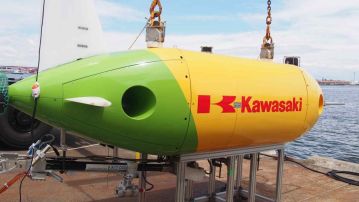
Photo Source: Nikkei
Japan’s Cabinet Office will fund a Kawasaki Heavy Industries trial to develop an underwater base station for autonomous marine drones. The drones will inspect offshore wind farms and undersea cables without human operators, reducing maintenance costs, vessel trips, and the need for workers at sea. The government considers marine drones a strategic technology for both civilian and national defence purposes. It aims for Japanese companies to capture 30% of the global marine drone market, with public-private investment expected to reach approximately ¥1.2 trillion by fiscal 2040
▶ More Japanese Firms Turn to Ireland as European R&D Hub
24 Nov, 2026
More Japanese companies are choosing Ireland as an R&D hub in Europe, attracted by its highly skilled workforce, strong expertise in science and technology, access to talent across the EU and UK, and R&D tax incentives. Sony Group established an AI data analysis facility in Ireland in 2025, reflecting growing Japanese investment in European research and innovation activities.
JIJI: https://jen-k.jiji.com/jc/eng?g=ind&k=2026112400529
▶ Japan to amend law regarding the investigation of self-driving car accidents
24 Nov, 2026

Photo Source: Reuters
Japan plans to amend the law governing the Japan Transport Safety Board (JTSB) to expand its investigative authority to include serious accidents involving self-driving vehicles. The proposed legislation is expected to be submitted to the ordinary parliamentary session in January 2027. The move comes ahead of the planned launch of Japan's first driverless taxi services in 2027. The government will also establish a panel to examine liability and compensation for victims of autonomous vehicle accidents.
Japan times:https://www.japantimes.co.jp/news/2026/11/24/japan/japan-law-self-driving-amend/
▶ EU caps hybrid car imports from China, Japan and others
24 Nov, 2026
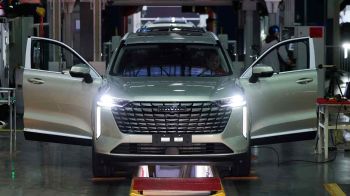
Photo Source: Reuters
The EU has introduced temporary import caps on hybrid vehicles from China, Japan, South Korea, the UK and other countries to protect European automakers. The measures will take effect on December 1 and remain in place for up to 200 days while the European Commission continues its investigation. China faces the strictest restrictions, while quotas for most other countries, including Japan, are set above current export levels. The move follows an agreement between the EU and China to limit Chinese hybrid vehicle imports to 350,000 units annually. The Commission argues that rising Chinese imports are not only affecting European manufacturers but also reducing the market share of other exporters, including Japan and South Korea.
Nikkei Asia:https://asia.nikkei.com/economy/trade/eu-caps-hybrid-car-imports-from-china-japan-and-others
▶ US-driven gridlock on green ship fuel rules leaves Japan fleets at sea
25 Nov, 2026
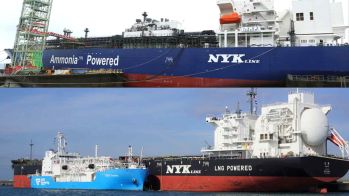
Photo Source: Nikkei
A growing divide between the U.S. and Europe over the use of cleaner maritime fuels, particularly ammonia versus LNG, is delaying the IMO's global shipping decarbonization regulations. The uncertainty is creating challenges for Japanese shipping and shipbuilding companies, whose investment strategies rely on the adoption of next-generation fuels. In response, companies such as MOL and NYK are increasingly focusing on operational efficiency and energy-saving technologies to reduce emissions. Japan is seeking a compromise to secure international agreement on greenhouse gas reduction targets while balancing decarbonization ambitions with economic and industrial competitiveness.
▶ Japan seeks supply chain mandate for chips, other critical goods
26 Nov, 2026

Photo Source: Kosuke Okamoto/Nikkei
Japan plans to strengthen its Economic Security Promotion Act by considering requirements for companies using semiconductors and other critical goods to diversify supply chains and reduce dependence on specific countries and suppliers. The government is considering financial support to help companies adjust procurement strategies, with implementation targeted gradually from fiscal 2027. The initiative aims to strengthen supply chain resilience, address geopolitical risks and ensure stable access to strategically important materials and technologies.
-------------------------------------------------------------------------------------------------------------------------------------
2. Business News
▶ Japan decarbonization agency invests in US metal recycling startup
23 Nov, 2026
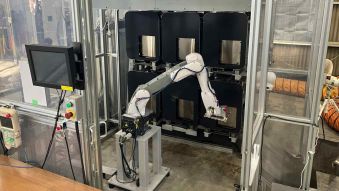
Photo Source: Sun Metalon
Japan’s GX Acceleration Agency is investing several hundred million yen in U.S.-based startup Sun Metalon to support mass production of its innovative, electricity-powered metal recycling equipment, potentially starting in fiscal 2027. The technology removes impurities from metal scrap using electricity, enabling lower-carbon steel production, particularly when powered by renewable energy. The investment is part of Japan’s broader circular economy and economic security strategy to strengthen domestic metal recycling capacity, secure high-quality scrap supplies, and accelerate the transition to green steel.
▶ Japan fund Advantage Partners to invest in Finland e-methane project
24 Nov, 2026

Photo Source: Satoko Kawasaki/Nikkei
Japanese investment firm Advantage Partners will invest in a major Finnish e-methane project through its hydrogen-focused fund. The facility, scheduled to begin operations in 2029, will produce 190 GWh of e-methane annually using renewable hydrogen and CO₂ from a local waste-to-energy plant. The €300 million-plus project will supply e-methane to Germany via gas pipelines for use in heavy-duty trucks. Other investors include Allianz, Schroders Greencoat and a Finnish government-affiliated investment group.
▶ From horsepower to firepower, Japan draws auto suppliers into major arms buildup
24 Nov, 2026
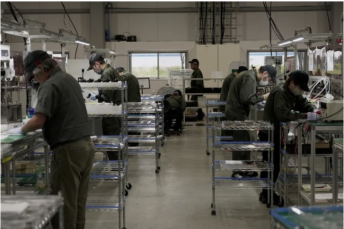
Photo Source: Reuters
Japanese automotive suppliers are increasingly entering the defence sector, leveraging their manufacturing expertise to produce components for drones and other defence technologies amid intensifying competition from China. Japan's Acquisition, Technology & Logistics Agency (ATLA) is supporting this shift by identifying potential suppliers, connecting them with defence companies and international partners, and providing funding for defence technology development. The government aims to strengthen domestic defence production capacity, particularly in the rapidly expanding drone sector, although major automakers such as Toyota, Honda and Nissan remain cautious about entering the market.
Asahi: https://www.asahi.com/ajw/articles/17075357
▶ Japan trading houses grow aircraft-part ties as airlines rely on aging jets
24 Nov, 2026
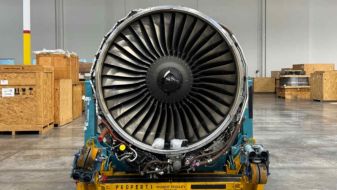
Photo Source: Kanematsu
Japanese trading houses, including Kanematsu, Toyota Tsusho, Itochu and Sumitomo Corp., are expanding their presence in the global aircraft parts, maintenance, repair and overhaul (MRO) market. With global aircraft delivery delays forcing airlines to extend the service life of existing fleets, demand for used aircraft parts and maintenance services is expected to grow. Japanese companies are responding through overseas investments, acquisitions and strategic partnerships, particularly in the U.S., Europe and Southeast Asia. These developments reflect Japanese trading houses' efforts to strengthen their positions in the global aviation supply chain and capture growing opportunities in the aerospace aftermarket.
▶ German private equity eyes Japan engine parts makers as EV adoption stalls
25 Nov, 2026
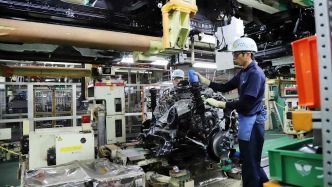
Photo Source: Getty Images
German private equity firms are increasingly investing in Japanese automotive parts suppliers, particularly manufacturers of combustion engine components, as the transition to electric vehicles progresses more slowly than expected. Rising corporate restructuring and the sale of non-core businesses are creating new investment opportunities. Recent examples include German firms acquiring European subsidiaries of Japanese suppliers JTEKT and expanding their presence in Japan. The trend reflects broader changes in Japan's automotive industry, as manufacturers seek to improve profitability, focus on core technologies and strengthen competitiveness amid the transition to electrification and growing Chinese competition.
▶ Toshiba, Hitachi bolster critical infrastructure cyberdefense teams
25 Nov, 2026
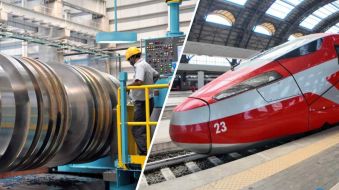
Photo Source: Toshiba and Hideaki Ryugen/Nikkei
Japanese companies, including Toshiba, Hitachi and Mitsubishi Electric, are strengthening cybersecurity capabilities to protect critical infrastructure from increasingly sophisticated AI-powered cyberattacks. Toshiba and Hitachi are expanding specialist teams and offering 24/7 monitoring, vulnerability detection and rapid recovery services for infrastructure operators. Mitsubishi Electric is also entering the market through its acquisition of U.S.-based Nozomi Networks. Amid a rise in cyberattacks targeting critical infrastructure, the Japanese government has introduced stricter reporting requirements and unified cybersecurity standards for infrastructure operators.
▶ System planned to wirelessly charge EVs from the road surface
25 Nov, 2026
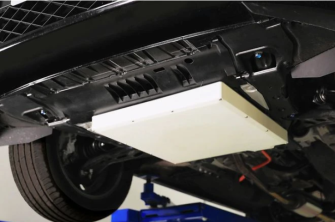
Photo Source: Honda Motor Co.
Honda, Taisei and Taisei Rotec have developed technology that wirelessly charges EVs while they are moving, using power transmitters embedded in road surfaces. Demonstration tests on an expressway are planned for fiscal 2027 at the earliest. The technology aims to reduce charging time and range concerns, with initial applications expected to focus on commercial vehicles such as trucks and buses. The initiative highlights collaboration between Japan's automotive and infrastructure industries to advance next-generation EV mobility.
Asahi: https://www.asahi.com/ajw/articles/16958153
▶ Humanoid robots meet factory reality on Toyota's home turf
26 Nov, 2026
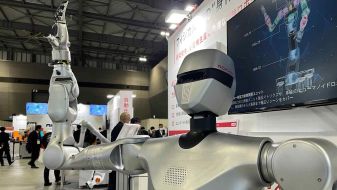
Photo Source: Ryohtaroh Satoh/NIkkei
Japan’s automotive industry, led by Toyota, is exploring humanoid robots and Physical AI to improve manufacturing productivity. However, current humanoid robots still face significant limitations in visual recognition, precision and reliability. Toyota is therefore prioritizing practical automation, including collaborative robots (cobots), while planning to deploy 400,000 robots across its supply chain between 2028 and 2040. The developments highlight both the potential and challenges of integrating AI-powered robotics into industrial manufacturing.
Nikkei Asia:https://asia.nikkei.com/business/automobiles/humanoid-robots-meet-factory-reality-on-toyota-s-home-turf
▶ Japan's Preferred Networks sows seeds of physical AI with robots, software and chips
26 Nov, 2026
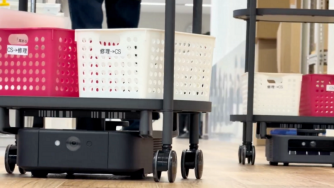
Photo Source: Preferred Networks
Japan’s Preferred Networks is expanding its Physical AI capabilities through industrial robotics, AI software and domestically developed semiconductors. Its technologies are already being used by companies such as Denso and Kuraray to improve manufacturing efficiency and accelerate materials development. The company is also developing high-bandwidth AI chips and adaptive robotics, while joining Japan’s sovereign AI initiative, Noetra, to strengthen national AI capabilities and compete with the US and China.
▶ Suzuki turns to rare metal-free batteries amid China supply risks
26 Nov, 2026

Photo Source: Sae Kamae/Nikkei
Suzuki is partnering with Japan’s Eliiy Power to develop lithium iron phosphate (LFP) batteries that avoid nickel and cobalt, aiming to reduce dependence on Chinese mineral supply chains. Mass production is planned to begin in Shizuoka in October 2029, supported by up to ¥18.7 billion in government subsidies. The initiative aims to strengthen Japan’s battery supply-chain security and provide more affordable batteries for electric vehicles and energy storage systems.
▶ Japan's JERA aims to build Anthropic, Meta data centers near power plants
27 Nov, 2026
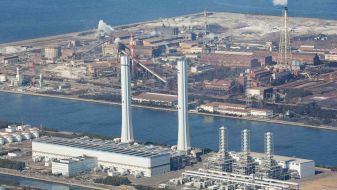
Photo Source: Shun Kato/Nikkei
Japan’s largest power producer, JERA, is exploring investments in AI data centers near its power plants, in discussions with major U.S. tech companies including Anthropic, Meta, Amazon, Microsoft and Google. Its 400-megawatt Chiba project, developed with Dell Technologies and UK-based RHAELM Holdings, is expected to start operations in 2028, with approximately $15 billion in total investment. The initiative aims to meet growing AI electricity demand while avoiding lengthy grid connection delays. JERA is also considering new financing options, including a potential IPO, to support its expansion in power generation and LNG infrastructure.
Japan times:https://www.japantimes.co.jp/business/2026/11/23/companies/jera-ai-spurs-funding/
▶ Nissan poised to import cars from China to Japan for first time
27 Nov, 2026

Photo Source: Shizuka Tanabe/Nikkei
Nissan is considering importing China-made plug-in hybrid vehicles from its joint venture with Dongfeng Motor to Japan from the second half of fiscal 2027. The move reflects Nissan’s efforts to leverage China’s faster development cycles and lower production costs while expanding exports to international markets. It also highlights the growing competitiveness of China’s automotive industry and the restructuring of global automotive supply chains.
Nikkei Asia:https://asia.nikkei.com/business/automobiles/nissan-poised-to-import-cars-from-china-to-japan-for-first-time
▶ Nvidia, Kioxia team on AI server memory as alternative to South Korean chips
27 Nov, 2026
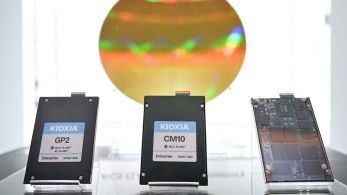
Photo Source: Kazuho Fujiwara/Nikkei
Japan’s Kioxia and NVIDIA have launched a proof-of-concept project to integrate Kioxia’s SSDs with NVIDIA GPUs, aiming to supplement high-bandwidth memory (HBM) in AI servers. The initiative seeks to address HBM supply shortages and diversify AI memory solutions. Kioxia plans to begin shipping improved GPU-compatible SSD samples by the end of next year, with twice the processing capability of its previous model.
Published: November 2026


EU-Japan Centre for Industrial Cooperation
Joint venture established in 1987 by the European Commission (DG GROW) and the Japanese Government (METI) for promoting all forms of industrial, trade and investment cooperation between the EU and Japan.


Copyright © 2026 EU-Japan Centre