The Centre quarterly newsletter, June 2026 issue, is now available.
In this issue:
Last chance…


JAPANESE ECONOMIC AND BUSINESS WEEKLY NEWSLETTER: 11 - 17 October, 2025

The EU Japan Centre is releasing a weekly press review covering Japan's economic and business matters.
Weekly Japanese Economic and Business News (11 – 17 October, 2025)
Outline
1. Economic News
▶ Japan's Hokkaido Spaceport lands on map as international launch site
11 Oct, 2025
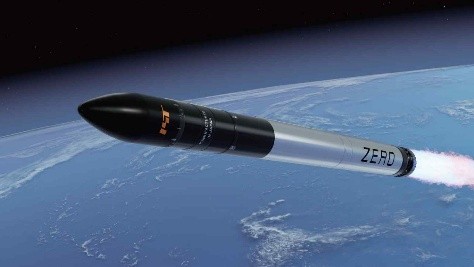 Photo Source: Interstellar Technologies
Hokkaido Spaceport (HOSPO) in Taiki, Japan, gained global attention after hosting its first foreign rocket launch in July, despite the rocket not reaching space. Since then, it has received inquiries from 13–14 companies worldwide. HOSPO signed a partnership with U.S.-based Firefly Aerospace and is preparing for a launch by Japanese firm Interstellar Technologies carrying international satellites. Japan aims to reach 30 launches annually by the 2030s, with private sector innovation playing a key role. Toyota's subsidiary, Woven by Toyota, is supporting rocket production efficiency through a partnership with Interstellar. HOSPO will need major investment to expand its infrastructure and increase launch frequency.
▶ Japan to promote domestic AI development for national security
13 Oct, 2025
 Photo Source: Kyodo
Japan will outline a new AI strategy to reduce reliance on foreign AI technologies, citing national security concerns. The plan will promote domestic AI development by improving pay and conditions for researchers, enhancing collaboration among academia and industry, and accelerating the creation of a next-generation supercomputer to succeed Fugaku. The government also aims to address AI-related risks like disinformation and cyberattacks while fostering innovation to make Japan a global leader in AI. Japan currently lags behind the U.S. and China in AI adoption and development, with only 27% of its population using generative AI in 2024.
Kyodo: https://english.kyodonews.net/articles/-/62655
▶ Japan plans high-speed optical communications tests in Singapore
15 Oct, 2025
 Source: Statista
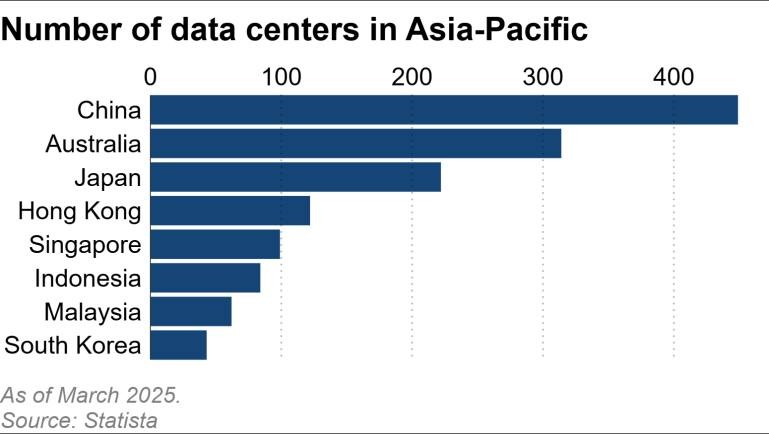
Japan plans to launch a large-scale trial of its high-speed IOWN optical communications technology in Singapore by 2026, aiming to test cross-border data network performance with links to India and Japan. Backed by ¥10 billion ($66 million) from government and industry, the project involves NTT and partners and targets promotion to financial and pharmaceutical firms in Singapore. IOWN uses light-based processing for faster, low-power, low-latency communications. Japan hopes the trial will support wider global adoption, especially in Southeast Asia. The move is part of Japan’s strategy to export telecom infrastructure, counter global rivals like Huawei, and prepare for 6G deployment in the 2030s.
Nikkei Asia: https://asia.nikkei.com/business/telecommunication/japan-plans-high-speed-optical-communications-tests-in-singapore
▶ The Second Meeting of the Japan-Germany Economic Security Consultations
15 Oct, 2025
Japan and Germany held the second Economic Security Consultations in Tokyo on October 14, 2025, following agreements by their leaders and foreign ministers earlier in the year. Officials from both countries discussed key economic security issues, including supply chain resilience, non-market practices, and critical technologies. They agreed to strengthen cooperation through continued dialogue and expertise sharing.
METI: https://www.meti.go.jp/english/press/2025/1015_001.html
MOFA: https://www.mofa.go.jp/erp/c_see/de/pagewe_000001_00267.html
▶ Dismantling starts at Osaka expo site with SDGs in mind
15 Oct, 2025
 Photo Source: Takuya Tanabe/ Asahi
Organizers of the now-closed Osaka Kansai Expo aim to continue supporting sustainable development goals (SDGs) by reusing expo pavilion materials. However, Japan’s Building Standards Law prohibits relocating entire temporary structures, so the pavilions are being dismantled and their parts sold or reused. Notable efforts include the Swiss pavilion’s resin membrane being repurposed for embassy furnishings and Panasonic’s goal to recycle nearly 100% of its pavilion materials. While some pavilions, like those owned by the Pasona group, will be relocated to private sites, most will be demolished starting October 20. To promote reuse, the expo association launched “Myaku Ichi!”—an auction platform for pavilion materials and memorabilia, aiming to foster sustainable practices and connect with future events like the 2027 GREEN×EXPO in Yokohama.
Asahi: https://www.asahi.com/ajw/articles/16092132
▶ Eggshells and bamboo help make Honda and Toyota supply chains greener
15 Oct, 2025
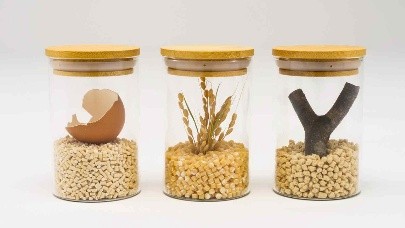 Photo Source: Moriroku
Japanese auto parts suppliers are increasingly using biomass materials—such as eggshells, seashells, bamboo, and sea urchin shells—to reduce carbon emissions and reliance on petroleum-based resins. Companies like Moriroku (Honda affiliate), Tokai Rika (Toyota affiliate), and Kasai Kogyo (linked to Nissan) are developing eco-friendly resins for interior car parts like consoles and dashboards. These materials also help preserve ecosystems and support carmakers’ sustainability goals, such as Honda’s 100% sustainable materials target by 2050. However, higher costs remain a challenge, with some biomass materials costing nearly twice as much as traditional ones.
Nikkei Asia: https://asia.nikkei.com/spotlight/environment/eggshells-and-bamboo-help-make-honda-and-toyota-supply-chains-greener
▶ Kochi following EU model on minimum wage with 60% target
16 Oct, 2025
Kochi Prefecture is launching a new initiative to set its minimum wage at 60% of the median full-time wage, following a standard used by the European Union to address income inequality. This is the first time such a benchmark would be adopted in Japan. The local wage council proposed raising the minimum wage to 1,023 yen per hour from Dec. 1, with a target of 1,093 yen within two years, based on the 2024 median wage of 1,822 yen. While still among the lowest in Japan, Kochi’s approach introduces data-driven, EU-aligned standards to wage discussions, aiming to reduce poverty and limit political interference. Experts support the move, noting it could bring more rationality and fairness to Japan’s wage-setting system.
Asahi: https://www.asahi.com/ajw/articles/16095019
▶ Nearly 70% of Japanese firms see economic benefits from expo
16 Oct, 2025
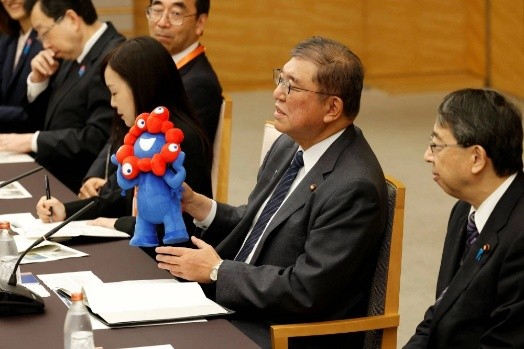 Photo Source: REUTERS
A survey by Teikoku Databank found that 67.5% of Japanese companies believe the 2025 Osaka World Expo had a positive impact on the domestic economy, up from 43.5% before the event. About 23.4% said the benefits exceeded expectations, while 44.0% said they matched expectations. However, 32.5% felt the impact fell short. Kinki saw the most benefits (81.3%), while Tokai reported the least (54.5%). Some, especially in Kanto, noted negative effects like rising construction material costs. The survey included 1,058 companies and was conducted online from Oct. 9 to 15.
Japan times: https://www.japantimes.co.jp/business/2025/10/16/japanese-firms-expo-economic-benefits/
▶ Japan weighs destroyer exports to S.E. Asia amid legal challenges
16 Oct, 2025
 Photo Source: Maritime Self-Defense Force
Japan is considering exporting decommissioned Abukuma-class escort ships to Southeast Asian nations, mainly the Philippines, as part of a broader strategy to strengthen regional defense ties and support its defense industry. The move could open new markets, but faces hurdles due to Japan’s strict arms export rules, which ban the transfer of lethal equipment. To proceed, Japan may remove weapon systems or classify the transfer as joint development, allowing for customization with local systems. This mirrors previous exports like the Mogami-class frigate deal with Australia. Interest from Indonesia and Vietnam also reflects growing regional demand for affordable naval upgrades. While offering potential growth for Japan’s defense sector, regulatory reform remains politically sensitive, with internal resistance to expanding arms export categories.
Asahi: https://www.asahi.com/ajw/articles/16095446
---------------------------------------------------------------------------------------------------------------------------------------------------------------------------
2. Business News
▶ Muji plots next growth milestone with European expansion
11 Oct, 2025
 Photo Source: Ryohin Keikaku
Ryohin Keikaku, the company behind Muji, is placing a strong focus on Europe in its new growth strategy, aiming for over 1 trillion yen in revenue by fiscal 2028. A major step is opening a flagship store in Paris in 2026, signaling renewed expansion after downsizing during the pandemic. The company plans to reopen stores in key European cities with a larger store format to improve profitability. Europe is seen as a key growth driver, alongside Southeast Asia, while domestic expansion slows.
Nikkei Asia: https://asia.nikkei.com/business/retail/muji-plots-next-growth-milestone-with-european-expansion
▶ Hitachi supports 800-volt architecture for next-generation data centers
13 Oct, 2025
Hitachi, Ltd. and Hitachi Energy announced support for NVIDIA’s new 800-volt direct-current (VDC) power architecture, aiming to power next-generation AI data centers more efficiently and sustainably. Hitachi Energy’s advanced grid-to-rack system simplifies energy flow from the grid to servers, reducing energy waste and cooling needs. As AI workloads grow, data centers are expected to reach up to 125 GW of capacity globally by 2030—comparable to Spain's total power generation. To meet this demand, Hitachi Energy is investing $9 billion worldwide, including $1 billion in the U.S., to expand manufacturing and grid infrastructure for AI and other energy needs.
Hitachi: https://www.hitachi.com/New/cnews/month/2025/10/251015c.pdf
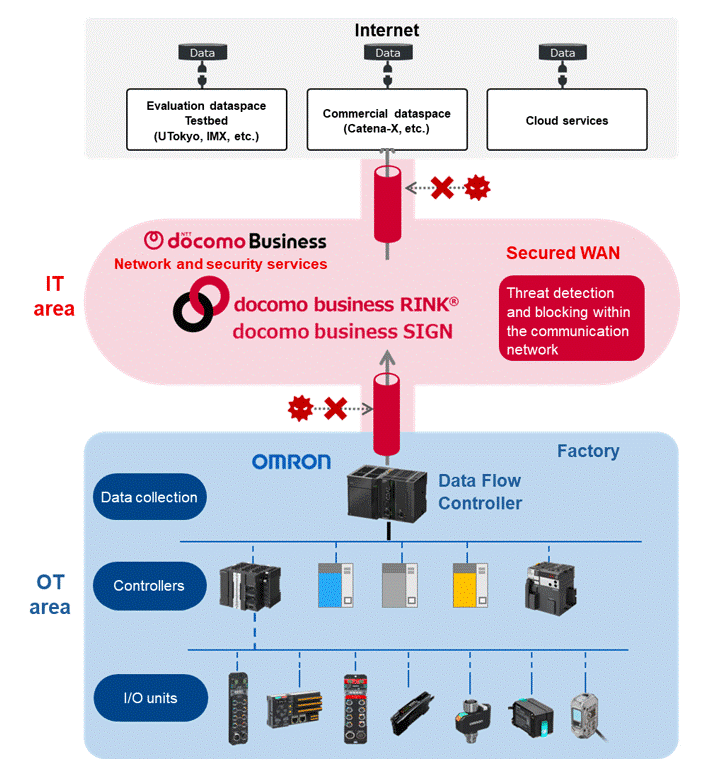
▶ OMRON and NTT DOCOMO BUSINESS partner to provide secure data collaboration solutions based on Catena-X standards: Achieving sustainable manufacturing through OT-IT fusion
14 Oct, 2025
 Source: NTT
OMRON and NTT DOCOMO BUSINESS have formed a strategic partnership to provide secure data collaboration solutions that connect manufacturing sites (OT) with external networks (IT). By enabling safe and efficient cross-company data sharing through international dataspaces like Catena-X, the partnership supports digital transformation, supply chain resilience, and eco-friendly manufacturing. Combining OMRON’s edge devices with DOCOMO’s secure network services, the solution ensures data sovereignty and paves the way for sustainable smart industries. The initiative also involves collaboration with the University of Tokyo to advance international standards like Manufacturing-X and Factory-X.
NTT: https://www.ntt.com/en/about-us/press-releases/news/article/2025/1014.html
▶ Japanese engineering slashes cost of building floating wind farms by 20%
16 Oct, 2025
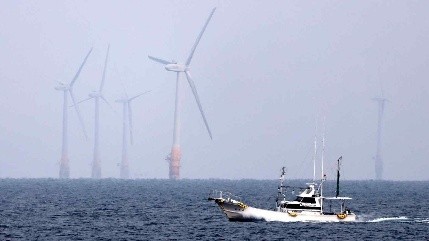 Photo Source: Toshiki Sasazu /Nikkei
Japanese engineering firm Toda has developed a new method for installing floating offshore wind turbines that cuts construction time by 75% and costs by 20%. The technique involves preassembling the turbine’s upper structure on land or a vessel and transporting it via crane barge, avoiding traditional on-site assembly. Floating turbines, more suitable for Japan’s deep coastal waters, are costlier than fixed-bottom types, but Toda’s approach aims to make them more viable. The company has tested its method off Goto City, Nagasaki, and plans to expand operations in Hokkaido. As other firms like Mitsubishi exit the offshore wind market due to high costs, floating wind remains a focus for Japan. The government aims to install 15 GW of floating wind capacity by 2040, enough to power 9 million homes, making cost reduction essential for future growth.
Nikkei Asia: https://asia.nikkei.com/business/energy/japanese-engineering-slashes-cost-of-building-floating-wind-farms-by-20
▶ Tokyo Electron completes R&D center with eye on 1-nanometer chips
16 Oct, 2025
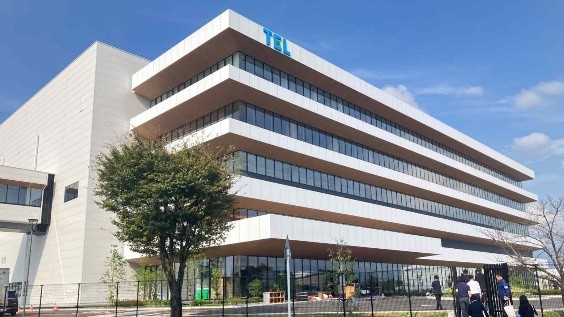 Photo Source: Kosuke Kondo/Nikkei
Tokyo Electron has opened a large R&D facility in Kumamoto to advance collaboration with TSMC and others on next-generation 1-nanometer semiconductor technology. The facility, which quadruples its local development capacity, will support development of Tokyo Electron's key coater-developer equipment used in chip miniaturization. The company is also partnering with ASML and Imec to push the limits of chipmaking. Amid rising competition and slowing earnings, Tokyo Electron plans to invest over ¥1.5 trillion ($9.92 billion) in R&D by 2029. However, its relationship with TSMC has been strained by a trade secrets leak involving former engineers.
▶ IHI and ICEYE agree to build an Earth observation satellite constellation to reinforce Japan’s national security and economic security
16 Oct, 2025
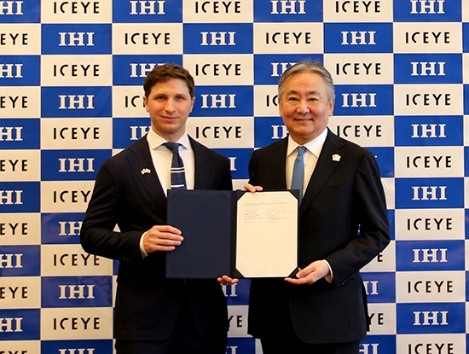 Photo Source: IHI
IHI Corporation has signed a contract with Finnish company ICEYE to co-develop a high-resolution SAR (synthetic aperture radar) satellite constellation, following an MoU signed in May 2025. IHI initially ordered four satellites, with the option to expand to 24 by FY2029. These satellites will support maritime and Earth surface monitoring, with Japan having priority access to the data, which may also be shared with allies like the UK and Australia.
The satellites will be assembled and tested in Japan, and the full system will integrate additional sensors (optical, VDES, RF, IR, and hyperspectral) to enhance detection and tracking capabilities for defense and security. IHI aims to strengthen Japan’s space-based intelligence and contribute to national and economic security, while ICEYE sees the partnership as a milestone in enhancing shared resilience and sovereign access to satellite data.
IHI:https://www.ihi.co.jp/en/all_news/2025/aeroengine_space_defense/1201692_13743.html
▶ Japan to hike visa fees to US, Europe levels amid surging tourism
17 Oct, 2025
Japan plans to raise visa fees for tourism, business, and long-term stays to match levels in the U.S. and Europe, aiming to cover rising administrative costs amid record visitor numbers. Current fees—unchanged since 1978—are much lower than those in other G7 countries.
The new fees could start next fiscal year and may include upfront payment to deter frivolous applications. With over 21.5 million visitors in the first half of 2025, the government believes the increase won’t hurt tourism and could help combat overtourism while boosting revenue without taxing citizens.
Nikkei Asia: https://asia.nikkei.com/business/travel-leisure/japan-to-hike-visa-fees-to-us-europe-levels-amid-surging-tourism
▶ Toshiba charges up investment in production of power grid equipment
17 Oct, 2025
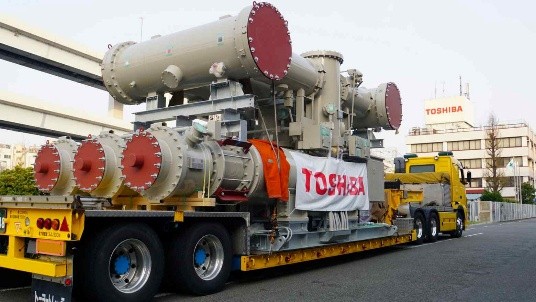 Photo Source: Toshiba
Toshiba plans to invest 48 billion yen ($319 million) through fiscal 2027 to expand production of electricity transmission and distribution equipment, more than doubling its previous investment plan. The move responds to growing demand from renewable energy projects, data centers, and the need to upgrade aging power grid infrastructure. Key investments include 27 billion yen for its Hamakawasaki plant in Japan and 18 billion yen for its Hyderabad plant in India, with plans to hire around 1,000 additional workers. Toshiba will scale up production of transformers and switchgear, citing strong demand growth since 2021. While orders tied to renewables may peak around fiscal 2035, long-term demand for grid replacements is expected to remain strong.
Nikkei Asia: https://asia.nikkei.com/business/companies/toshiba-charges-up-investment-in-production-of-power-grid-equipment
▶ Japan's Air Water to supply gas to Tata Steel from new India plant
17 Oct, 2025
Japan's Air Water will begin operating one of India’s largest industrial gas plants in November, supplying oxygen, nitrogen, and argon to Tata Steel and other clients under a 20-year contract. Built by Tata Steel in Jharkhand, the plant will be purchased by Air Water after completion, boosting its oxygen production capacity in India by 40%. With a daily oxygen output of 1,800 metric tons, the facility will also serve other regional factories. Air Water is expanding its presence in eastern and southern India, targeting ¥30 billion ($200 million) in local sales by fiscal 2027. In August, it launched a new plant in Chennai, anticipating rising nitrogen demand from India’s growing semiconductor industry.
Nikkei Asia: https://asia.nikkei.com/business/materials/japan-s-air-water-to-supply-gas-to-tata-steel-from-new-india-plant
Published: October 2025


EU-Japan Centre for Industrial Cooperation
Joint venture established in 1987 by the European Commission (DG GROW) and the Japanese Government (METI) for promoting all forms of industrial, trade and investment cooperation between the EU and Japan.


Copyright © 2026 EU-Japan Centre