
JAPANESE ECONOMIC AND BUSINESS WEEKLY NEWSLETTER: 28 April-01 May,2026

The EU Japan Centre is releasing a weekly press review covering Japan's economic and business matters.
Weekly Japanese Economic and Business News (28 April - 01 May, 2026)
Outline
1. Economic News
▶ SusHi Tech Tokyo Opens with Gov. Koike Expressing Desire for Tokyo to Become Global Startup Hub
27 Apr, 2026
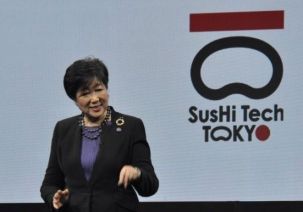
Photo Source: Yomiuri
SusHi Tech Tokyo 2026, a major global innovation and startup conference organized by the Tokyo Metropolitan Government, opened in Tokyo. Tokyo Governor Yuriko Koike announced plans to strengthen startup support, including creating a $1 billion investment flow into startups through public–private cooperation, aiming to make Tokyo a global startup hub. Prime Minister Sanae Takaichi also attended, highlighting the importance of global collaboration to address major challenges such as AI development, climate issues, and energy disruption. The three-day event focuses on AI, robotics, resilience, and entertainment, bringing together around 770 startups and participants from 24 countries to promote innovation and business opportunities.
Yomiuri:https://japannews.yomiuri.co.jp/business/companies/20260427-324695/
▶ Japan to tell companies to consider economic security in M&A guidance
28 Apr, 2026
Image: Nikkei
Japan’s Ministry of Economy, Trade and Industry (METI) plans to issue additional guidance on corporate takeovers, encouraging target companies to consider factors beyond price when evaluating acquisition offers. The updated guidance will highlight economic security, employee and business partner interests, and risks such as supply chain disruption or technology leaks as part of “corporate value.” It will also clarify that companies are not required to accept the highest bid and may choose to remain independent if appropriate.
Nikkei Asia: https://asia.nikkei.com/business/business-deals/japan-to-tell-companies-to-consider-economic-security-in-m-a-guidance
▶ Nuclear subs, AI systems listed as panel begins security rewrite
28 Apr, 2026
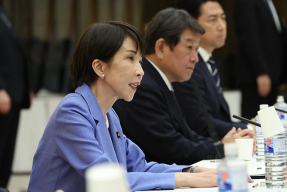
Photo Source: Takeshi Iwashiga/Asahi
A Japanese government expert panel has begun discussions on a major overhaul of the country’s security strategy, including proposals such as nuclear-powered submarines, higher defense spending, and a possible review of Japan’s Three Non-Nuclear Principles. The panel, set up under Prime Minister Sanae Takaichi, is focused on strengthening defense capabilities, adapting to modern warfare, and improving economic security amid global tensions. Key topics include increasing defense spending potentially to 3.5–5% of GDP, securing stable munitions supply, and addressing “new ways of fighting” such as AI-enabled warfare. The proposals are controversial, especially those related to nuclear principles and nuclear-powered submarines, and are expected to face strong domestic debate.
Asahi: https://cdn-ssl.asahi.com/ajw/articles/16531797
▶ Japan's naphtha supply can last beyond 2026, Takaichi says
01 May, 2026
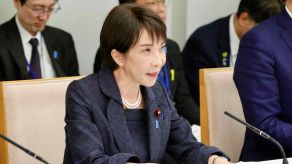
Photo Source: Ken Suzuki/Nikkei
Japan expects its naphtha supply to last through the year by increasing imports from non–Middle East sources like the U.S., Algeria, and Peru, amid disruptions caused by the Iran conflict. While alternative sourcing and stockpiles should sustain supply, shortages and supply chain disruptions are still affecting some chemicals, with panic buying and logistical bottlenecks adding pressure.
Nikkei Asia: https://asia.nikkei.com/business/markets/commodities/japan-s-naphtha-supply-can-last-beyond-2026-takaichi-says
--------------------------------------------------------------------------------------------------------------------------------------
2. Business News
▶ Japan chemical maker to quintuple China output for key battery material
28 Apr, 2026
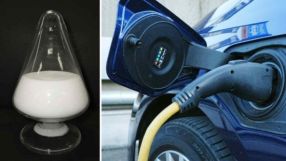
Photo Source: Nippon Shokubai
Nippon Shokubai plans to significantly expand production of LiFSI, a key lithium-ion battery electrolyte, through a China-based joint venture, increasing capacity more than fivefold by fiscal 2027. LiFSI improves battery life, charging speed, and low-temperature performance, and demand is rising especially from energy storage systems in China. The expansion is part of the company’s broader strategy to grow its battery materials business globally, despite some delays in overseas investment plans.
▶ JAL, GMO to test using humanoid robots for airport ground operations
28 Apr, 2026
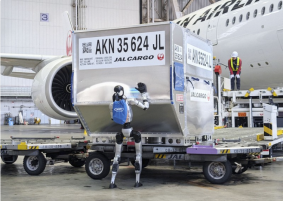
Photo Source: Kyodo
Japan Airlines and GMO Internet Group will begin a demonstration experiment at Tokyo’s Haneda Airport in May using humanoid robots to move passengers’ luggage, aiming to improve labor efficiency in ground handling operations. The project, running through 2028, targets growing travel demand and worsening labor shortages caused by Japan’s aging population.
The initiative will test China-made humanoid robots that can operate for 2–3 hours, with plans to expand their use to other tasks such as aircraft cabin cleaning if successful.
Yomiuri:https://mainichi.jp/english/articles/20260428/p2g/00m/0bu/012000c
▶ Japan's Terra Drone backs 2nd Ukrainian peer with eye on defense exports
29 Apr, 2026

Photo Source:Reuters
Terra Drone, a Japanese drone developer, announced it will invest in Ukrainian fixed-wing drone maker WinnyLab, marking its second investment in a Ukrainian defense company. The partnership aims to strengthen collaboration in drone technology developed during the Russia–Ukraine war and support mass production of interceptor drones for potential export to Japan, Europe, and other markets. The company highlighted growing global defense demand for drones and said it will continue seeking further opportunities in Ukraine’s drone sector, including maritime and reconnaissance drones.
▶ Mitsubishi Materials to lift tungsten carbide prices on tight China supply
29 Apr, 2026
Source: Mitsubishi Materials
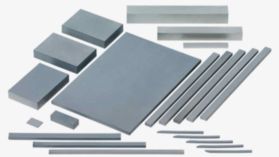
Mitsubishi Materials and Sumitomo Electric are sharply raising prices on tungsten-based products used in cutting tools, in response to supply constraints caused by China’s export restrictions on rare metals. Tungsten carbide, widely used in industrial and semiconductor applications, is becoming more expensive as China controls most global supply. Japanese firms are also trying to reduce dependence by expanding recycling efforts.
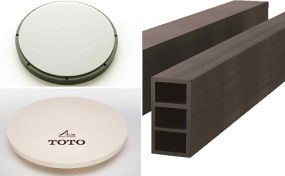
▶ How toilet maker Toto turned its ceramics know-how into an AI play
29 Apr, 2026
Source: TOTO
Toto, best known for toilets and home equipment, is now increasingly driven by its high-precision ceramic components business used in semiconductor manufacturing equipment essential for the AI boom. This division is expected to account for over half of the company’s operating profit, with strong margins and growth prospects. Activist investor Palliser Capital is urging Toto to improve disclosure and invest more heavily in the ceramics unit, arguing its value is underrecognized and could significantly boost the share price. Demand is being driven by the global expansion of semiconductor equipment, especially for AI-related chips. Despite strong growth and improving efficiency, investors still tend to undervalue the business due to its association with traditional sanitary products, even though its semiconductor technologies are becoming increasingly important.
▶ Japan's Kao, Ajinomoto boost chip material operations on AI demand
30 Apr, 2026
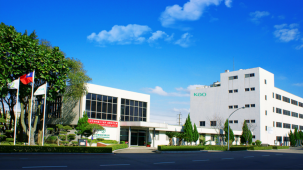
Photo Source: Kao
Japanese consumer goods companies such as Kao and Ajinomoto are expanding into semiconductor materials, leveraging their core technologies to benefit from the global AI-driven chip boom. Kao is applying its cleaning expertise to develop advanced chip-cleaning solutions, while Ajinomoto supplies its highly successful insulating film (ABF) used in semiconductor packaging. Other firms like Sakura Color Products and Nisshin Engineering are also entering the sector with niche technologies. Overall, traditional consumer and food companies are increasingly finding high-growth opportunities in the semiconductor supply chain.
▶ Japan's Ulvac to reshore production of rare earth magnet-making equipment
01 May, 2026

Photo Source: Ulvac
Ulvac plans to reshore production of rare-earth magnet manufacturing equipment from China back to Japan due to growing geopolitical risks and China’s tightening control over rare-earth resources. The move will strengthen Japan-based supply capacity for key equipment used in EV motors and data centers, while supporting global efforts—led by the U.S. and EU—to diversify and secure critical mineral supply chains away from China.
Get to know ULVAC:https://www.ulvac.co.jp/en/index.html
▶ Japan's JFE to double India steel capacity by 2030 on infrastructure demand
01 May, 2026

Photo Source: JFE Steel
JFE Steel has begun operating a joint integrated steel plant in India with JSW Steel, marking a major expansion into one of the world’s fastest-growing steel markets. The investment, part of a broader industry boom, aims to more than double capacity as India’s infrastructure and automotive demand rises. While India is expected to significantly increase steel production, concerns remain over potential oversupply, raw material costs, and geopolitical risks.
Published: May 2026


EU-Japan Centre for Industrial Cooperation
Joint venture established in 1987 by the European Commission (DG GROW) and the Japanese Government (METI) for promoting all forms of industrial, trade and investment cooperation between the EU and Japan.


Copyright © 2026 EU-Japan Centre