The Minerva Policy Reports deliver comprehensive research on the dynamic political, economic, and…


JAPANESE ECONOMIC AND BUSINESS WEEKLY NEWSLETTER: 17-27 April 2026

The EU Japan Centre is releasing a weekly press review covering Japan's economic and business matters.
Weekly Japanese Economic and Business News (17 - 27 April, 2026)
Outline
1. Economic News
▶ Tokyo pushing plan for world’s biggest floating wind power farm
18 Apr, 2026
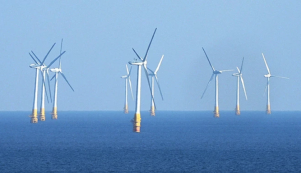
Photo Source: Asahi
Tokyo plans to build a large floating offshore wind farm near the Izu Islands by 2035, with a target capacity of at least 1 gigawatt. The project will involve surveying seabed and weather conditions, installing floating wind turbines anchored offshore, and laying underwater cables to supply electricity to both the islands and mainland Tokyo. While the project is central to Japan’s net-zero goals, concerns remain about costs and profitability, as some companies have become cautious about investing in offshore wind due to rising construction expenses.
Asahi:https://www.asahi.com/ajw/articles/16465021
▶ Japan to spend $6bn on recycling plastics and critical minerals
21 Apr, 2026
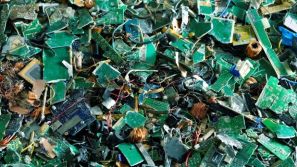
Photo Source: JX Metals Circular Solutions
Japan plans to invest about 1 trillion yen ($6.3 billion) by 2030 to expand recycling of critical minerals and plastics, aiming to strengthen resource security and reduce reliance on imports.
The initiative includes subsidies, public-private funding, and AI-based sorting technology to improve efficiency. Targets include sourcing 40% of aluminum and 30% of materials for permanent magnets from recycling by 2030. The plan also promotes recycled plastics use, builds recycling supply chains with ASEAN countries, and tightens regulations on waste exports, all to support economic resilience amid global supply risks.
▶ Japan reverses landmark policy to allow lethal arms exports
21 Apr, 2026
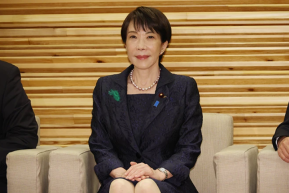
Photo Source: Takeshi Iwashita/Asahi
Japan’s government has lifted its long-standing ban on exporting lethal weapons, marking a major shift in its postwar policy. The change allows exports of items such as fighter jets and warships. The government says the move will strengthen national security and support the domestic defense industry, while maintaining Japan’s commitment to peace. However, critics argue there was insufficient debate and question the effectiveness of oversight. Although exports to countries at war are generally prohibited, exceptions may be made in cases deemed vital to Japan’s security. The decision has also drawn criticism from countries such as China.
Asahi: https://www.asahi.com/ajw/articles/16513588
▶ Japan logs trade deficit in FY 2025 for 5th yr in row, hit by U.S. tariffs
22 Apr, 2026

Photo Source: Kyodo
Japan recorded a 1.71 trillion yen trade deficit for fiscal 2025, marking the fifth consecutive year in the red, according to government data. Exports rose 4% overall, driven by strong demand for semiconductors and electronics, but auto exports to the United States fell sharply (down 15.9%) due to higher tariffs introduced since 2025. Imports increased slightly by 0.5%. Although Japan posted a surplus of 667 billion yen in March, the overall year was still in deficit. The report also noted concerns about tariff impacts and global energy supply risks affecting trade flows.
Kyodo: https://english.kyodonews.net/articles/-/74651
▶ Japan to import 1m barrels of oil from Mexico in step away from Middle East
22 Apr, 2026

Photo Source: Nikkei, Mexican presidential office
Japan will import about 1 million barrels of crude oil from Mexico as early as July, following talks between Prime Minister Sanae Takaichi and President Claudia Sheinbaum. The move is a small step toward reducing Japan’s heavy reliance on Middle Eastern oil, though the amount covers less than a day of its consumption. Both countries also agreed to deepen cooperation in energy and economic security, with Japan viewing Mexico as a valuable partner for resources like minerals as well as oil.
▶ Japan to focus on resource supply chain in new Indo-Pacific plan
23 Apr, 2026
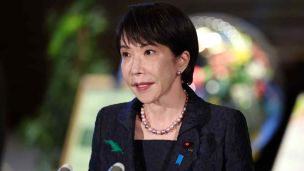
Photo Source: Shun Kato/Nikkei
Japan’s Prime Minister Sanae Takaichi plans to introduce updated diplomatic guidelines during her upcoming trip to Vietnam, revising the “Free and Open Indo-Pacific” framework. The new approach focuses on economic security, stronger supply chains, and regional cooperation through public-private partnerships and development support. It also aims to address challenges such as critical resource dependence and geopolitical uncertainty, while encouraging greater unity among Indo-Pacific countries and maintaining regional stability.
▶ Japan charts buildup of homegrown drone industry in defense plans
24 Apr, 2026
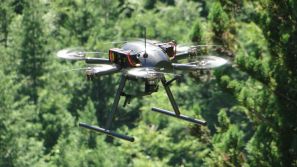
Photo Source: ACSL
Japan plans to build a domestic drone industry capable of rapid mass production in emergencies to strengthen national security. The Ministry of Defense (Japan) and its agency Acquisition, Technology & Logistics Agency aim to support startups, expand civilian production in peacetime, and use those capabilities for military needs during crises. Drones will be tested jointly with the Self-Defense Forces to prepare for large-scale deployment. The effort responds to heavy global drone use and China’s dominance in the market, while Japan seeks to increase its own production capacity and reduce reliance on imports, alongside regulatory easing and industry expansion.
Nikkei Asia:https://asia.nikkei.com/politics/defense/japan-charts-buildup-of-homegrown-drone-industry-in-defense-plans
▶ Japan's state-backed lender, top banks to provide $1.6bn for US projects
24 Apr, 2026

Photo Source: Reuters
Japan’s government-backed lender Japan Bank for International Cooperation and major banks—MUFG Bank, Sumitomo Mitsui Banking Corp., and Mizuho Bank—will provide about ¥250 billion ($1.6 billion) in initial financing for U.S. projects under a bilateral investment deal. The funds will support three projects (power plant in Ohio, oil facility in Texas, and a synthetic diamond center in Georgia), with the largest led by SoftBank Group. Financing will increase over time, with JBIC covering about one-third and the rest backed by Japan’s export insurance.
▶Japan to start EV battery traceability program to spur recycling
25 Apr, 2026
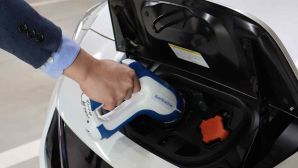
Photo Source: Risako Kojima
Japan plans to introduce an EV battery “passport” system around fiscal 2027 to track battery origin, materials, and degradation throughout their lifecycle. The system will help evaluate used EV quality, improve resale value, and support reuse and recycling of batteries for energy storage and recovery of critical minerals. It will be managed by an industry group with government support from Ministry of Economy, Trade and Industry. The initiative also aims to align with upcoming European rules on battery passports to maintain competitiveness in the EU market and reduce the export of valuable resources in used EVs.
▶ Japan and EU to partner on undersea cable protections
26 Apr, 2026
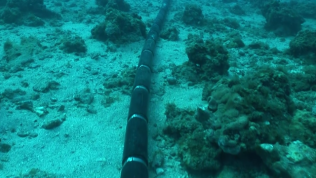
Photo Source: NTT World Engineering Marine
Japan and the European Union will cooperate on protecting and maintaining submarine cables, which carry about 99% of global communications, amid rising incidents of damage and sabotage. They plan joint research on early detection and emergency response, and will explore a new Arctic route linking Japan and Europe while avoiding Russian waters. Demand for cables is growing due to AI and data use, but security risks and costs remain key challenges.
Nikkei Asia:https://asia.nikkei.com/business/telecommunication/japan-and-eu-to-partner-on-undersea-cable-protections
--------------------------------------------------------------------------------------------------------------------------------------
2. Business News
▶ Japan to provide Sony with $380m to make image sensors
18 Apr, 2026
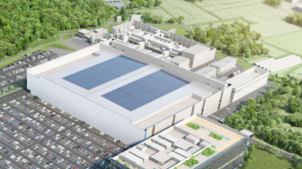
Photo Source: Sony Group
The Japanese government will provide up to 60 billion yen ($378 million) in subsidies to Sony Group to support construction of an image sensor plant in Kumamoto and strengthen supply capacity. The goal is to secure a stable supply of key semiconductors for the AI era and reinforce Japan’s domestic supply chain. Sony plans to invest about 180 billion yen in the facility, aiming to start operations in 2029. Amid intensifying competition from rivals like Samsung Electronics, the move is intended to maintain Japan’s competitiveness in the image sensor market.
Nikkei Asia:https://asia.nikkei.com/business/tech/semiconductors/japan-to-provide-sony-with-380m-to-make-image-sensors
▶ Kawasaki Heavy to develop shipbuilding AI robot amid welder shortage
19 Apr, 2026
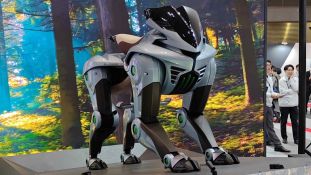
Photo Source: Eisaku Nitta/Nikkei
Kawasaki Heavy Industries is developing an AI-powered quadruped robot for shipbuilding that can autonomously navigate shipyards and perform welding, aiming to double productivity and address labor shortages. The robot can climb large ship blocks using magnets, work continuously day and night, and replicate skilled welding using AI image recognition. It is expected to enter practical use around 2028, with mass production planned for 2029. By automating a labor-intensive process that accounts for about 20% of ship construction time, the technology could significantly reduce reliance on human workers and improve efficiency in an industry facing declining orders and workforce shortages.
▶ Toyota Motor to Begin Full-Scale Hydrogen Production in May; Mass Production and Sales of Equipment Planned to Start in 2029
20 Apr, 2026
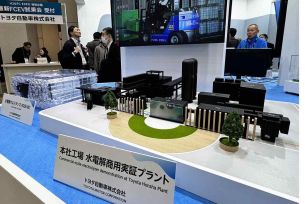
Photo Source: Yomiuri
Toyota Motor Corporation has completed hydrogen production equipment at its Honsha Plant in Aichi Prefecture, which will begin full-scale operation around May. The system uses water electrolysis and can produce 96 kg of hydrogen per hour. The hydrogen will be used for manufacturing processes and fuel cell testing, with plans to mass-produce similar equipment from 2029. Toyota developed the system with Chiyoda Corporation, achieving much higher output than earlier demonstration facilities. The company aims to expand hydrogen use in transport and industry to reduce costs and support decarbonization, while increasing demand through fuel cell trucks and taxis.
Yomiuri:https://japannews.yomiuri.co.jp/business/companies/20260420-323169/
▶ Panasonic device expected to cut cost of iPS cell therapies by factor of 50
21 Apr, 2026
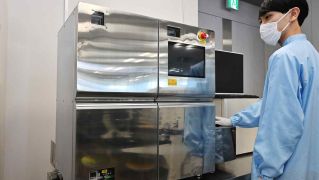
Photo Source: You Inoue/Nikkei
Panasonic Holdings has developed a compact automated system for culturing induced pluripotent stem (iPS) cells that could dramatically cut treatment costs from about 50 million yen per patient to under 1 million yen. The system reduces contamination risks by isolating cultures in a small enclosed space, lowering the need for expensive sterile facilities. The company aims to complete testing by 2027 and begin commercialization in 2028, with plans to expand into other automated cell culture technologies. This innovation could accelerate the spread of iPS-based therapies, an area where Japan—led by Nobel laureate Shinya Yamanaka—has been a global pioneer.
▶ Nissan moves closer to fitting EVs with solid-state batteries
21 Apr, 2026

Photo Source: Marina Inoue/Nikkei
Nissan Motor has reached key performance targets with a prototype all-solid-state EV battery, moving closer to mass production by fiscal 2028. The new batteries could double driving range and cut charging time by two-thirds compared to current lithium-ion batteries. The company is also developing a cheaper bidirectional charger (launching around 2028) that allows EVs to supply power to homes and potentially sell excess electricity to the grid by 2030. In addition, Nissan is advancing software-defined vehicles, aiming to introduce AI-powered autonomous driving by 2027 and equip about 90% of its models with AI features, including driving assistance and in-car digital support.
▶ Japan-Ukraine drone tie-up sends first weapon onto battlefield
22 Apr, 2026

Photo Source: Terra Drone / Amazing Drones
Terra Drone has deployed its Terra A1 interceptor drone—developed with Ukraine’s Amazing Drones—into active combat against Russian Shahed drones. The system is being tested in real battlefield conditions, with plans to expand deployment and mass production if successful. The drones are designed as a low-cost alternative to expensive missile defenses, making them effective against large numbers of attack drones. This move reflects growing Japan–Ukraine defense cooperation, as Japan increases investment in drone technology and eases military export rules, while Ukraine shares combat experience and technology.
Japan times:https://www.japantimes.co.jp/news/2026/04/22/japan/japan-firm-drone-ukraine-deployed/
▶ JAL eyes passport-free international travel with facial recognition
23 Apr, 2026

Photo Source: JAL
Japan Airlines plans to introduce facial recognition boarding for international flights by 2035 to simplify and secure travel. In a trial with International Air Transport Association at Haneda Airport Terminal 3, passengers completed nearly the entire journey using facial recognition instead of tickets or passports. Travelers would register at home via the JAL app by scanning their passport and face. At airports, this would replace document checks for check-in, security, boarding, and transfers—even across airlines.
The system aims to improve efficiency and security as global air travel grows, with JAL targeting full rollout by 2035 and broader adoption worldwide.
▶ JAPEX reverts to focus on oil production, investing up to $7.3bn
23 Apr, 2026

Photo Source: Nikkei
Japan Petroleum Exploration (JAPEX) plans to sharply expand oil and gas production, shifting away from its earlier focus on decarbonization as geopolitical risks rise. The company aims to quadruple output to 180,000 barrels per day by 2035 and will invest heavily in fossil fuel development, making it the core of its business again. This reflects concerns over energy security, especially as conflicts disrupt supplies from the Middle East. While still pursuing some carbon capture efforts, JAPEX is prioritizing stable energy supply and profitability, including expanding projects in the U.S., and targeting higher profits by 2035.
Nikkei Asia:https://asia.nikkei.com/business/energy/japex-reverts-to-focus-on-oil-production-investing-up-to-7.3bn
▶ NEC to tie up with Anthropic to cultivate corporate AI demand
23 Apr, 2026

Photo Source: Ayami Yamada/Nikkei and Reuters
NEC has partnered with Anthropic to use its AI tool Claude for product development and monitoring systems, aiming to expand AI adoption in Japan. The collaboration also includes supporting the global development of Claude and exploring access to advanced AI technologies. While Anthropic’s latest model, Claude Mythos, has restricted availability due to safety concerns, the partnership could help introduce cutting-edge AI capabilities to the Japanese market.
▶ Marubeni targets 80% cut in AI data center power use with Spanish tie-up
24 Apr, 2026

Photo Source: Reuters
Marubeni has launched a new service with Multiverse Computing, a Spanish startup, to reduce the power consumption of generative AI systems. Multiverse, founded in 2019, began selling its technology in Europe in 2024. The technology compresses processing for large language models, a mainstay of generative AI. The company's value is expected to surpass $1 billion this year. Their technology simplifies AI processing, potentially cutting data center energy use by up to 80% without reducing performance. The solution works by compressing large AI models and focusing on the most important parameters, lowering the load on GPUs and reducing cooling needs. Marubeni plans to offer this service to Japanese industries such as finance and pharmaceuticals. The move comes as AI-driven power demand rises rapidly, with data center electricity use in Japan expected to grow significantly in the coming years.
Published: April 2026


EU-Japan Centre for Industrial Cooperation
Joint venture established in 1987 by the European Commission (DG GROW) and the Japanese Government (METI) for promoting all forms of industrial, trade and investment cooperation between the EU and Japan.


Copyright © 2026 EU-Japan Centre