The Belgian-Luxembourg Chamber of Commerce in Japan (BLCCJ) is organizing the 13th edition of the…

JAPANESE ECONOMIC AND BUSINESS WEEKLY NEWSLETTER: 28 March-06 April 2026

The EU Japan Centre is releasing a weekly press review covering Japan's economic and business matters.
Weekly Japanese Economic and Business News (28 March - 06 April, 2026)
Outline
1. Economic News
▶Japan's parliament passes emergency ¥8.56 trillion stopgap budget
30 Mar, 2026
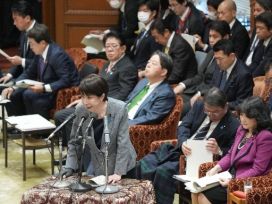
Photo Source: JIJI
On Monday, Japan’s Parliament passed an emergency ¥8.56 trillion stopgap budget to fund basic services until April 11, after Prime Minister Sanae Takaichi’s government postponed the full ¥122.3 trillion 2026 fiscal budget due to limited time for debate following last month’s election. The temporary budget covers social security, local government grants, defense, and education programs. Takaichi aims to pass the full fiscal year budget before April 11, but the opposition-controlled Upper House seeks more debate time. Public approval of Takaichi remains relatively high, despite economic concerns from the Iran war.
Japan times: https://www.japantimes.co.jp/news/2026/03/30/japan/politics/provisional-budget-passes/
▶ Japan to focus on India economic ties with new Foreign Ministry office
31 Mar, 2026
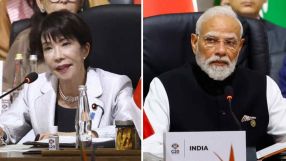
Photo Source: Nikkei
The Japanese Ministry of Foreign Affairs will create a new office to boost economic cooperation with India and support Japanese companies expanding there. The office will address investment barriers like complex regulations, opaque laws, and taxation, and promote collaboration in AI, startups, and critical minerals. India is a high-priority partner due to its large population, fast economic growth, and strategic importance as part of the Quad security grouping. Despite strong potential, Japanese company presence in India has remained low compared with other Asian markets.
▶ Takaichi turns to Asian nations to stabilize critical supply chains
31 Mar, 2026
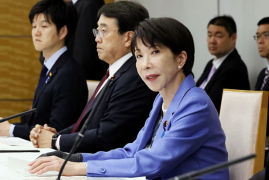
Photo Source: Takeshi Iwashita/Asahi
On March 31, Prime Minister Sanae Takaichi directed Cabinet ministers to ensure a stable supply of key items, including medical equipment and petroleum-based products, amid Middle East war–related disruptions. She emphasized cooperation with Asian countries that supply these essential materials and established a task force of director-general-level officials. Economy Minister Ryosei Akazawa was appointed to oversee policies for securing these critical supplies.
Asahi: https://www.asahi.com/ajw/articles/16461860
▶ Japan-France Summit Meeting and Working Dinner
01 Apr, 2026
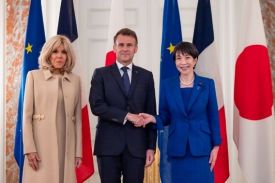
Photo Source: Cabinet Public Affairs Office
On April 1, Prime Minister Sanae Takaichi and President Emmanuel Macron held a summit in Tokyo, followed by a signing ceremony and working dinner. They reaffirmed that Japan and France, as like-minded partners, will strengthen cooperation in security, defense, and economic security amid an increasingly severe global environment. The two leaders also agreed to deepen collaboration in areas such as critical mineral supply chains, AI and advanced technologies, nuclear energy, space, and innovation, while promoting cultural exchanges ahead of the 170th anniversary of diplomatic relations in 2028. They further confirmed close coordination on regional and global issues, including China, North Korea, the Middle East, and Ukraine.
MOFA: https://www.mofa.go.jp/erp/erp_1/fr/pageite_000001_01563.html
▶ Japan Moves to Approve Commercial Flying Car Passenger Service as Early as 2027 in Major Shift in Urban Transportation
01 Apr, 2026

Photo Source: Yomiuri
The Japanese government plans to allow commercial flying car services by 2027–2028, starting with urban sightseeing flights and later expanding to city-to-airport routes. Flying cars, electrically powered VTOL vehicles, aim to ease congestion and provide new mobility options. Certification and safety measures are underway, and demonstration flights are taking place in Tokyo and Osaka.
Yomiuri: https://japannews.yomiuri.co.jp/politics/defense-security/20260404-320445/
▶ Japan Eyes Domestic Geologic Hydrogen Production, with Use as Energy Source from 2040
04 Apr, 2026
Source: Yomiuri
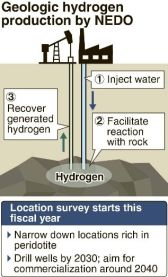
Japan plans to begin surveying locations for geologic hydrogen production this fiscal year, aiming for commercial use by 2040. The project, led by New Energy and Industrial Technology Development Organization, will study underground rock formations and develop methods to stimulate hydrogen generation by injecting water. Geologic hydrogen—formed through serpentinization—is seen as a cheaper and cleaner alternative to current hydrogen sources. Japan hopes it will strengthen energy security and help achieve its 2050 net-zero emissions goal. Exploration and testing will continue through 2030, with potential drilling sites identified based on geological data and experiments.
Yomiuri:https://japannews.yomiuri.co.jp/politics/defense-security/20260404-320445/
--------------------------------------------------------------------------------------------------------------------------------------
2. Business News
▶ Japan to slash BYD EV subsidies to under $1,000
30 Mar, 2026

Photo Source: Sota Tanaka/Nikkei
Japan has slashed EV purchase subsidies for China’s BYD by over half to 150,000 yen, favoring automakers using domestically produced batteries. Toyota’s bZ4X retains the highest subsidy at 1.3 million yen, while Nissan’s Ariya will see a reduction to 1 million yen in 2027. Subsidies for many imported EVs, including Audi and Hyundai, are cut, whereas Tesla’s subsidies remain unchanged.
Nikkei Asia:https://asia.nikkei.com/business/automobiles/japan-to-slash-byd-ev-subsidies-to-under-1-000
▶Japan companies to invest in defense tech with civilian use
30 Mar, 2026
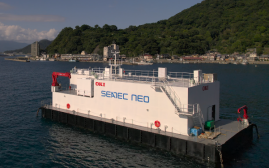
Photo Source: Oki Electric
Japanese defense equipment makers are increasingly investing in dual-use technologies that serve both military and civilian purposes. Oki Electric plans to expand production of sonar and sonobuoys, adapting them for offshore construction and wind power projects. Hitachi and Fujitsu are developing AI and quantum computing applications for defense and civilian use, while startups like Acompany explore secure computing for drones. The government, under Prime Minister Sanae Takaichi, has prioritized defense as a strategic area for public investment, promoting dual-use technologies to help companies recoup costs and improve competitiveness amid rising defense spending and evolving regional security challenges.
Nikkei Asia: https://asia.nikkei.com/politics/defense/japan-companies-to-invest-in-defense-tech-with-civilian-use
▶ Mitsubishi Materials Signs MOU for U.S. Rare Earth Project
31 Mar, 2026
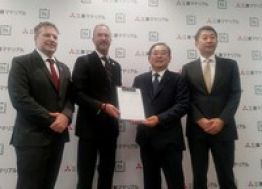
Photo Source: JIJI
Mitsubishi Materials signed an MOU with ReElement Technologies to collaborate on recycling rare earths and metals. Mitsubishi Materials will invest in ReElement’s U.S. project and the companies may pursue joint operations in Japan. The partnership aims to stabilize critical mineral supply chains and strengthen U.S.-Japan cooperation.
JIJI:https://jen.jiji.com/jc/eng?g=ind&k=2026033100943
▶ Japan's Fujitsu to develop cutting-edge 1.4-nm chips for AI processing
31 Mar, 2026
Photo Source: Ami Yamada/Nikkei
Fujitsu plans to develop a domestically produced AI semiconductor using advanced 1.4nm technology, with manufacturing handled by Rapidus. The chip will feature NPUs optimized for AI processing and be integrated with Fujitsu’s CPUs for use in servers and supercomputers. Supported partly by the Japanese government, the project aims to strengthen domestic AI capabilities and reduce reliance on foreign technology amid growing global competition.
▶ Sojitz Enters Biomethane Production and Sales Business in the U.S.
01 Apr, 2026
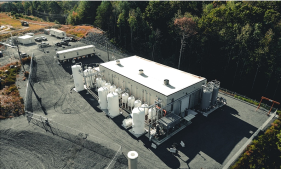
Photo Source:Sojitz
Sojitz Corporation, via its U.S. subsidiary, has invested in U.S.-based biomethane producer Fidem Energy, making it an equity-method affiliate. Fidem produces renewable biomethane from landfill gas in Tennessee and holds additional development rights across the U.S. Biomethane, used as a transportation fuel and in industrial applications, is a growing clean energy source driven by decarbonization and energy security needs. Through this partnership, Sojitz aims to expand biomethane supply in the U.S., Japan, Asia, and other regions, aligning with its Green Transformation strategy under the Medium-term Management Plan 2026.
Sojitz: https://www.sojitz.com/en/news/article/20260401_01.html
▶ Microsoft to pour $10bn into Japan data centers, work with SoftBank on AI
03 Apr, 2026

Photo Source: REUTERS
Microsoft plans to invest $10 billion in Japan by 2029 to expand AI-focused data centers and infrastructure. It will collaborate with SoftBank and Sakura Internet to build domestic AI data networks, supporting “data sovereignty” and local AI development. The initiative aligns with the Japanese government’s strategy under Sanae Takaichi to prioritize AI and economic security. Microsoft also plans to train 1 million developers and strengthen partnerships with companies like Hitachi.This investment is part of a broader trend, alongside major commitments from Oracle and Amazon Web Services, as global competition in AI infrastructure intensifies.
Nikkei Asia: https://asia.nikkei.com/business/companies/microsoft-to-pour-10bn-into-japan-data-centers-work-with-softbank-on-ai
Published: April 2026


EU-Japan Centre for Industrial Cooperation
Joint venture established in 1987 by the European Commission (DG GROW) and the Japanese Government (METI) for promoting all forms of industrial, trade and investment cooperation between the EU and Japan.


Copyright © 2026 EU-Japan Centre