The Belgian-Luxembourg Chamber of Commerce in Japan (BLCCJ) is organizing the 13th edition of the…


Weekly Japanese Industry and Policy News: 13 September - 19 September, 2025

The EU Japan Centre is releasing a weekly press review covering Japan's economic and policy matters.
Weekly Japanese Industry and Policy News (13 – 19 September, 2025)
Outline
1. Economic News
2. Business News
▶ Share of population aged 65 or older hits record high 29.4 percent: gov't
14 Sep, 2025
Japan's elderly population (65+) has reached a record 29.4% — the highest among countries with over 40 million people. Of the 36.19 million seniors, a record 9.3 million are still working, making up one in seven workers. Most are in part-time or contract roles, especially in retail and wholesale sectors. Despite a slight year-on-year decline in total seniors, the number is projected to rise to 39.28 million by 2040 (34.8% of the population). Japan also leads in the share of people aged 75+, at 17.2%, highlighting growing demographic and labor challenges.
Kyodo: https://english.kyodonews.net/articles/-/61020
▶ Resource-scarce Japan gets more trains running on renewables
14 Sep, 2025
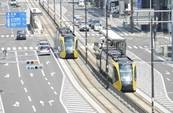
Japanese train operators are increasingly using renewable energy to reduce carbon emissions and support the country’s goal of carbon neutrality by 2050. About 75% of train energy currently comes from thermal power, but efforts are underway to cut emissions by half by the late 2030s.
Examples include Utsunomiya’s green streetcars powered by biomass and solar energy, and Tokyo’s Setagaya Line, which has run exclusively on renewable energy since 2019. Tokyu Corp. achieved 100% renewable-powered train services in 2022, cutting CO2 emissions by 160,000 tons annually.
Despite higher costs and supply challenges, operators see renewable energy use as effective for promoting decarbonization, with other major rail companies in Kansai and Tokyo also adopting non-fossil fuel electricity.
Kyodo: https://english.kyodonews.net/articles/-/61009
Photo Source: Kyodo
▶ Japan Set to Unveil Roadmaps to Help Central Asian Nations Shift From Coal, Gas to Clean Energy
15 Sep, 2025
Japan’s Ministry of Economy, Trade and Industry will present customized decarbonization roadmaps to five Central Asian countries to support their energy transitions. The plans include upgrading thermal and hydropower plants and introducing nuclear energy, tailored to each country’s energy mix.Japan aims to strengthen ties and counter China and Russia’s influence by involving companies like Mitsubishi Heavy Industries and Panasonic. Proposals also include cross-border power networks to utilize hydropower from Kyrgyzstan and Tajikistan. The initiative reflects Central Asia’s growing interest in diversifying energy partnerships and adopting advanced Japanese technologies.
Yomiuri: https://japannews.yomiuri.co.jp/society/general-news/20250915-280931/
▶ Japanese AI robot swarms to scout sites for underground moon bases
16 Sep, 2025

Japanese researchers are developing AI-powered miniature robots, called RED, to explore the moon's surface and potential underground lava tubes that may support future human life. Led by Chuo University and Takenaka Corp., the project aims to deploy swarms of low-cost, autonomous robots that can navigate, jump, and collaborate using reinforcement learning AI. A simulated lunar environment will be used for training before actual deployment to avoid damage. Backed by the Japanese government since 2022, the plan is to send RED robots to the moon via startup ispace by 2030, and by 2050, use them to help build an underground lunar city. This effort reflects growing collaboration between AI and space research in Japan, addressing past limitations in space-based AI applications.
Nikkei Asia: https://asia.nikkei.com/business/science/japanese-ai-robot-swarms-to-scout-sites-for-underground-moon-bases
Photo Source: Mana Kuroda / Nikkei Asia
▶ The Japan-EU Energy Dialogue 2025
16 Sep, 2025
Japan and the EU held a policy dialogue to strengthen cooperation on clean energy, following the 30th Japan-EU Summit and the launch of the "Japan-EU Competitiveness Alliance." They agreed on the need for resilient supply chains in sectors like wind, solar, and hydrogen, and emphasized broader policy principles such as transparency and sustainability. The first Japan-EU Intergovernmental Gas Dialogue was also held, reaffirming the role of natural gas and LNG in energy security during the transition to decarbonization. Both sides confirmed their ongoing cooperation on hydrogen, methane reduction, and other initiatives, and their shared commitment to global climate goals.
METI: https://www.meti.go.jp/english/press/2025/0916_002.html
▶ Japan, EU should jointly develop rare earths in Greenland: senior EU official
17 Sep, 2025

EU Executive Vice President Stephane Sejourne proposed Japan and the EU collaborate on rare-earth and resource development in Greenland to reduce reliance on the U.S. and China. Greenland is seen as a strategic location with rich reserves of rare earths and graphite. The EU has begun initiatives there and now seeks to involve Japan through joint public-private partnerships. This builds on the Japan-EU Competitiveness Alliance launched in July. Sejourne also emphasized the EU’s commitment to simplifying regulations while maintaining strategic goals, especially in areas like environmental standards and digital policy.
Photo source: Seiko Ota / Nikkei Asia
▶ US auto tariffs push Mitsubishi, Mazda toward Latin America
17 Sep,2025
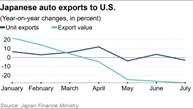
Japanese automakers are shifting focus to Latin America and other regions as high U.S. auto tariffs (reduced from 27.5% to 15%) hurt profits. The delay in the tariff cut caused significant financial losses, and the current rate remains much higher than the previous 2.5%. Mitsubishi Motors is expanding in Latin America, especially Brazil and Argentina, to offset a projected ¥32 billion tariff impact and a 76% drop in net profit. Mazda is reducing shipments to the U.S. and redirecting exports to other markets like Canada and Colombia. Despite most automakers expecting profits in fiscal 2025, weak yen plays a key role. A stronger yen or further cost pressures could hurt earnings. Toyota is strengthening its regional production strategy and plans to build EVs in Europe to stay resilient. Overall, Japanese automakers are diversifying globally to reduce reliance on the U.S. and mitigate tariff-related risks.
Nikkei Asia: https://asia.nikkei.com/business/automobiles/us-auto-tariffs-push-mitsubishi-mazda-toward-latin-america
Source: Japan Finance Ministry
▶ Meeting between Foreign Minister IWAYA and Mr. Stéphane Séjourné, Executive Vice-President for Prosperity and Industrial Strategy, European Commission
17 Sep, 2025
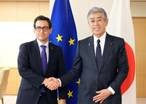
On September 17, Japanese Foreign Minister Takeshi Iwaya met with Stéphane Séjourné, EU Executive Vice-President for Prosperity and Industrial Strategy, during his first visit to Japan. They discussed strengthening Japan-EU cooperation on economic security, industrial competitiveness, and regulatory simplification. Both sides reaffirmed their commitment to maintaining close communication and enhancing Japan-EU economic relations, in line with outcomes from the July Japan-EU Summit, and ahead of the upcoming High-Level Economic Dialogue.
MOFA: https://www.mofa.go.jp/press/release/pressite_000001_01671.html
Photo Source: MOFA
▶ Japan to Develop Domestic AI Model With Government Support; Security Concerns Over Outflow of Data, False Information
18 Sep, 2025
The Japanese government plans to support the development of a fully domestic generative AI model using Japanese data and technology to reduce reliance on AI from the U.S. and China. Concerns over data security, misinformation, and cultural inaccuracies have driven this initiative. The National Institute of Information and Communications Technology (NICT) and Preferred Networks will lead development, using 20 years of Japanese-language data. Sakura Internet will host the AI domestically, and the government will provide infrastructure, funding, and talent support. The goal is to create a trustworthy AI model rooted in Japan’s culture, history, and systems.
Yomiuri: https://japannews.yomiuri.co.jp/politics/politics-government/20250918-281749/
▶ Japan to revise investment rules for startups to woo foreign capital
18 Sep,2025

Japan will revise its startup investment guidelines by the end of September to attract more overseas venture capital and foster more unicorns. Key changes include removing the obligation for startups to prioritize IPOs, instead recognizing M&As as viable exit options. The revision also bans controversial contract clauses that allow VCs to demand repayments beyond their initial investment — a practice rare internationally. These reforms aim to align Japan’s practices with global standards, addressing concerns that current rules deter foreign investors. While Japan lags behind the U.S. in unicorn creation, the government sees improving the startup environment as a key economic priority.
Nikkei Asia: https://asia.nikkei.com/business/startups/japan-to-revise-investment-rules-for-startups-to-woo-foreign-capital
Photo Source: Nikkei
2. Business News
▶ Scientists spin synthetic spider silk as fabric of the future
14 Sep,2025
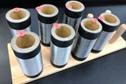
Japanese biotech startup Spiber Inc. is pioneering the mass production of synthetic spider silk, a material as strong as steel, highly elastic, and environmentally friendly. Using genetically engineered microorganisms fed with plant-based sugars, Spiber produces “Brewed Protein,” a sustainable alternative to petroleum-based fabrics like nylon and polyester. A breakthrough by Kyoto University’s Keiji Numata revealed how spiders spin their super-strong silk, enabling better synthetic replication. While challenges like water sensitivity remain, Spiber has improved the silk’s durability by altering amino acid sequences. Synthetic spider silk promises vast applications—from medical uses to eco-friendly textiles—with significantly lower carbon emissions and water usage than traditional fibers. Spiber continues to work on reducing production costs by enhancing microbial efficiency to make artificial spider silk more accessible and practical.
Asahi: https://www.asahi.com/ajw/articles/15973488
Photo Source: Keiji Numata/ Asahi
▶ Nissan slashes new EV Leaf production in half on battery shortage
17 Sep, 2025

Nissan has sharply reduced production plans for its redesigned Leaf EV due to battery supply issues, cutting output for September–November to less than half the original plan. The Tochigi plant, which produces the Leaf for Japan and the U.S., is facing delays as supplier AESC struggles with battery yield problems.The new Leaf, a key part of Nissan’s recovery strategy, offers 30% more range and a new SUV design. However, production delays threaten its success. Nissan posted a ¥670.8 billion loss in fiscal 2024 and fell out of the global top 10 automakers. With growing competition from Tesla, BYD, and Honda, setbacks in Leaf production could hinder its comeback efforts.
Photo Source: Nissan
▶ NTT and Mitsubishi Heavy Industries Achieved World's Highest Efficiency in Laser Wireless Power Transmission under Atmospheric Turbulence
17 Sep, 2025
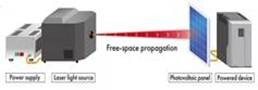
NTT and Mitsubishi Heavy Industries successfully conducted the world’s most efficient long-distance optical wireless power transmission experiment using a laser beam. In this outdoor test, 1 kilowatt of laser power was transmitted over 1 kilometer, with 152 watts of electricity received—achieving a record 15% efficiency using a silicon-based photoelectric conversion element, even under strong atmospheric turbulence.The experiment, held at Nanki-Shirahama Airport, used advanced beam shaping and output leveling technologies to ensure stable and uniform energy delivery. This breakthrough demonstrates the potential for wireless power supply in remote or disaster-hit areas where power cables are impractical, as well as future applications in drone operations, space platforms, and lunar missions. The results were published in Electronics Letters in August 2025 and mark a major step toward practical, on-demand, long-range wireless power transmission.
MHI: https://www.mhi.com/news/250917.html
Source: MHI
▶ ITOCHU Announces ISUZU, FamilyMart and ITOCHU Commence Demonstration of Deliveries Using Electric Trucks with Swappable Batteries in Yokohama
18 Sep, 2025
ITOCHU, ISUZU, FamilyMart, and the City of Yokohama will launch a demonstration in November 2025 using electric delivery trucks with swappable batteries—the first in Japan to allow simultaneous left and right battery swaps. Three modified ELF EVs will deliver goods to around 80 FamilyMart stores in Yokohama. The battery-swapping process is automated and takes about as long as refueling a diesel vehicle, addressing the downtime issue of traditional EV charging. The project aims to improve logistics efficiency and support Japan’s goal of carbon neutrality by 2050. ITOCHU and its partners will evaluate the system's business potential and decarbonization impact for future commercialization.
ITOCHU: https://www.itochu.co.jp/en/news/press/2025/250918.html
▶ Mitsubishi Electric and Inria Commence Joint Technology Development to Ensure AI Trustworthiness Using Formal Methods
18 Sep, 2025
Mitsubishi Electric and France’s Inria have launched a joint research project, FRAIME, to develop trustworthy AI systems by combining mathematical verification methods (Formal Methods) with AI technologies. The goal is to ensure the reliability of AI in critical fields like infrastructure and cybersecurity, where errors can be costly and dangerous. Running from September 2025 to August 2029, the project will focus on verifying AI-generated outputs, building reliable AI processes, and improving efficiency through interaction between users, AI, and verification tools. Mitsubishi Electric brings industry expertise, while Inria contributes academic knowledge. The project aims to publish open-source tools, academic papers, and train young researchers, ultimately promoting safe, practical, and trustworthy AI for real-world applications.
Mitsubishi Electric: https://www.mitsubishielectric.com/en/pr/2025/pdf/0918.pdf
▶Japan’s top shipping company to expand LNG fleet as global demand climbs
18 Sep, 2025
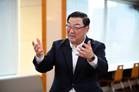
Japan's largest shipping company, Nippon Yusen, plans to expand its LNG tanker fleet by 50%, reaching over 130 vessels by early 2029, up from 89, to meet growing global demand for liquefied natural gas (LNG). CEO Takaya Soga emphasized LNG’s role in the global energy transition. With LNG consumption expected to rise 60% by 2040, more tankers are needed globally. Nippon Yusen’s fleet is mainly built in South Korean shipyards, with minimal reliance on Chinese-built vessels, which is notable amid new U.S. restrictions on Chinese ships. Rival Mitsui OSK Lines is also pursuing fleet expansion.
Japan times: https://www.japantimes.co.jp/business/2025/09/18/companies/nippon-yusen-lng-fleet-expansion/
Photo Source: BLOOMBERG
▶ NEC enters capital alliance with US insurance software developer Moter
19 Sep, 2025
NEC has formed a capital alliance with Moter Technologies, a U.S.-based subsidiary of Japan's Aioi Nissay Dowa Insurance, to enhance AI-driven driver risk assessment for auto insurance. Moter develops telematics insurance and safe driving support tools. NEC, leveraging its facial recognition and video summarization technologies, aims to help insurers streamline claims processes and assess individual driver risk, especially for commercial fleets. The collaboration targets the growing U.S. auto insurance market, with possible expansion to Japan. Moter also recently received investment from Itochu.
▶ Japan's petrochemical makers pressed by China overproduction
19 Sep, 2025
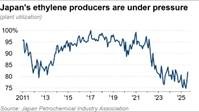
Japan’s petrochemical industry is struggling with chronic overcapacity and weak demand, largely due to oversupply from China. Ethylene plant utilization has stayed below the 90% threshold for over three years, despite a slight recovery to 81.9% in August 2025. Companies like Asahi Kasei, Mitsui Chemicals, and Mitsubishi Chemical are planning major restructuring, including plant closures and consolidations, which could reduce national ethylene capacity by 30%. Mitsui Chemicals, Idemitsu Kosan, and Sumitomo Chemical are also merging their domestic polyolefin resin businesses to improve efficiency amid continued losses. Companies are being driven to restructure not only to restore profitability but also to meet growing environmental demands, with shared development of green technologies seen as a competitive edge against Chinese rivals. Despite these moves, experts say more consolidation is likely, as the industry remains one of the last in Japan to undergo full-scale restructuring.
Nikkei Asia: https://asia.nikkei.com/business/materials/japan-s-petrochemical-makers-pressed-by-china-overproduction2
Source: Japan Petrochemical Industry Association
Published: September 2025


EU-Japan Centre for Industrial Cooperation
Joint venture established in 1987 by the European Commission (DG GROW) and the Japanese Government (METI) for promoting all forms of industrial, trade and investment cooperation between the EU and Japan.


Copyright © 2026 EU-Japan Centre